Front Drive Elliptical Trainers
Introduction
Elliptical trainers eliminate the impact forces associated with running by guiding the feet through a continuous oval path. Front drive models place the resistance flywheel at the front of the machine, which changes the geometry of the stride compared to rear-drive designs. The incline of the foot pedals tends to be steeper, and users naturally adopt a slightly more upright posture, which some riders find more comfortable for extended sessions. Front drive ellipticals are historically among the most space-efficient designs in the category. Because the flywheel is positioned ahead of the user rather than behind, the overall footprint is more compact. This makes front drive models a practical choice for home fitness rooms, small apartment gyms, and hotel wellness spaces where floor area is limited. Resistance in front drive ellipticals is generated through the same magnetic or electromagnetic systems found in exercise bikes, offering quiet, consistent workloads. Stride length varies from 38 cm on budget models to 51 cm or more on premium machines. Upper body engagement is delivered through movable handlebars that work in sync with the stride, activating the chest, back, and arms in coordination with the lower body. Buyers sourcing ellipticals for light commercial applications — such as apartment fitness centers or small corporate gyms — frequently select front drive models for their combination of low maintenance, compact dimensions, and broad user appeal. A well-specified front drive elliptical can serve users from rehabilitation walks at near-zero resistance to sustained high-intensity cardio sessions.

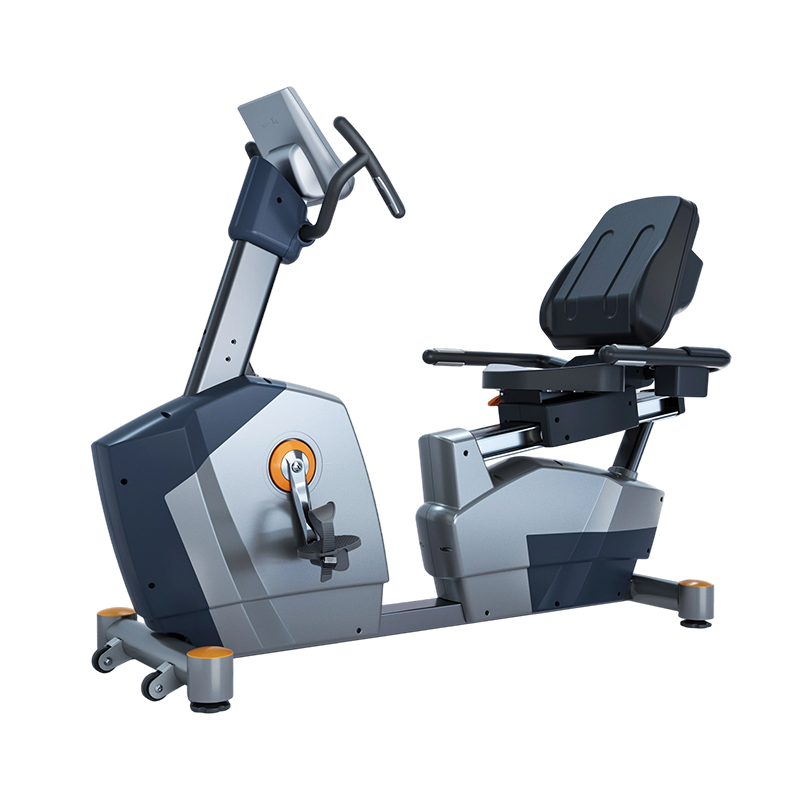
Technical Specifications and Features
Front drive ellipticals share several core specifications with other elliptical trainer types, but certain parameters are particularly relevant to this drive configuration.
Stride Length: This is the most important ergonomic dimension. A stride length below 40 cm feels short and choppy for users above 170 cm in height. Most quality front drive units offer 43–51 cm stride length. Some premium models provide adjustable stride length to accommodate multiple users.
Flywheel and Resistance: Front drive flywheels typically range from 7 kg to 14 kg. Magnetic resistance is standard; electromagnetic resistance is available on connected models. Resistance levels range from 8 on entry units to 24 or more on commercial-grade machines.
| Parameter | Typical Range | Recommended Minimum |
|---|---|---|
| Stride Length | 38–51 cm | 43 cm for users 170 cm+ |
| Flywheel Weight | 7–14 kg | 10 kg for smooth motion |
| Max User Weight | 100–150 kg | 120 kg for commercial |
| Resistance Levels | 8–24 | 16 for varied training |
| Machine Footprint | 140–170 cm long | Verify available space |
Most front drive ellipticals include fixed or moving handlebars. Moving handlebars add an upper body workout component and increase caloric expenditure by 10–15% compared to fixed-handle use. Console features vary from basic LCD displays showing time, speed, distance, and calories to color touchscreens with app streaming, goal-based programs, and Bluetooth connectivity.
Professional Buying Guide
When evaluating front drive elliptical trainers for purchase, buyers should systematically work through the following considerations to identify the unit that best matches their operational context.
User Height Range: Confirm the stride length is appropriate for the tallest anticipated users. A stride length of 43–46 cm suits users up to approximately 180 cm; 48–51 cm is preferred for taller users. Short stride lengths lead to an unnatural circular motion and increase knee stress.
Frame Material and Weld Quality: Heavy-gauge steel frames with continuous MIG welds handle the cyclic loading of elliptical motion better than thinner-gauge or brazed frames. Request material specifications and welding certifications for commercial orders.
| Consideration | Home Use | Light Commercial |
|---|---|---|
| Flywheel Weight | 8–10 kg adequate | 12 kg or more |
| Warranty | Frame 2–3 yr | Frame 5+ yr, parts 2 yr |
| Console | LCD sufficient | Touchscreen preferred |
| Pedal Size | Standard | Oversized for foot stability |
Inspect the pedal axle bearings and the crank arm connection points. These areas absorb the highest stress during use and are the most common source of noise or wobble in lower-quality units. Request bearing specifications and confirm the supplier provides replacement bearing kits.
Usage Advantages
Front drive ellipticals offer several practical benefits that make them a preferred option for specific buyer segments.
- Compact footprint: With the flywheel positioned at the front, front drive models are typically 10–20 cm shorter than equivalent rear drive units, fitting into tighter spaces.
- Low-impact motion: The oval stride path eliminates heel strike, reducing joint loading by 40–60% compared to running at equivalent cardiovascular intensity.
- Full-body engagement: Moving handlebars activate the upper body, increasing total muscle recruitment and caloric burn compared to lower-body-only cardio equipment.
- Backward stride capability: All ellipticals allow reverse pedaling, which shifts emphasis to the hamstrings and calves — a feature not available on treadmills or stationary bikes.
| Advantage | Front Drive Elliptical | Treadmill | Upright Bike |
|---|---|---|---|
| Joint Impact | Very Low | Medium-High | Low |
| Upper Body Work | Yes | Minimal | No |
| Footprint | Compact | Large | Small |
Application Scenarios
Front drive elliptical trainers are well-suited to a range of environments and user populations.
| Environment | User Profile | Recommended Feature |
|---|---|---|
| Home Gym (small room) | General fitness user | Compact model, transport wheels |
| Apartment Gym | Mixed user base | Adjustable stride, 16+ resistance levels |
| Rehabilitation Clinic | Post-surgery recovery | Low starting resistance, hand pulse sensors |
| Senior Wellness Center | Older adults, limited mobility | Step-through frame, low step-on height |
In rehabilitation and senior wellness contexts, the low step-on height of front drive models is a practical advantage. Users with limited hip flexion or balance concerns find it easier to mount and dismount compared to center or rear drive designs where the user steps up higher onto the pedal platform.
FAQ
Frequently Asked Questions
- Q: How does a front drive elliptical differ from a rear drive model?
- A: The flywheel position changes the stride geometry. Front drive units tend to produce a more upright, slightly steeper stride that resembles a stair-climbing motion. Rear drive units typically offer a flatter, longer stride that more closely mimics running. Neither is categorically superior; the preferred feel is largely a matter of personal preference and body geometry.
- Q: Is a front drive elliptical suitable for tall users?
- A: Stride length is the primary determinant of fit for taller users. Users above 180 cm should look for models with a stride length of 48 cm or more. Some front drive models offer adjustable stride lengths, which accommodate users of varying heights on a shared machine.
- Q: What is the typical service life of a front drive elliptical in a commercial setting?
- A: Commercial-grade front drive ellipticals with heavy-gauge frames and sealed bearings typically maintain reliable operation for 8–12 years with routine maintenance. Bearing replacement and belt inspection every 2–3 years are the most common service requirements.
- Q: Do front drive ellipticals require assembly after delivery?
- A: Most units require partial assembly, typically connecting the upper arm linkages, handlebars, and console. Assembly time ranges from 45 minutes for simple models to 2 hours for complex commercial units. Detailed assembly instructions and all required tools are standard inclusions.