Feb 16, 2026
Content
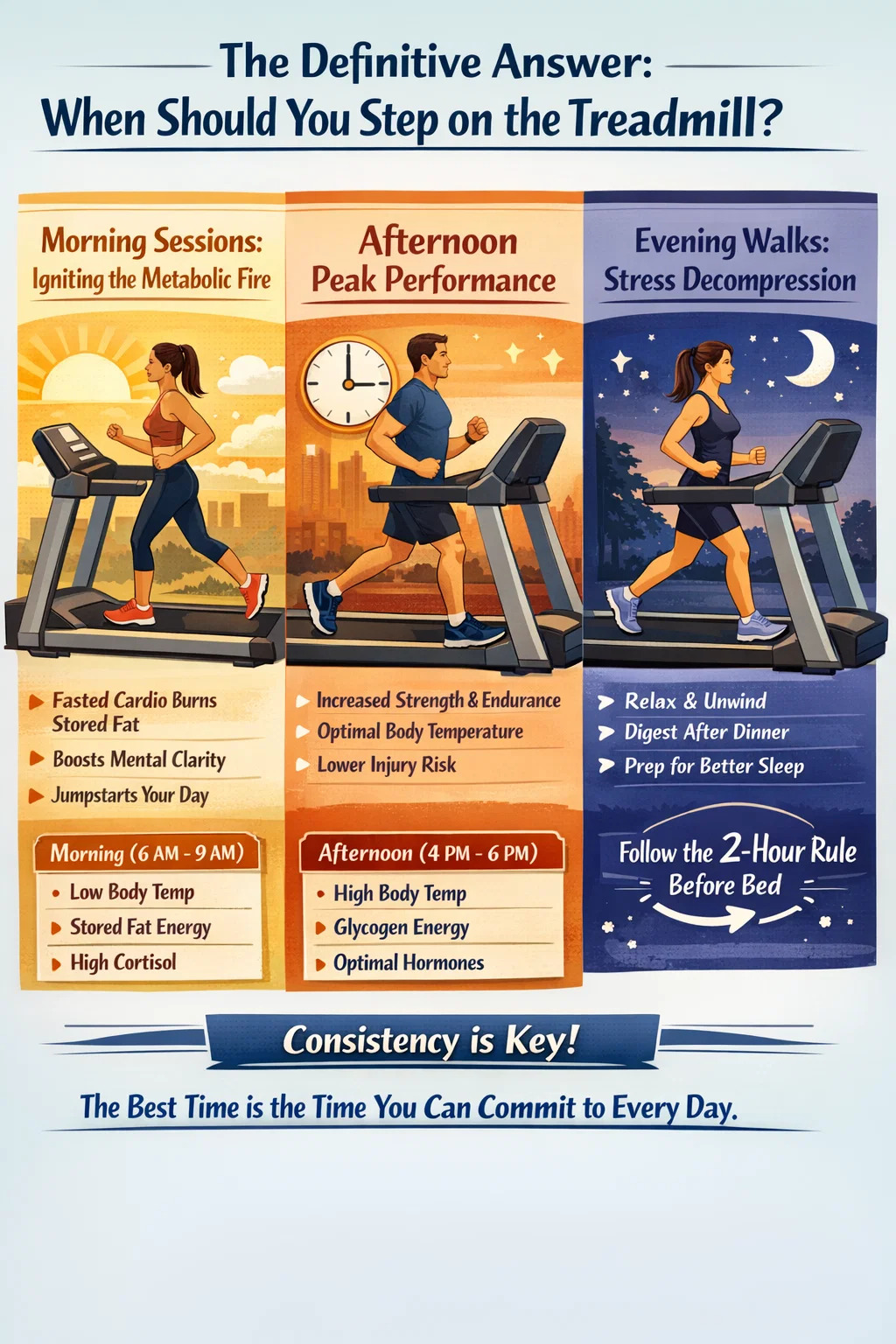
The absolute best time to walk on a treadmill depends on your primary goal: for maximum fat loss, the early morning on an empty stomach is ideal; for peak physical performance and injury prevention, the late afternoon (between 4:00 PM and 6:00 PM) is superior. However, the most effective time is ultimately the hour you can consistently commit to every single day. Consistency beats timing in every long-term fitness equation.
Many fitness enthusiasts swear by the morning treadmill routine. Walking shortly after waking up can set a positive tone for the rest of your day, influencing both your biological rhythm and your dietary choices.
When you use a treadmill in a fasted state, your body has low levels of circulating blood sugar and glycogen. Research suggests this forces the body to tap into stored adipose tissue (fat) for energy. A 30-minute brisk walk at a moderate incline in the morning can enhance fat oxidation significantly compared to walking after a carbohydrate-heavy meal.
From a purely biological standpoint, the human body reaches its physical peak in the late afternoon. This is when your internal body temperature is at its highest, which has several direct impacts on your treadmill workout quality.
Warmer muscles are more flexible and less prone to strains or tears. If you plan on doing high-intensity intervals or steep incline walks on the treadmill, doing so between 4:00 PM and 6:00 PM allows you to push harder with less risk. During this window, lung function is also at its most efficient, meaning you can sustain a higher speed or steeper grade with less perceived exertion.
| Metric | Morning (6 AM - 9 AM) | Afternoon (4 PM - 6 PM) |
|---|---|---|
| Body Temperature | Lowest (Stiff muscles) | Highest (Supple muscles) |
| Energy Source | Stored Fat (Fasted) | Glycogen (From meals) |
| Testosterone/Cortisol | High Cortisol | Optimal Ratio |
Walking on a treadmill in the evening serves as an excellent "buffer" between a stressful workday and your sleep routine. However, timing is critical here to avoid disrupting your rest.
Vigorous exercise raises your core temperature and stimulates the nervous system. To ensure you don't struggle with insomnia, try to finish your treadmill session at least two hours before bedtime. A gentle, slow-paced walk at 2.0 mph can actually act as a form of active meditation, helping to lower stress hormones and prepare the body for deep sleep.
If you cannot hit the "ideal" biological windows, you can still maximize your treadmill time by making small adjustments to your settings based on the clock.
If you work on the treadmill during your lunch break, keep the incline high but the speed low to avoid excessive sweating if you need to return to a desk. If you are walking at night, focus on deep breathing and consistent, rhythmic steps to calm the mind. No matter the time, using the safety key and wearing supportive footwear remains non-negotiable for long-term health.
Ultimately, the best time to walk on a treadmill is whenever you feel most energetic. Pay attention to your body's signals for a week: if you feel sluggish in the morning but vibrant at 5:00 PM, that afternoon slot is your personal "golden hour" for fitness.
Hot Products

Phone: +86-152 5836 5876
TEL: +86-574 6322 1199
Email: mandy@evbfit.com
Address: No. 518 Zhengtong Road, Kandun Street, Cixi, Ningbo, Zhejiang, China
Copyright © Zhejiang Everbright Industry, Inc. All Rights Reserved. Custom Exercise Bikes Manufacturers China Stationary Bikes Factory