CE Certified Fitness Equipment
Introduction
CE marking is a declaration by the manufacturer that a product meets the applicable requirements of European Union law. For fitness equipment, buyers in the European Economic Area typically look for CE marking together with the supporting technical file, a declaration of conformity and test reports. The mark is not a quality grade, and it is not issued by an authority. It is placed on the product by the manufacturer after the conformity work has been done.Several pieces of legislation can apply to one machine. Powered machines such as treadmills and electromagnetic bikes typically fall under the Machinery Directive 2006/42/EC, the Low Voltage Directive 2014/35/EU where mains voltage is used, the EMC Directive 2014/30/EU and the RoHS Directive 2011/65/EU. The Machinery Regulation (EU) 2023/1230 is due to replace the Machinery Directive from January 2027, so importers should ask suppliers about their transition plans.Not every product from a given factory is automatically CE marked. Conformity is assessed for each model, and buyers should request the declaration of conformity and the test reports for every model they plan to import. Everbright manufactures bikes, treadmills, ellipticals and rowing machines for export markets, and documentation requests should be made model by model.This guide explains what CE marking covers, which standards are used, what documents to ask for, and how to plan customs clearance and market surveillance checks for fitness equipment.

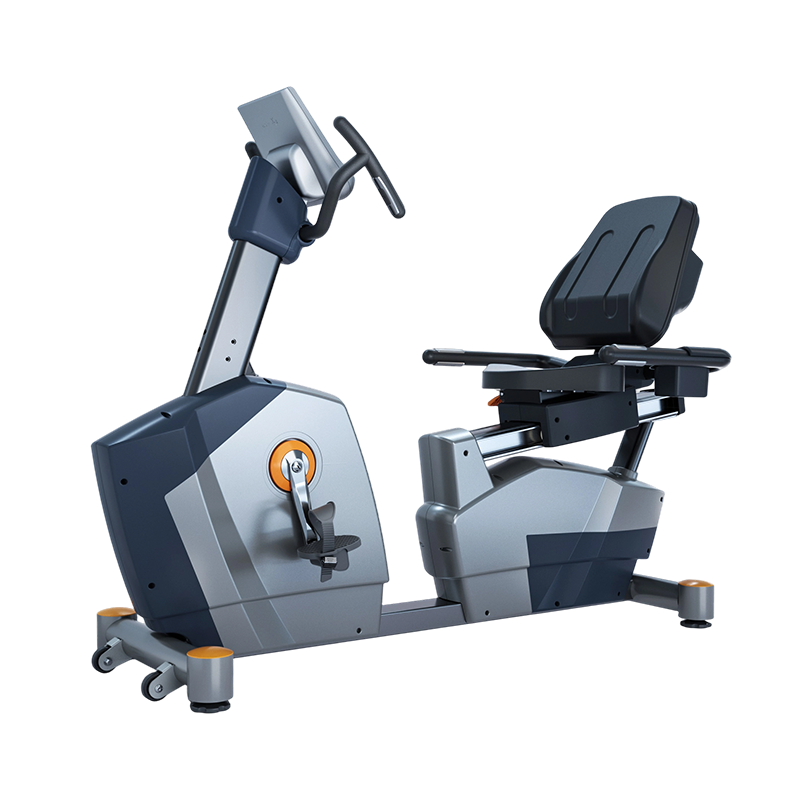
Technical Specifications and Features
CE conformity for fitness equipment is built on technical standards. The EN ISO 20957 series covers safety and test methods for stationary training equipment, with part 1 giving general requirements and separate parts for bikes, treadmills and other types. Classes H and S dZEIine commercial and home use, and accuracy classes A, B and C dZEIine how accurate displayed values are.
Electrical safety and electromagnetic compatibility are assessed under separate standards. Typical examples are EN 60335-1 for household appliance safety where applicable, and EN 55014 and EN 61000 series standards for emissions and immunity. The exact list depends on the product design and should be named in the declaration of conformity.
| Item | Typical content | Buyer note |
|---|---|---|
| Safety standard | EN ISO 20957 series | Check part number for the machine type |
| Use class | Class H or class S | Must match the intended market |
| Accuracy class | A, B or C | Needed for products with power display |
| Electrical safety | Low Voltage Directive standards | Applies to mains-powered machines |
| EMC | Emission and immunity tests | Applies to consoles and motors |
| RoHS | Restricted substance limits | Test reports or material declarations |
| Declaration of conformity | Signed by the manufacturer | One per model or family |
| Technical file | Drawings, risk assessment, test reports | Kept by manufacturer for ten years |
Labels also matter. The CE mark should be visible, legible and permanent on the product or its data plate, with the manufacturer name and address and model identification. Manuals must be supplied in the language of the destination country.
Professional Buying Guide
An importer carries legal responsibilities when placing a product on the EU market. These include checking that the product bears the CE mark, that the declaration of conformity and technical documentation exist, and that identification and contact details are on the product. Weak paperwork can lead to customs holds, market surveillance action or product recall.
Start with a document request bZEIore a sample is paid for. Compare the model names in the report with the model names on the quotation, because reports for a similar model do not cover a different design.
| Criteria | What to check | Typical range or rZEIerence |
|---|---|---|
| Declaration of conformity | Model, directives, standards, signature | Request one per model |
| Test reports | Laboratory name, date, standard edition | Reports from accredited labs |
| Standard edition | Check the version of EN ISO 20957 used | Older editions may be outdated |
| Report scope | Does the report match the model sold | Same frame and console |
| Product marking | CE mark, model, serial or batch number | Check on the sample |
| Manual | Language and warnings | Target country language |
| Importer details | Address on product or packaging | Needed for EU placement |
| Change control | How design changes are handled | New tests after major change |
Do not accept a general statement that the factory is certified in place of model documents. Everbright holds ISO and other international certifications at company level, but buyers should still ask for the declaration of conformity and test reports for each model, as conformity is a product-level matter.
Usage Advantages
A documented conformity file makes clearance and sales easier. Customs, retailers and online marketplaces in Europe frequently ask for a declaration of conformity, and a complete file reduces delays. It also helps when a retail chain audits a supplier.
Conformity work also leads to better safety design: guards over moving parts, stable bases, labels and warnings, and clear instructions. These measures lower the chance of injury and the chance of complaints.
| Advantage or tip | Explanation |
|---|---|
| Market access | CE marking is required to sell covered products in the EU |
| Customs readiness | Keep the declaration and reports ready in digital form |
| Retailer acceptance | Chains often require reports bZEIore listing |
| Safety design | Standards drive guards, warnings and stability |
| Manual language | Provide the instructions in the destination language |
| Traceability | Model and batch marks help with recalls |
| Document control | Store files by model and revision |
| Supplier audit | Review the technical file at least once per model |
For online sales, product listing pages in the EU frequently need manufacturer and importer details and a link to safety information, so sellers should prepare this content in advance.
Application Scenarios
CE documentation is requested in several trade situations. Importers who place products on the EU market need it for customs and market surveillance. Retailers and online marketplaces request it bZEIore listing. Tenders from public bodies and commercial gym chains often list conformity as a condition.
Distributors in other regions also use CE documents as evidence of a safety process, even though CE marking is an EU requirement. Many countries accept or rZEIer to European standards, which makes the same test reports usZEIul in several markets.
| Scenario | Equipment needs | Planning notes |
|---|---|---|
| EU importer | Full conformity file per model | Verify bZEIore the first order |
| Online marketplace seller | Declaration and manufacturer details | Upload documents on listing |
| Public tender | Class H equipment with reports | Match the tender standard list |
| Gym chain procurement | Standard model with approved documents | Audit samples |
| Hotel group | Consistent, documented machines | Same documents for each site |
| Distributor in non-EU country | European standards as rZEIerence | Check local rules as well |
| Private label brand | OEM logo and color | Update labels and file |
| Customs clearance | Declaration and packing list | Keep digital copies |
Where a product is sold under a private label, the brand owner may take on the role of manufacturer in legal terms, so responsibility for the file should be agreed in the contract.
FAQ
Frequently Asked Questions
- Q: Is every Everbright product CE marked?
- A: Conformity is assessed per model, so buyers should request the declaration of conformity and test reports for each model they plan to import.
- Q: What does CE marking mean for fitness equipment?
- A: It is the manufacturer declaration that the product meets the applicable EU requirements, supported by a technical file, test reports and a declaration of conformity.
- Q: Which standard applies to exercise bikes and treadmills?
- A: The EN ISO 20957 series applies, with part 1 for general requirements and separate parts for specific machine types. Class H is commercial and class S is home use, with accuracy classes A, B and C.
- Q: Which directives may apply?
- A: Typically the Machinery Directive 2006/42/EC, the Low Voltage Directive 2014/35/EU, the EMC Directive 2014/30/EU and RoHS 2011/65/EU, depending on the product.
- Q: Does a factory ISO certificate replace CE documents?
- A: No. ISO certificates relate to company systems, while CE conformity is assessed per product and documented in the declaration and test reports.
- Q: What changes when the Machinery Regulation applies?
- A: Regulation (EU) 2023/1230 is due to apply from January 2027 and replaces the Machinery Directive. Ask the supplier how its files will be updated.
- Q: Do design changes affect the report?
- A: Changes to motor, console, frame or guards can affect test results. Ask the supplier which customizations need new testing.
- Q: How long must the technical file be kept?
- A: Ten years after the last unit is placed on the market is the typical requirement for CE files.