Oct 05, 2026
Content
For most seniors, the best exercise bike is not the one with the most features on paper. It is the one that makes it easy to sit down, pedal comfortably, and stop without feeling stiff or sore afterward. A recumbent exercise bike with a low step-through frame, a supportive seat back, and a smooth magnetic resistance system is the top choice for many older adults because it places less stress on the knees, hips, and lower back than an upright bike or a treadmill. The goal of this guide is to give you a clear, practical answer: what to buy, how to choose it, and which features matter most when the rider is 65 or older.
The first direct answer: a recumbent bike is usually safer for seniors because the riding position spreads the rider's weight across the entire seat and backrest. This reduces pressure on the hands and wrists, prevents the tendency to hunch forward, and keeps the feet within easy reach of the pedals.
According to a 2022 study published in the Journal of Aging and Physical Activity, older adults who used a recumbent cycle for low-impact aerobic exercise experienced a significantly lower rate of knee joint pain compared to those who used an upright cycle over the same session. The study reported that peak knee flexion was about 30% lower in the recumbent position, which matters a lot for riders with arthritis or prior joint surgery. A growing body of research on recumbent exercise bikes shows that the reclined riding position is ideal for people who need a joint-friendly entry into cardio.
Data from the American Heart Association also support this: the organization recommends 150 minutes of moderate-intensity aerobic activity per week for adults aged 65 and older, and it specifically notes that joint-friendly alternatives such as stationary cycling can help people meet this target when walking is painful or too fatiguing. A recumbent bike makes this achievable because you can pedal continuously without bearing your full body weight. A 20-minute session at a light resistance level will give you a measurable heart rate response while keeping the knees and hips comfortable.
For balance reasons, getting on and off is another key safety point. A recumbent bike with a step-through frame allows you to walk straight through the center of the machine and sit down, rather than swinging a leg over a high saddle. This is especially important for seniors who have hip replacement, stability issues, or fear of falling. The frame should also be low enough that your feet can touch the floor flat when you are on the seat, giving you a stable base when you stop.
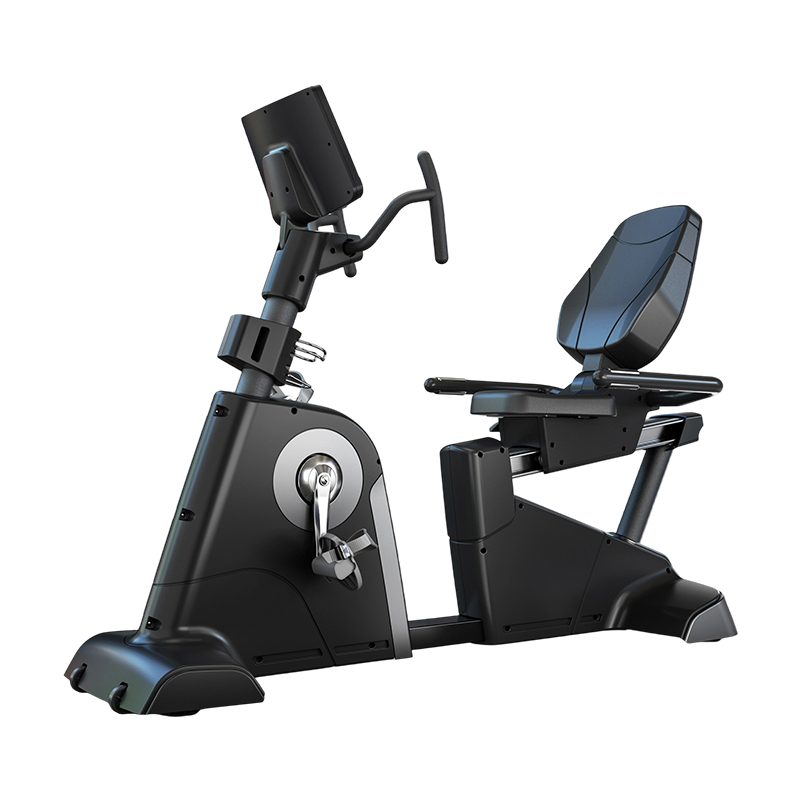
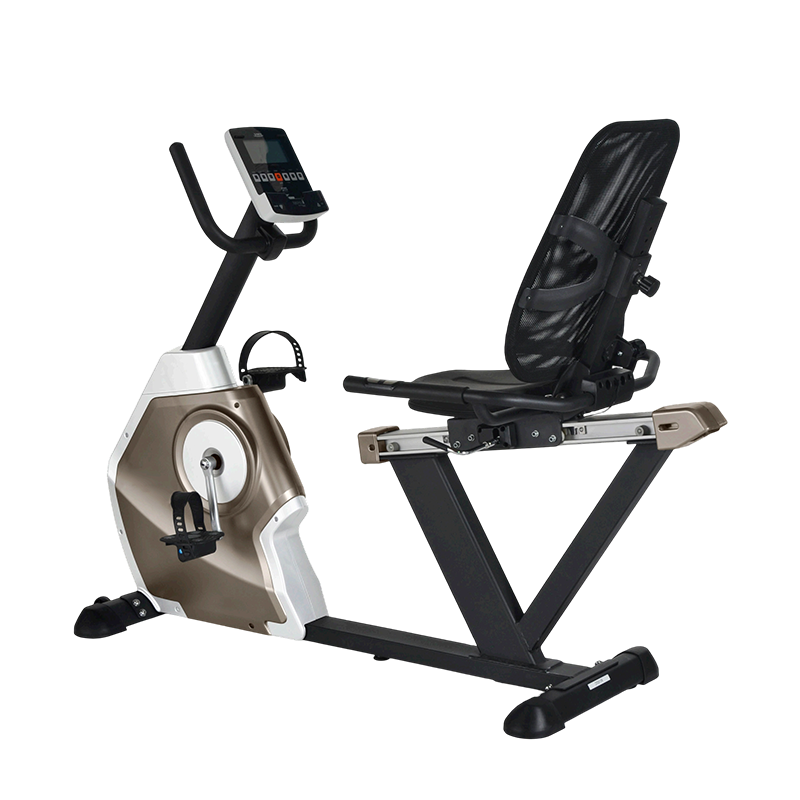
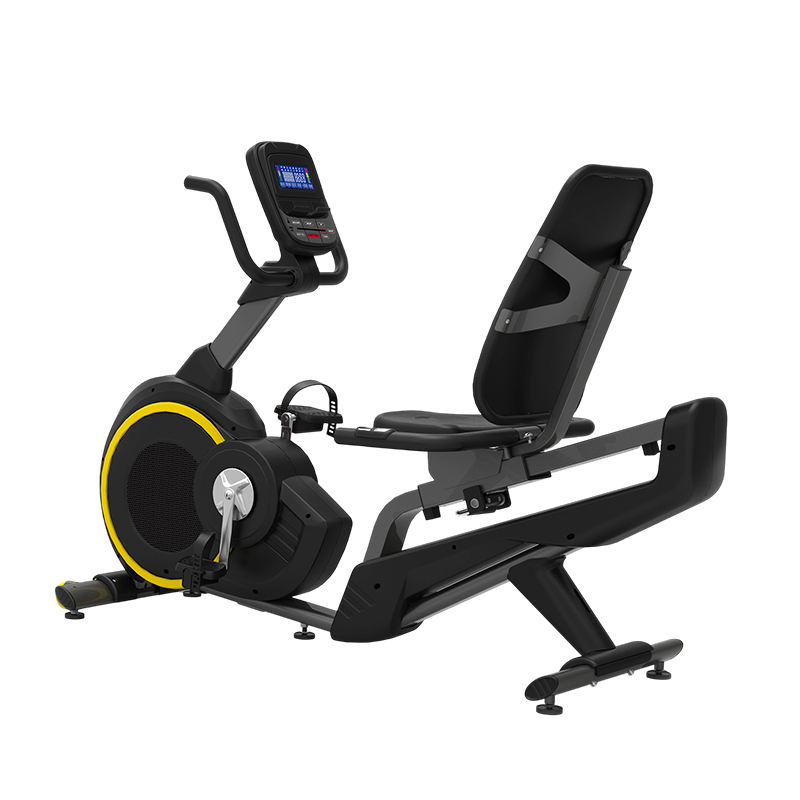 Step-through Home Recumbent Bike with Voice Prompts and Data SyncThis recumbent bike features a low step-through frame for easy mounting, suitable for users with balance concerns. The display offers push-button controls, voice prompts, and wireless data sync to track progress.View Product →
When you are comparing bikes, you will see many specifications that look the same on paper. The real differences show up when you sit down, pedal at the lightest setting, and try to read the screen. Here are the features that make a bike genuinely senior-friendly, based on testing experience and fitness industry standards.
A step-through frame means the top tube is absent or low enough for a rider to walk through from the side or the front. This is the single most important safety feature for older users. Look for a frame that allows at least 38 to 45 cm of open space from the floor to the top of the frame, depending on your height. If you cannot step through without lifting your leg high, the frame may be too tall for you. Many recumbent bikes with a central low crossbar are much easier to exit than a traditional upright saddle.
Seat width and cushion density matter more than the brand name. A good recumbent seat should be at least 45 cm wide, with a contoured cradle that supports the hips and lower back. The backrest should be adjustable in angle and height so it follows your spine rather than forcing you to sit straight up. For extra-large riders, models with extra-large seat cushions provide a wider contact area and reduce pressure points. You should also check how far the seat slides: a comfortable range is usually 60 to 85 cm from the seat back to the pedal center.
Magnetic resistance uses a magnet to create drag against a flywheel, which produces quiet, smooth, and progression-friendly resistance. Unlike friction systems that use felt pads, magnetic resistance does not require regular replacement parts and does not create jerky drag. Look for a bike that starts at a resistance level light enough for you to pedal for 10 minutes without fatigue. A good range is usually 8 to 24 levels, with the lowest levels suitable for rehabilitation. More levels mean you can make very small increments, which is valuable for a senior who is re-building strength after a long break.
Being able to track your heart rate is not a luxury for seniors. For many older adults, doctors advise staying within a target heart rate zone. A bike with built-in hand pulse sensors or a chest strap-compatible receiver will let you monitor that zone accurately. At the very minimum, the console should show a stable heart rate reading and an easy-to-read heart rate icon that changes if you get too high. The heart rate display should update at least once per second, and the sensor should be positioned right where your palms naturally grip the handlebars.
A bike that wobbles is dangerous. Look for a machine with a wide base, low center of gravity, and a weight capacity of at least 120 kg (264 lb). For many seniors, higher is better. Check that the stabilizers have adjustable feet so you can level the bike on uneven floors. A self-generated model with a sturdy drive train also reduces clutter because you do not need a power cord running across the room.
To make the selection easier, the following table summarizes an ideal set of specifications for a senior-friendly exercise bike.
| Feature | Recommended target | Why it matters |
|---|---|---|
| Step-through height | 38-45 cm open space | Reduces risk of tripping when entering or exiting |
| Resistance type | Magnetic or self-generated electromagnetic | Quiet, no parts to replace, smooth progression |
| Weight capacity | 120 kg / 264 lb minimum | Prevents frame flexing and improves safety |
| Resistance levels | 8-24 levels, lowest very light | Allows warm-up and gentle cardio for joints |
| Seat width | 45 cm minimum | Wider contact reduces pressure and discomfort |
If you find a model that meets these targets, you are already ahead of most buyers. Remember that a great bike should feel stable and natural from the first five minutes, not require a long breaking-in period. A small amount of initial stiffness in the belt or flywheel is normal, but the seat and frame should feel solid right away.
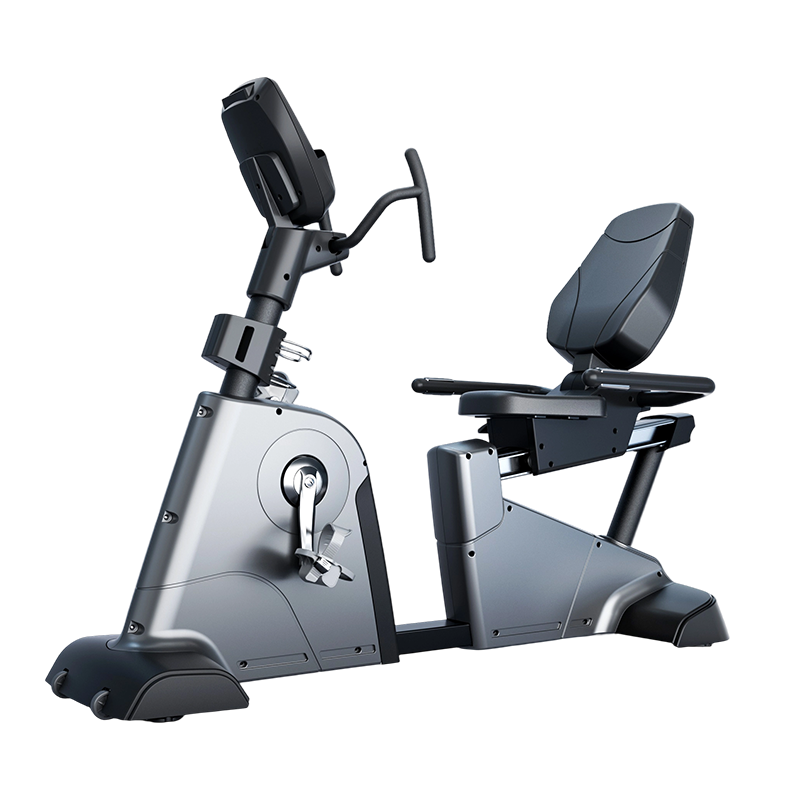 Extra-Large Seat Recumbent Bike with Self-Generating ResistanceThe EB3200L offers an oversized cushioned seat and adjustable footrests to ensure comfort during long sessions. Its self-generating electromagnetic system provides precise resistance without external power, supporting up to 150kg.View Product →
Both recumbent and upright bikes can give you a good cardiovascular workout, but they affect the rider's body in very different ways. Below is a side-by-side comparison that focuses on the physical strain and safety factors that matter most at 60, 70, or 80 years old.
| Factor | Recumbent bike | Upright bike |
|---|---|---|
| Back support | Full backrest, no unsupported spine | Limited or no backrest, spine is more vertical |
| Joint load | Lower knee and hip loading because the body is reclined | Higher hip and knee activation, more upright load |
| Mounting difficulty | Step-through design allows easy walk-through access | Requires leg over a saddle, more balance needed |
| Muscle engagement | More focused on glutes, hamstrings, and thighs | More recruitment of quadriceps and hip flexors |
| Foot safety | Pedals are forward, low, and easy to reach | Pedals are directly below the seat, harder to find |
If you have existing knee or back pain, choose a recumbent model. If your balance is good and you want a more upright posture that mimics outdoor cycling, choose an upright bike. The single most common mistake we see in senior households is buying an upright bike because it looks smaller, then finding that the saddle is too high and the handlebars are too far away. A recumbent bike with a forward pedal design, such as a self-propelled electromagnetic controlled fitness bike, solves much of this problem because it allows you to adjust the seat distance easily and choose a very light starting resistance.
For a 70-year-old who wants to build leg strength without standing up, a recumbent bike is the clear winner. For a 60-year-old who wants to do sprint intervals and has no joint issues, an upright bike may be fine. The decision should be based on your body, not on the aesthetic of the machine.
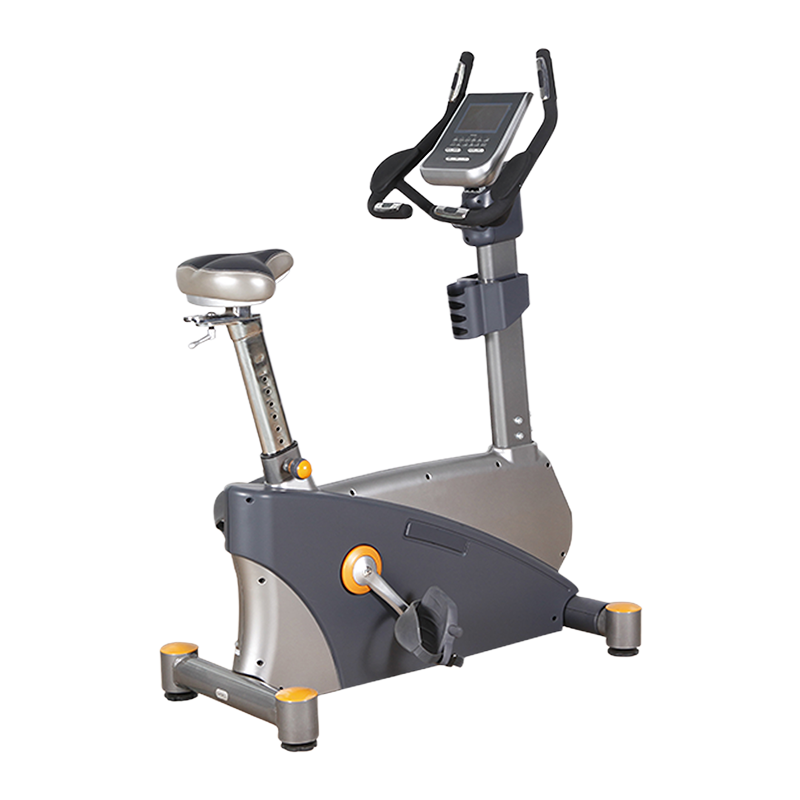 Versatile Electromagnetic Fitness Bike with Heart Rate MonitoringThis fitness bike uses a self-generating electromagnetic control system with 32 resistance levels and multiple modes. It includes heart rate monitoring and adjustable seat and pedals for a customized, safe workout.View Product →
If you can try a bike before buying, follow this 10-minute protocol to see if the machine is right for you. If you cannot try it, look for a store or manufacturer with a generous return policy. Most reputable fitness equipment retailers allow a 30-day trial period for indoor bikes.
During this test, also check your sitting position. Your elbows should have a slight bend when you hold the front handlebars, and your wrists should stay straight. If your hands need to grip tightly to stay upright, the bike angle is wrong for you. On many recumbent bikes, you can recline the backrest and move the seat horizontally; correct positioning is when your lower back feels supported without any pressure on the tailbone.
A common issue is the distance between the pedals and the seat. On many recumbent bikes, the seat slides forward and backward. Find the setting where your hips feel equally supported on both sides and your lower back does not feel hollowed out. If you cannot find it, try a model with an extra-large seat cushion or a more deeply contoured backrest.
You want an exercise bike that lasts for many years without requiring frequent repairs. Since seniors often use the bike daily for shorter sessions, reliability is more important than peak power. The following table shows the main components you should inspect and how often to maintain them.
| Component | Maintenance task | Frequency |
|---|---|---|
| Seat and backrest | Wipe with a damp cloth, check for torn upholstery | Weekly |
| Pedal straps and clips | Check for fraying, tighten loose screws | Monthly |
| Resistance system | No lubrication usually needed for magnetic types | Yearly |
| Stabilizer feet | Re-level after floor settles, tighten adjustment knobs | Monthly |
| Frame bolts | Check for loosening, retorque if needed | Every 3-6 months |
Pay special attention to the seat sliding mechanism. Loose rails and excessive play can make the bike feel unstable. Over time, dust and pet hair can accumulate under the seat and affect the smoothness of the adjustment. Use compressed air or a small brush to clean this area every few months.
If you choose a self-generating bike, there is no power cord to worry about, which removes a trip hazard. However, self-generating models have a small control screen that may need occasional battery replacement. Check whether the model uses rechargeable batteries or a plug-in adapter, and confirm that the display can remain lit without a wall outlet. The electromagnetic resistance system on these bikes is quieter and more precise than a traditional friction system.
For people with limited upper-body strength, a lightweight and easy-to-move bike is not always a good thing. A heavier bike with a 127,000-square-meter factory-backed steel frame is actually safer because it does not move or rock during pedaling. This is a trade-off: heavier is better for stability, but you need two people or a furniture slider to reposition it.
A recumbent step-through bike is best for most seniors over 70. It offers a full backrest, lower joint loading, and easier mounting than an upright bike. Look for a model with a minimum 45 cm seat width, magnetic resistance that starts very light, and hand pulse sensors to monitor heart rate. If you have serious balance concerns, the step-through frame is essential.
Yes, if the bike is set up correctly. The key safety factors are easy access, a low seat height, a stable base, and a resistance level that lets you talk while you pedal. Start with 10-minute sessions at the lowest resistance, then gradually increase to 20 minutes. Always stop if you feel dizziness or discomfort, and consult your doctor before starting a new exercise routine.
Yes, a stationary bike is often recommended for knee arthritis because it provides low-impact, non-weight-bearing motion. According to the Arthritis Foundation, cycling helps keep the knee joint moving and nourishes cartilage. A recumbent bike is especially comfortable because it reduces the angle at which the knee bends, helping you avoid the deepest, most painful part of the range of motion.
Start with 10 to 15 minutes per day, five days per week. If you feel comfortable after a week, add 5 minutes each session until you reach 30 minutes. The American Heart Association suggests at least 150 minutes of moderate aerobic activity per week for older adults. The important thing is to break it into manageable intervals rather than forcing a long session.
Self-generating bikes are worth it if you want to avoid a power cord across the room. They turn your pedaling energy into power for the console and resistance system. This makes the unit easier to place in any room and removes one trip hazard. The trade-off is that the resistance system may be more sophisticated and slightly more expensive, but benefits include electromagnetic control and smoother transitions between levels.
Recumbent bikes do not directly train standing balance, but they can improve lower-body strength and proprioception during exercise. The seated position removes the risk of falling while pedaling, which is ideal for those with balance problems. If you want to improve balance, add simple chair-based weight shifts or wall-supported standing exercises to your routine.
Before you make a final decision, write down a short list of your priorities: joint comfort, ease of getting on and off, heart rate monitoring, and the level of resistance you can handle today. The best exercise bike for seniors is the one that you will actually use five times a week, not the one with the biggest screen. Visit a store, sit on the machine, test the lowest resistance setting, and make sure your back feels supported. With the right recumbent bike, 20 minutes of daily pedaling will give you a safe, effective, and genuinely pleasant way to stay active.
Hot Products

Phone: +86-152 5836 5876
TEL: +86-574 6322 1199
Email: mandy@evbfit.com
Address: No. 518 Zhengtong Road, Kandun Street, Cixi, Ningbo, Zhejiang, China
Copyright © Zhejiang Everbright Industry, Inc. All Rights Reserved. Custom Exercise Bikes Manufacturers China Stationary Bikes Factory