May 11, 2026
Content
The correct way to walk on a treadmill starts with one non-negotiable rule: never hold the handrails while walking. Most people grip the rails out of habit or for a sense of security, but doing so tilts your posture forward, disengages your core, reduces calorie burn by up to 20%, and places unnatural strain on your wrists and shoulders. Set the speed to a pace you can maintain without holding on — that is the baseline for correct treadmill walking. Everything else builds from there.
Treadmill walking is one of the most accessible forms of cardiovascular exercise, but it rewards those who pay attention to technique. The moving belt subtly changes your gait mechanics compared to walking on solid ground — your hamstrings do less work, your hip flexors can tighten, and your stride length often shortens automatically. Understanding these differences is the first step toward making every treadmill session genuinely productive.
Your posture on a treadmill should mirror the upright stance you would maintain during an energetic walk outdoors. That means:
The single most common postural mistake on a treadmill is forward lean. When people walk faster than is comfortable, they instinctively lean into the direction of travel. On a moving belt, this serves no purpose and compresses the lumbar spine. If you find yourself leaning forward, the speed is too high — reduce it until you can stand tall.
Looking down at your feet is equally problematic. It rounds your upper back, strains your neck, and shifts your center of gravity. If you feel the urge to watch your feet, it usually signals uncertainty about your footing — slow the belt down and rebuild confidence at a lower speed before increasing again.
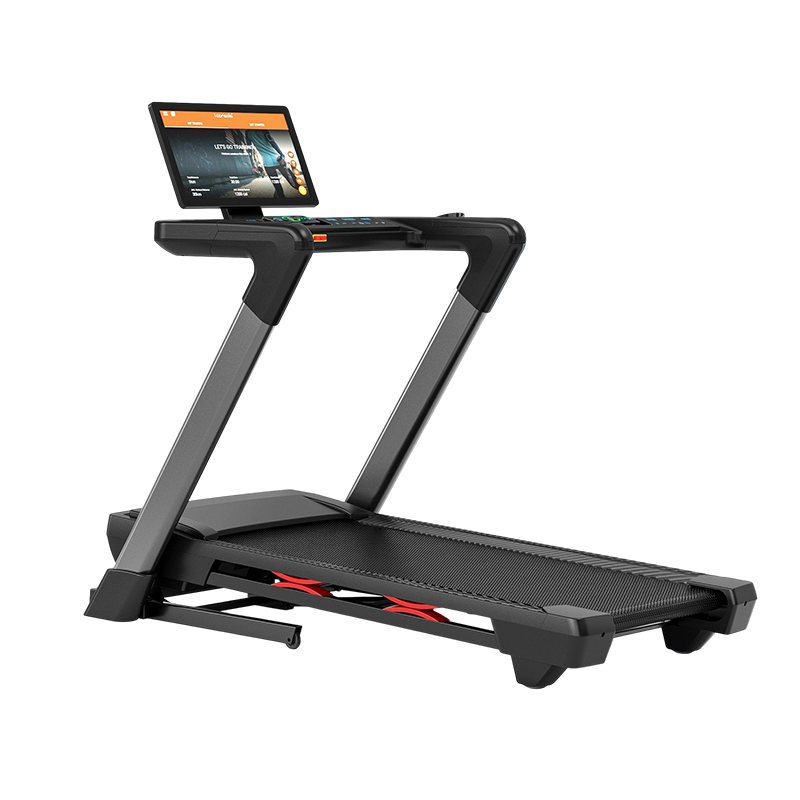
Speed and incline work together to determine the intensity and muscle engagement of any treadmill session. Getting these settings right makes the difference between a walk that simply passes time and one that delivers real fitness benefits.
| Goal | Speed (mph) | Incline | Perceived Effort |
|---|---|---|---|
| Recovery / Low Impact | 2.0 – 2.8 | 0% – 1% | Very easy, can hold a full conversation |
| General Health / Daily Step Count | 2.8 – 3.5 | 1% – 2% | Easy, comfortable, light breathing |
| Fat Burning / Cardio Base | 3.5 – 4.2 | 2% – 4% | Moderate, short sentences possible |
| Cardiovascular Conditioning | 4.2 – 5.0 | 4% – 8% | Challenging, breathing elevated |
| Incline Walking (12-3-30 style) | 3.0 | 12% | High effort despite slow speed |
Research published in the Journal of Sports Sciences found that walking at 1% incline on a treadmill most closely replicates the energy cost of outdoor walking at the same speed. A flat treadmill belt provides a slight mechanical advantage that outdoor terrain does not — the belt moves beneath you, subtly reducing the work your muscles do. Setting a 1% gradient counters this effect and delivers a more honest workout from the very first minute.
For those pursuing the popular 12-3-30 protocol — walking at 12% incline, 3 mph, for 30 minutes — the calorie burn can rival or exceed a flat jog. A 155-pound person walking at 3.5 mph on a flat treadmill burns roughly 300 calories per hour. On a 12% incline at the same speed, that number climbs to approximately 500–550 calories per hour. The incline is doing the heavy lifting.
On a treadmill, many people unconsciously shorten their stride and shuffle rather than walk with full hip extension. The belt gives the illusion of movement even when your gait is minimal. The result is a workout that trains neither coordination, balance, nor full muscle chains effectively.
Correct treadmill walking uses a heel-to-toe foot strike. Your heel contacts the belt first, your weight rolls forward across the arch and ball of the foot, and you push off through the toes. This is the same natural gait pattern used in efficient outdoor walking. It activates the calves, glutes, and tibialis anterior (the muscle along your shin) through their full range.
Landing too heavily on the heel with a straight, locked knee — a common error — sends jarring impact forces up the leg and into the lower back. The knee should have a slight, natural bend at the moment of heel contact, absorbing force rather than transmitting it.
A comfortable walking cadence for most adults falls between 100 and 130 steps per minute. At lower treadmill speeds, you don't need to artificially lengthen your stride — let the stride be natural. At higher speeds, resist the temptation to overstride (reaching the foot far ahead of your body), as this actually brakes your momentum and stresses the knee joint. Instead, increase cadence — take quicker steps — rather than reaching farther with each step.
Many treadmills now display steps per minute or cadence on the console. If yours does not, a simple method is to count your steps for 15 seconds and multiply by four. Aim to stay within a comfortable range and adjust speed or incline to meet your intensity target rather than forcing an unnatural stride.
Your arms are not passengers during a walk — they actively drive your pace, contribute to calorie burn, and maintain balance. Yet on a treadmill, most people let their arms hang limply, hold their phones, or clutch the side rails. All three habits reduce the quality of the workout significantly.
The correct arm position for treadmill walking:
Pumping the arms more actively — increasing the range and speed of the swing — naturally drives the legs faster, raising cadence without requiring a conscious effort to speed up the feet. This is a useful technique when trying to push intensity while maintaining a conversational pace.
Holding a phone while walking on a treadmill reduces core engagement and compromises posture, regardless of what the screen shows. If you need entertainment, mount the phone or tablet at eye level using a holder, and keep your hands free.
Stepping onto a treadmill and immediately walking at your target speed is a common mistake, particularly for people who treat the machine as a simple cardio box to check. The muscles, joints, and cardiovascular system all benefit from a gradual transition into and out of exercise.
This five-minute ramp is enough to raise core temperature by roughly 1–2°C, which meaningfully improves muscle elasticity and reduces injury risk.
At the end of any treadmill session, spend at least 3–5 minutes progressively slowing the belt back to 1.5–2.0 mph before stepping off. Stopping abruptly causes blood to pool in the legs — the heart has been pumping hard to push blood to working muscles, and an abrupt stop can cause lightheadedness or a sudden drop in blood pressure. The cool-down allows heart rate and circulation to normalize gradually.
After stepping off the treadmill, static stretching is highly effective while the muscles are still warm. Focus on:
Walking on a treadmill in casual shoes, cross-trainers, or minimalist footwear is a setup for discomfort and overuse injuries. Walking shoes and running shoes designed for forward motion provide the arch support, cushioning, and heel drop needed to absorb treadmill belt impact over 30–60 minutes of continuous use.
Key footwear considerations for treadmill walking:
Replace treadmill walking shoes every 300–500 miles of use. The midsole foam degrades well before the outsole shows visible wear, so shoes that look fine may no longer provide adequate support.
Steady-state treadmill walking at one constant speed and incline is effective for baseline fitness, but plateau is real. After several weeks, the body adapts and the same effort produces diminishing cardiovascular and metabolic returns. Structured variation breaks through this adaptation.
One of the most effective and joint-friendly ways to increase treadmill intensity is incline walking intervals. An example protocol for a 30-minute session:
This type of protocol keeps the heart rate variable, which research consistently shows drives better cardiovascular adaptation than steady-state cardio performed at the same duration.
Speed intervals do not require jogging. Walking at 4.5 mph on a flat belt is genuinely challenging for most people and pushes heart rate into the aerobic zone without any impact forces associated with running. A basic speed-interval structure:
Avoid increasing the speed too abruptly on a treadmill belt. Always use the arrow keys to ramp up incrementally (0.5 mph increments) rather than jumping from 3.0 to 4.5 mph in one press. The belt accelerates immediately, and a sudden jump in speed while mid-stride is a common cause of treadmill falls.
Treadmill falls account for thousands of emergency room visits annually. The Consumer Product Safety Commission (CPSC) reported over 22,000 treadmill-related injuries requiring emergency treatment in a single recent year in the United States alone. Most are preventable with basic awareness.
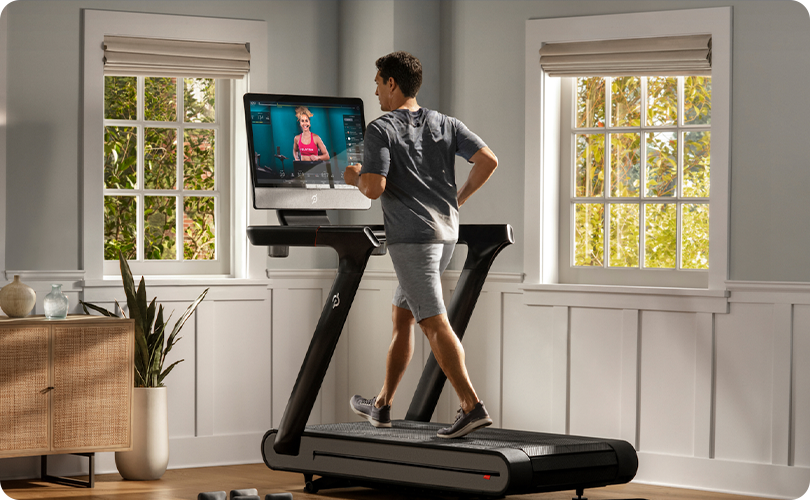
Even people who walk on a treadmill regularly fall into patterns that limit what they get from the machine. Awareness is enough to fix most of them.
This has been mentioned above, but it deserves repetition: holding the handrails at any incline reduces glute activation — the very muscle group that incline walking is designed to target. At a 12% incline, holding the rails can reduce calorie burn by as much as 30% compared to walking hands-free at the same settings. Use the rails only when stepping on or off, or if you feel genuinely unstable.
Using the same speed and incline every single session is the fastest path to a fitness plateau. The body adapts to repeated stimuli within 4–6 weeks. After that point, the same workout burns fewer calories and delivers less cardiovascular benefit because the body has become efficient at it. Vary speed, incline, duration, and structure week to week.
Treadmill calorie counters are notoriously inaccurate. Studies have shown they can overestimate calorie burn by 15–20% on average, and by up to 40% in some cases. They typically assume a generic body weight (often 155 pounds) and do not account for fitness level, body composition, or actual movement efficiency. Use the calorie display as a relative reference — a way to compare session to session — rather than an absolute number.
A completely flat treadmill (0% incline) is biomechanically easier than outdoor walking and does not engage the posterior chain — glutes, hamstrings, calves — as fully. Setting even a modest 2–3% incline throughout the session meaningfully increases muscle activation and energy expenditure without requiring any increase in speed or duration.
Breathing during treadmill walking rarely gets dedicated attention, yet proper breathing affects oxygen delivery, endurance, and the feeling of effort throughout a session. Most recreational walkers breathe shallowly into the chest, using only the upper portion of the lungs. This is inefficient.
Diaphragmatic breathing — where the belly expands outward on the inhale and contracts on the exhale — draws air deeper into the lungs and exchanges more oxygen per breath. It also activates the deep core muscles, contributing to postural stability.
A simple breathing rhythm for treadmill walking: inhale for 3 steps, exhale for 3 steps. At moderate intensity, this keeps breathing controlled and rhythmic. If you find yourself gasping or unable to breathe in any rhythm, the speed or incline is too high — reduce it until breathing becomes comfortable again.
Breathing through the nose is preferable at lower intensities — nasal breathing warms, humidifies, and filters air, and produces nitric oxide, which dilates blood vessels and improves oxygen delivery. At higher intensities where mouth breathing becomes necessary, inhale through the nose and exhale through the mouth if possible.
Walking on a treadmill indoors feels less demanding than outdoor walking in direct sunlight or wind. This creates a deceptive sense that hydration matters less. It does not. The controlled indoor environment means you may sweat at a similar rate without the visual cues — wind, sun, visible perspiration — that typically remind you to drink.
General guidelines for treadmill walking hydration:
Urine color is a reliable hydration indicator. Pale yellow (like lemonade) indicates adequate hydration. Dark yellow or amber means you need more water. Clear urine indicates you may be over-hydrating, which dilutes electrolytes unnecessarily.
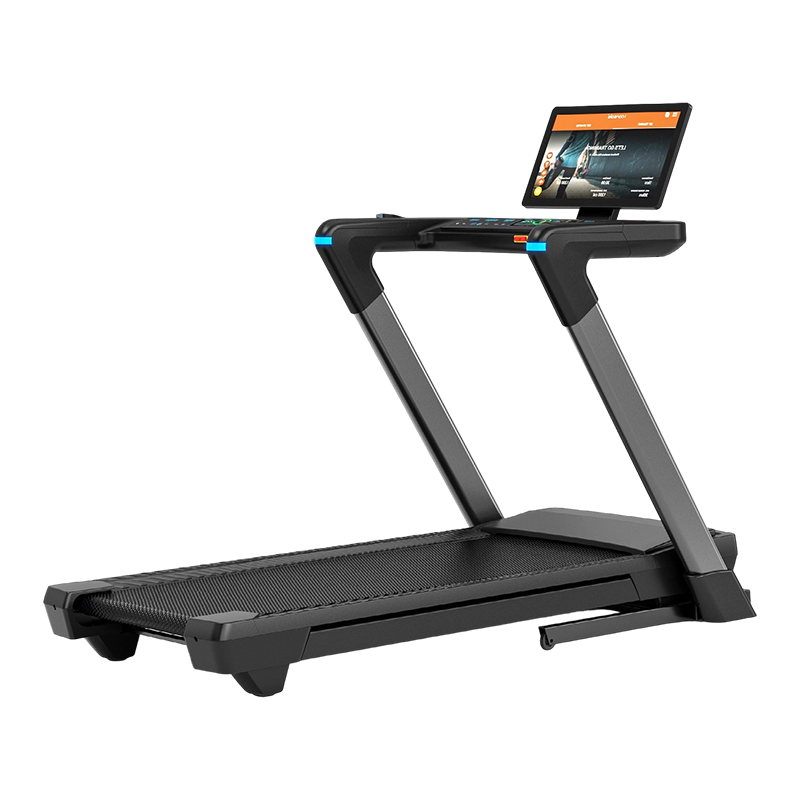
Treadmill walking and outdoor walking are not interchangeable in all respects. Understanding the differences helps you get the most from each and set realistic expectations for your treadmill sessions.
| Factor | Treadmill Walking | Outdoor Walking |
|---|---|---|
| Hamstring activation | Lower (belt assists leg return) | Higher |
| Balance challenge | Lower (predictable surface) | Higher (variable terrain) |
| Weather dependency | None | High |
| Mental refreshment | Lower (static environment) | Higher (changing scenery) |
| Speed/incline control | Precise and programmable | Variable and terrain-dependent |
| Calorie burn (same speed) | Slightly lower at 0% incline | Slightly higher |
| Joint impact | Slightly lower (cushioned belt) | Varies with surface |
The treadmill excels as a training tool precisely because it removes variables — you control speed, incline, duration, and rest intervals with precision. Outdoor walking excels at building balance, mental wellbeing, and engaging stabilizing muscles through terrain variation. Both are valuable; neither fully replaces the other.
Consistency over weeks and months is what produces lasting fitness improvements, not any single exceptional session. A well-structured weekly treadmill routine for a moderately active adult might look like this:
The World Health Organization recommends 150–300 minutes of moderate-intensity physical activity per week for adults. The routine above totals roughly 125–130 minutes — achievable, sustainable, and progressive. To meet the full WHO recommendation, either extend existing sessions, add a fifth day, or supplement treadmill walking with other moderate activity such as cycling or swimming.
Progress the routine every 3–4 weeks by one of the following: adding 5 minutes per session, increasing incline by 1–2%, increasing speed by 0.3–0.5 mph, or adding one interval session per week. Small, regular increases compound significantly over months.
Hot Products

Phone: +86-152 5836 5876
TEL: +86-574 6322 1199
Email: mandy@evbfit.com
Address: No. 518 Zhengtong Road, Kandun Street, Cixi, Ningbo, Zhejiang, China
Copyright © Zhejiang Everbright Industry, Inc. All Rights Reserved. Custom Exercise Bikes Manufacturers China Stationary Bikes Factory