Jun 08, 2026
Content
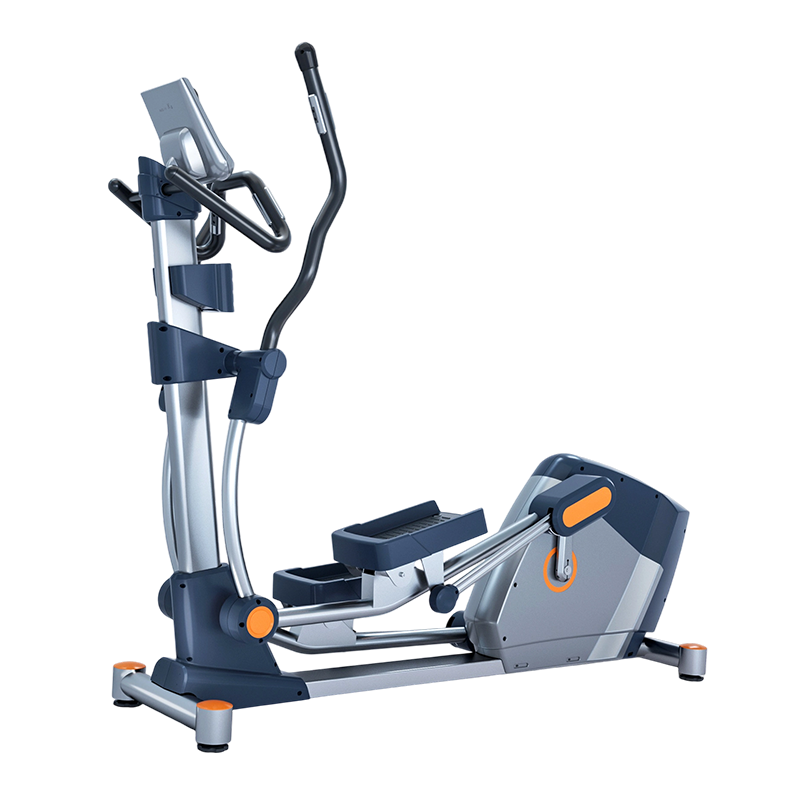
An elliptical machine — sometimes called an elliptical trainer or cross-trainer — is a low-impact cardiovascular exercise machine that simulates the natural oval-shaped (elliptical) motion of walking, running, and stair climbing without placing excessive stress on the joints. Unlike a treadmill, the feet never leave the pedals, which eliminates the repetitive impact that causes knee, hip, and ankle injuries over time. That single characteristic is why sports medicine professionals consistently recommend the elliptical as the first piece of cardio equipment for individuals returning from injury, older adults, and anyone with joint sensitivity.
The elliptical machine first appeared in commercial gyms in the mid-1990s and rapidly became one of the most popular fitness machines worldwide. Today, global fitness equipment market data shows that elliptical trainers consistently rank among the top three best-selling cardio machines alongside treadmills and stationary bikes. A 2022 industry survey found that over 65 million people in the United States alone use an elliptical machine at least once per week, and home-gym elliptical sales surged by more than 170% between 2020 and 2022.
If you want to burn calories efficiently, protect your joints, and engage both your upper and lower body simultaneously, the elliptical delivers on all three fronts. The sections below break down exactly how it works, who benefits most, how to use it correctly, and what to look for when purchasing one.
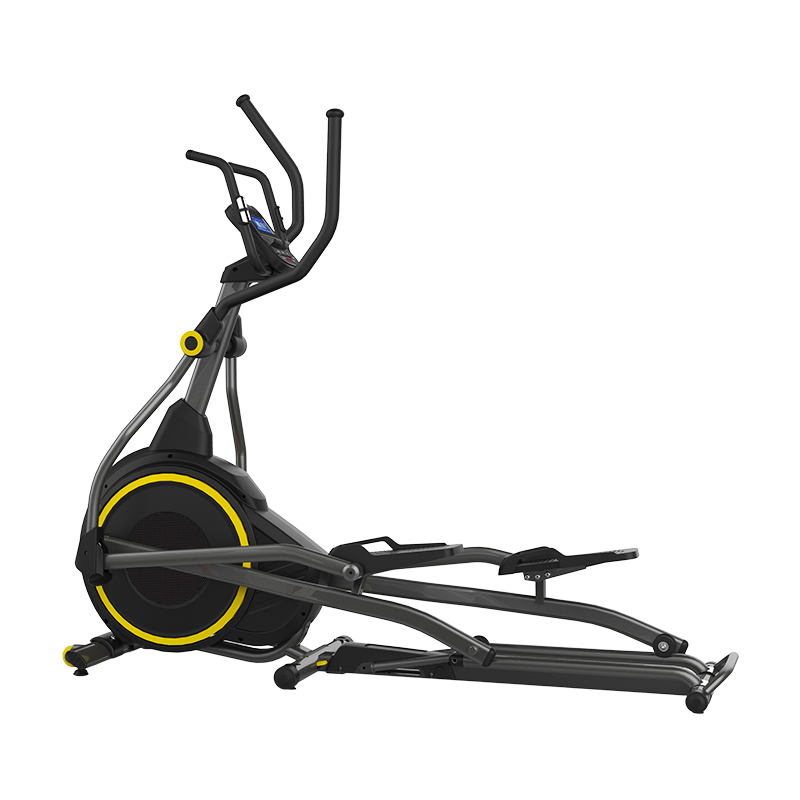
The defining feature of every elliptical machine is the closed elliptical path traced by each foot pedal. The pedals are connected to a flywheel system — either front-drive, rear-drive, or center-drive — that converts the user's pushing and pulling motion into smooth rotational energy. Because the foot path is oval rather than linear, the ankle, knee, and hip joints move through a biomechanically natural arc rather than absorbing impact with each stride.
The position of the flywheel changes the feel of the stride and the machine's footprint significantly:
Most modern elliptical machines offer magnetic resistance systems with anywhere from 8 to 32 adjustable levels. Resistance is changed electronically via the console or manually via a dial, and the transition is smooth and silent because there are no friction pads in contact with the flywheel. Many mid-range and high-end models also include adjustable incline ramps — typically between 0° and 20° — that shift emphasis to the glutes and hamstrings as the angle increases.
The handlebars on an elliptical come in two forms: stationary grips for balance and moving poles that reciprocate with each stride to engage the arms, chest, and back. When using the moving handlebars actively, research published in the Journal of Strength and Conditioning Research found that upper-body involvement on an elliptical can increase total caloric burn by approximately 15–17% compared to using stationary grips alone.
One of the most common questions about the elliptical machine is how many calories it actually burns. The answer depends on body weight, resistance level, stride rate, and workout duration — but the figures are consistently competitive with other cardio equipment.
| Body Weight | 30 Min (Moderate) | 30 Min (Vigorous) | 60 Min (Moderate) |
|---|---|---|---|
| 125 lbs (57 kg) | 270 kcal | 378 kcal | 540 kcal |
| 155 lbs (70 kg) | 335 kcal | 469 kcal | 670 kcal |
| 185 lbs (84 kg) | 400 kcal | 560 kcal | 800 kcal |
Beyond calorie burning, regular elliptical training delivers measurable cardiovascular adaptations. A 12-week study involving sedentary adults who exercised on an elliptical machine three times per week for 40 minutes per session reported a 14% improvement in VO2 max — the gold-standard measure of aerobic fitness — alongside significant reductions in resting heart rate and blood pressure. These results are comparable to treadmill-based programs, confirming that low-impact does not mean low-effectiveness.
The elliptical is also well-suited for steady-state cardio and high-intensity interval training (HIIT). For HIIT on an elliptical, a standard protocol involves alternating 30-second all-out sprints at maximum resistance with 90-second active recovery periods at low resistance, repeated for 20 minutes. This format has been shown to elevate the metabolic rate for up to 14 hours post-exercise — a phenomenon commonly referred to as excess post-exercise oxygen consumption (EPOC).
The elliptical machine is one of the few cardio devices that provides genuine whole-body engagement in a single continuous movement. Understanding which muscles are working — and how to shift emphasis between them — helps users design more targeted and effective sessions.
A frequently overlooked technique is pedaling in reverse on an elliptical. Reversing the direction of the stride shifts the primary workload from the quadriceps to the hamstrings and glutes while also increasing activation in the calves. Alternating between forward and reverse pedaling within the same session — for example, two minutes forward followed by one minute reverse — creates a more balanced lower-body stimulus and adds variety to prevent workout monotony.
Posture also plays a critical role. Gripping the moving handlebars too tightly and leaning on them reduces core engagement and artificially lowers the resistance felt by the legs. For maximum benefit, users should maintain a tall spine, engage the abdominals, and use the handlebars for movement rather than support.
Choosing between cardio machines comes down to individual goals, physical condition, and workout preferences. Each machine has genuine advantages and specific use cases where it outperforms the alternatives.
| Feature | Elliptical | Treadmill | Stationary Bike |
|---|---|---|---|
| Joint Impact | Very Low | High | Very Low |
| Muscles Targeted | Full Body | Lower Body + Core | Lower Body |
| Calorie Burn (155 lbs/30 min) | 335 kcal | 372 kcal | 252 kcal |
| Learning Curve | Minimal | None | None |
| Suitable for Injury Recovery | Excellent | Limited | Good |
| Upper Body Engagement | Yes | Minimal | No |
| Average Home Unit Price | $400 – $3,000+ | $500 – $4,000+ | $200 – $2,500+ |
The treadmill edges out the elliptical on calorie burn at the same perceived exertion because running is a weight-bearing activity that demands more energy per stride. However, multiple studies have shown that elliptical users consistently rate their perceived exertion lower than treadmill users at equivalent heart rates — meaning the elliptical feels easier even when the cardiovascular demand is similar. This makes it psychologically easier to sustain longer sessions.
The stationary bike wins on seated comfort and is the preferred choice for people with severe knee problems or balance issues. However, it does not provide upper-body engagement and the calorie burn per session is notably lower unless cycling at very high resistance or pedaling rate.
The versatility of the elliptical machine means it serves a remarkably broad population. However, certain groups see the most pronounced benefits relative to alternative training methods.
Joint preservation becomes increasingly important with age. The zero-impact stride of the elliptical allows older adults to maintain aerobic fitness and lower-body strength without aggravating existing arthritis or degenerative joint conditions. Research published in the Archives of Physical Medicine and Rehabilitation demonstrated that adults over 60 who used an elliptical three times per week for 10 weeks experienced a 22% reduction in self-reported joint pain alongside improved balance and gait speed.
Anterior cruciate ligament (ACL) tears, meniscus repairs, stress fractures, and shin splints all respond well to elliptical-based rehabilitation because the machine keeps the foot in contact with the pedal throughout the entire range of motion. Physical therapists frequently introduce the elliptical within the first four to six weeks post-surgery as a way to restore range of motion and rebuild muscular endurance without loading the healing tissue with impact forces.
The elliptical is forgiving for those who are new to structured exercise. The motion is intuitive, the risk of falling is minimal, and the adjustable resistance allows users to start at an extremely low intensity and progress gradually. Many fitness professionals recommend the elliptical as the safest entry point into cardio training for individuals who have been sedentary for extended periods.
Competitive runners use the elliptical machine as an active recovery tool on rest days and as a cross-training vehicle when managing overuse injuries. Because the cardiovascular stimulus is high while the mechanical load on the legs is low, the elliptical allows athletes to maintain aerobic fitness during forced breaks from running without disrupting the recovery process. Some ultramarathon training programs incorporate up to 20% of total weekly training volume on the elliptical specifically to reduce cumulative impact load.
Getting on an elliptical and moving for 30 minutes is better than nothing, but using the machine with proper technique and a structured approach produces dramatically better results. The following guidelines apply regardless of fitness level.
Three evidence-backed elliptical workout formats that suit different goals:
The market for elliptical machines spans a wide price and quality range. Knowing which specifications matter — and which are marketing noise — prevents costly mistakes and ensures the machine matches actual usage needs.
Stride length determines how natural the elliptical motion feels for your height. Most budget ellipticals offer a fixed stride length of 14–16 inches, which is too short for users taller than 5'4" (163 cm) and creates a choppy, uncomfortable motion. Users between 5'7" and 6'0" (170–183 cm) should look for a stride length of at least 18–20 inches; taller users benefit from 21–22 inches. Some premium models offer adjustable stride lengths, which is ideal for households with multiple users of different heights.
Flywheel weight directly correlates with stride smoothness. Heavier flywheels carry more rotational inertia, which produces a fluid, consistent feel throughout the entire pedal stroke. Budget home machines often use flywheels in the 7–12 lb (3–5 kg) range, which can feel jerky. A flywheel of 18 lbs (8 kg) or heavier is the practical minimum for a smooth, satisfying workout experience; commercial-grade machines typically use 20–30 lb flywheels.
Every elliptical machine has a rated maximum user weight. Always choose a machine whose capacity exceeds your actual weight by at least 20–25%, as the weight rating also reflects overall structural integrity and longevity. A machine rated for 250 lbs being used by a 240-lb person daily will wear far faster than one rated for 300 lbs in the same scenario.
Entry-level ellipticals provide basic readouts: time, distance, strides per minute (SPM), resistance level, and estimated calories. Mid-range and premium models add heart rate monitoring (via handlebar sensors or wireless chest straps), pre-programmed workouts, Bluetooth connectivity, tablet holders, and compatibility with fitness apps such as Zwift, iFit, or Peloton. These features add value for users who rely on data tracking for motivation and progress measurement, but they are not necessary for effective training.
For home use, noise and physical dimensions are practical concerns. Magnetic resistance ellipticals are significantly quieter than friction-based models — suitable for apartment use or early-morning workouts without disturbing others. Check the machine's assembled dimensions against your available floor space carefully; most full-size ellipticals require a footprint of approximately 70 inches long by 28 inches wide (178 cm × 71 cm), plus clearance around the machine for safe mounting and dismounting.
| Budget Tier | Price Range | Typical Stride Length | Flywheel Weight | Best For |
|---|---|---|---|---|
| Entry-Level | $300 – $700 | 14–16 in | 7–12 lbs | Light use, shorter users |
| Mid-Range | $700 – $1,500 | 18–20 in | 15–22 lbs | Regular home use, most users |
| Premium Home | $1,500 – $3,000 | 20–22 in (adjustable) | 20–30 lbs | Heavy use, tall users, connected fitness |
| Commercial Grade | $3,000+ | 20–22 in (adjustable) | 25–35 lbs | Gym facilities, daily multi-user use |
Even experienced gym-goers fall into habits on the elliptical that reduce effectiveness and occasionally lead to discomfort. The following are the most frequently observed errors and the straightforward corrections for each.
Leaning on stationary handles or pressing down hard on moving poles transfers weight off the legs and reduces the actual workload. It also creates an artificial calorie reading on the console. The fix is simple: hold the moving handlebars lightly and use them for movement, not support. If balance is a concern, grip firmly but keep the torso upright rather than shifting body weight onto the arms.
Doing the same elliptical workout at resistance level 5 and 0° incline week after week trains the body to become efficient at that specific demand — which means the calorie burn and cardiovascular challenge diminish over time. Progressive overload applies to elliptical training just as it does to strength training. Systematically increase resistance, incline, or session duration every two to three weeks to continue generating adaptation.
Users with tight hip flexors often unconsciously shorten their stride to avoid the discomfort of full hip extension. This reduces the involvement of the glutes and hamstrings and concentrates workload in the quadriceps. Five minutes of dynamic hip flexor stretching before each elliptical session — including leg swings and lunge stretches — gradually improves range of motion and allows a fuller, more effective stride.
Using stationary grips while the moving handlebars sit unused is a missed opportunity. As noted earlier, actively driving the arms increases total caloric expenditure by approximately 15–17%. Rotate between 5-minute blocks of active arm use and 2-minute blocks of hands-free pedaling to also challenge core stability.
Many users look at their feet during the stride, which flexes the neck forward and causes upper back rounding. Direct your gaze straight ahead or toward the console display. This simple cue keeps the spine in alignment and prevents accumulated neck and shoulder tension over long sessions.
A well-maintained elliptical machine should last 10–15 years in a home environment and 5–8 years under heavy commercial use. The maintenance requirements are modest but must be performed consistently to prevent premature wear and mechanical failure.
Many elliptical manufacturers recommend placing the machine away from direct sunlight and extreme temperature swings, as these accelerate plastic aging and electronic degradation. Indoor gym rooms or dedicated workout spaces with stable ambient temperature are ideal environments.
Weight loss ultimately depends on creating a sustained caloric deficit — burning more energy than is consumed over time. The elliptical machine is an effective tool for the expenditure side of that equation, but its effectiveness is maximized when a few principles are applied deliberately.
Frequency matters more than duration per session. Five 30-minute elliptical sessions per week produces more total caloric expenditure and better metabolic conditioning than two 75-minute sessions, and is more sustainable for most schedules. Research on exercise frequency consistently shows that spreading activity across more days also improves insulin sensitivity and resting metabolic rate more effectively than equivalent activity concentrated into fewer sessions.
Varying the workout structure prevents the adaptation plateau. After approximately six to eight weeks of consistent same-intensity elliptical training, the body becomes measurably more efficient at performing that exact workload, which means the calorie burn per session decreases even at the same heart rate. Introducing HIIT sessions two to three times per week alongside one or two longer steady-state sessions maintains the metabolic challenge.
Combining elliptical training with resistance exercises — even a simple 20-minute bodyweight circuit performed after the elliptical session — builds lean muscle tissue that raises resting metabolic rate. Each additional pound of lean muscle mass increases resting caloric expenditure by approximately 6–10 calories per day, a figure that compounds meaningfully over months of consistent training.
For individuals with 20 or more pounds to lose, a realistic expectation is 0.5–1 lb of fat loss per week from a combination of 200–400 daily caloric deficit and regular elliptical training. Attempting to lose faster through excessive session duration or severe caloric restriction typically leads to muscle loss, fatigue, and unsustainable training — outcomes that are counterproductive in the long term.
Hot Products

Phone: +86-152 5836 5876
TEL: +86-574 6322 1199
Email: mandy@evbfit.com
Address: No. 518 Zhengtong Road, Kandun Street, Cixi, Ningbo, Zhejiang, China
Copyright © Zhejiang Everbright Industry, Inc. All Rights Reserved. Custom Exercise Bikes Manufacturers China Stationary Bikes Factory