Jul 13, 2026
Content
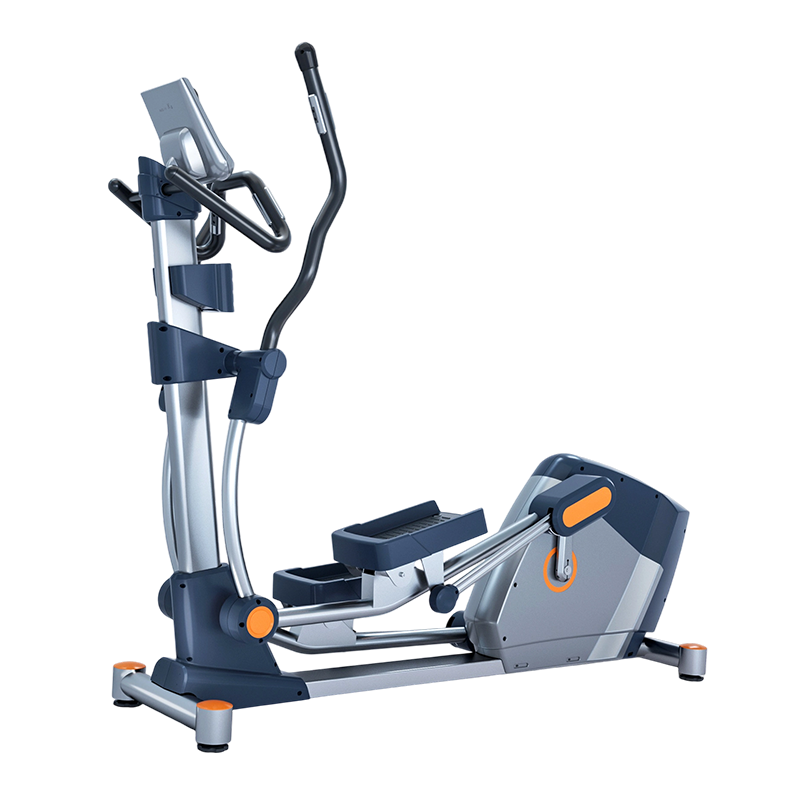
An elliptical trainer works the quadriceps, glutes, hamstrings, calves, and hip flexors on every stride, while the moving handles add the biceps, triceps, chest, shoulders, and upper back into the same motion. The core, including the rectus abdominis, obliques, and lower back erectors, stays switched on the entire time just to keep the body balanced on the pedals. Sports medicine literature commonly credits the elliptical with recruiting close to 80 percent of the body's major muscle groups during a single session, provided the stride is performed with an upright posture rather than a slouched, bobbing motion.
Research published in the journal Gait and Posture found that elliptical training produces meaningfully higher overall muscle activation than either walking or stationary cycling at a comparable pace. That is largely explained by the machine's design: the feet never leave the pedals, so the legs work through a longer, more continuous range of motion, and the handles turn what would otherwise be a lower-body-only cardio session into a full-body one. The sections below break down exactly which muscles do the work, how incline and direction shift that emphasis, and how the elliptical stacks up against a treadmill or bike when the activity is measured with surface electromyography.
The legs carry the majority of the workload on an elliptical, and the muscle recruitment shifts depending on which phase of the stride is happening. As the pedal moves forward and downward, the quadriceps and hip flexors drive the motion. As the pedal comes back and up, the hamstrings and glutes take over. The calves and anterior tibialis fire continuously to keep the ankle stable against the pedal.
| Muscle Group | Stride Phase | Primary Function |
|---|---|---|
| Quadriceps and hip flexors | Forward push | Extends the knee, drives the pedal forward |
| Glute complex (maximus, medius, minimus) | Backward drive and pelvis stabilization | Extends the hip, keeps the pelvis level |
| Hamstrings | Pedal return | Flexes the knee, assists hip extension |
| Adductors and abductors | Throughout the stride | Stabilizes the hip and knee sideways |
| Calves and tibialis anterior | Throughout the stride | Stabilizes the ankle against the pedal |
Because the pedals move in a fixed, guided path, there is no impact phase like there is with running, which is why the same muscles can be trained hard without the joint pounding of a treadmill session.
Whether the upper body actually gets trained depends entirely on how the handles are used. A rider who lets the arms hang loosely and rests the hands lightly on stationary bars gets almost no upper body benefit. A rider who actively pushes and pulls the moving handlebars turns the session into a genuine upper body workout as well.
Electromyography research comparing elliptical training with treadmill walking and stationary cycling found that every measured upper extremity muscle, including the biceps brachii, triceps brachii, pectoralis major, and trapezius, showed higher activation on the elliptical than on either of the other two machines. This is one of the clearest advantages the elliptical has over a treadmill or bike: the arms are not just along for the ride, they are doing measurable work.
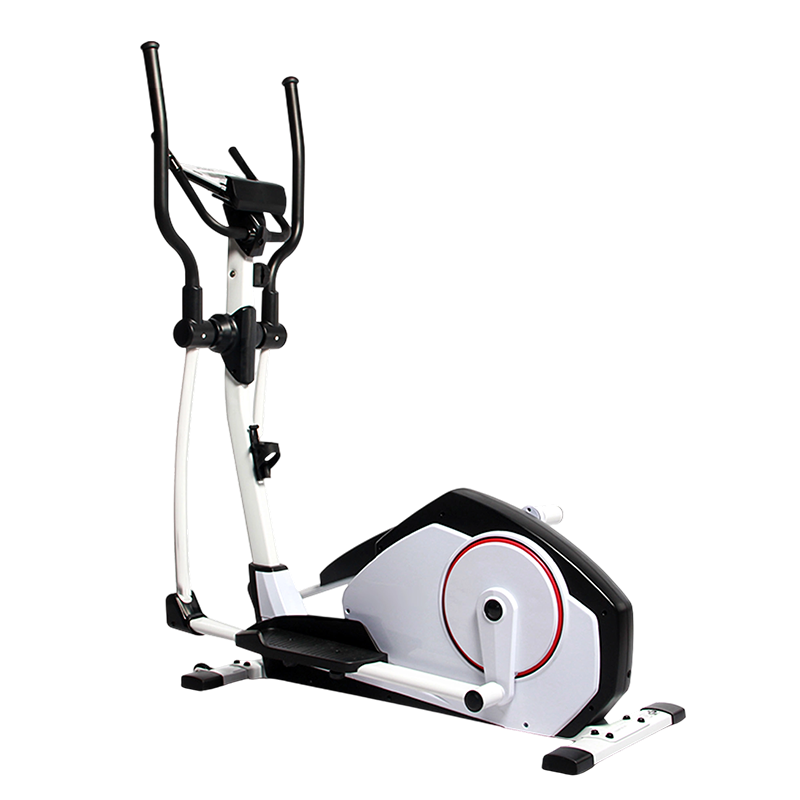
The core does not drive the elliptical's motion, but it never gets to switch off either. The rectus abdominis and obliques contract isometrically to keep the torso upright and prevent excess rotation, while the erector spinae along the lower back resists the forward lean that naturally happens when the arms are pushing and pulling on the handles.
This is one reason posture matters so much on an elliptical. Riders who hunch forward and lean heavily on the handles shift work away from the core and legs and onto the arms and lower back, which reduces the overall muscle activation the machine is capable of producing. Bracing the core, keeping the chest tall, and pretending a string is gently pulling the crown of the head upward keeps the stabilizing muscles engaged the way they are meant to be during the workout.
Adjusting the incline, on machines that offer it, is the single most effective way to change which muscles do the most work. Raising the incline increases the hip extension demand of every stride, which shifts emphasis away from the quadriceps and toward the glutes and hamstrings.
Research on inclined walking illustrates just how large this shift can be. One study found that walking on a nine-degree incline, compared with walking on flat ground, produced a 635 percent increase in hamstring activation and a 345 percent increase in gluteus maximus contraction. A comparable jump in posterior chain activation shows up when the same incline principle is applied to an elliptical, which is why many trainers recommend cranking the incline up specifically on days focused on glute and hamstring development, and keeping it flat on days meant to emphasize the quadriceps.
A surface electromyography study that placed sensors on the biceps brachii, triceps brachii, pectoralis major, trapezius, gastrocnemius, vastus lateralis, rectus femoris, and gluteus maximus while subjects exercised at a matched intensity found a consistent pattern across all three machines.
| Muscle | Machine With Highest Activation |
|---|---|
| Upper body (biceps, triceps, pectoralis, trapezius) | Elliptical |
| Gastrocnemius and gluteus maximus | Treadmill |
| Rectus femoris | Elliptical (versus bike) |
| Vastus lateralis | No significant difference |
The practical takeaway is that a treadmill still wins for pure calf and glute overload, but nothing beats the elliptical for combined upper and lower body activation in a single low-impact session. On the calorie side, a 155-pound person burns roughly 335 calories during a 30-minute moderate elliptical session compared with about 260 calories on a stationary bike over the same time, with intensity levels on the elliptical ranging from a light 4.5 METs up to a vigorous 10 METs or higher.
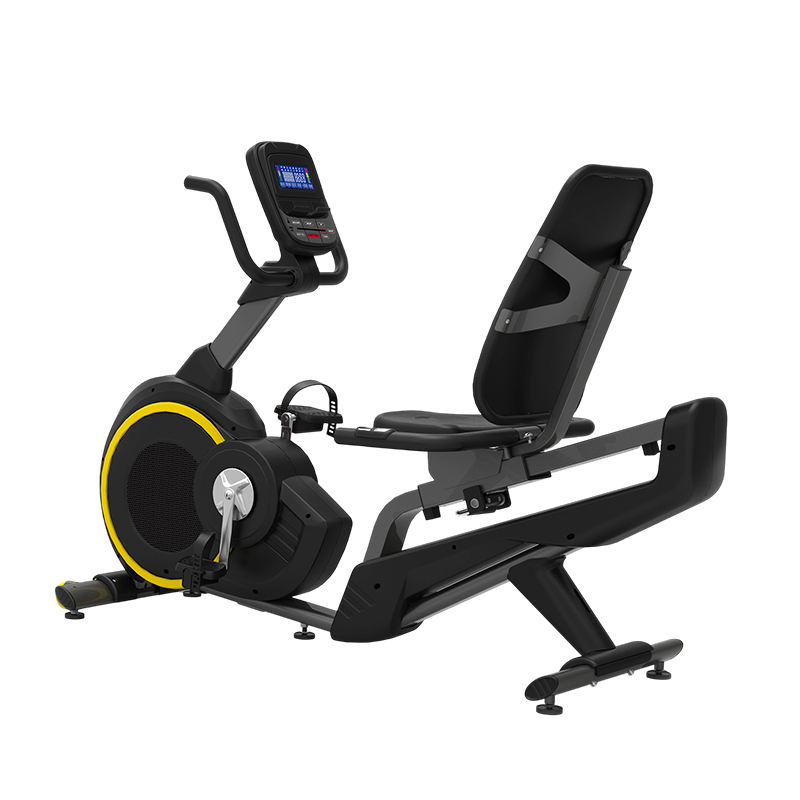
Most ellipticals allow the pedals to move in either direction, and the two directions do not train the same muscles equally.
Alternating a few minutes in each direction during a single session is a simple way to make sure the front and back of the legs are both getting a proportional share of the work, rather than letting the quadriceps dominate the entire workout.
| Day | Machine Setting | Primary Muscle Focus |
|---|---|---|
| Day 1 | Flat incline, forward pedal, moderate resistance | Quadriceps and hip flexors |
| Day 2 | High incline, reverse pedal | Glutes and hamstrings |
| Day 3 | Moderate incline, active handle push-pull | Arms, chest, back, and core |
| Day 4 | Alternating incline and direction every 5 minutes | Full body, balanced activation |
It primarily builds muscular endurance rather than significant muscle size, since resistance levels on most machines are far lower than what is needed to drive hypertrophy. It is highly effective, however, for maintaining and toning the muscles it recruits.
They matter. Electromyography testing shows the biceps, triceps, chest, and upper back are measurably more active on an elliptical with handles than on a treadmill or bike, but only when the handles are actively pushed and pulled rather than lightly gripped for support.
The abdominal muscles and lower back work isometrically for stability rather than through a large range of motion, so they receive far less direct training stimulus than the legs, and a rider seeking significant core strength gains should pair elliptical sessions with dedicated core exercises.
Including a few minutes of reverse pedaling is a simple way to balance quadriceps-dominant forward pedaling with additional glute and hamstring activation, which can help offset muscular imbalances that develop from forward-only training.
A higher incline increases glute and hamstring activation substantially, but it also increases fatigue and joint demand at the hip, so it is best used for a portion of a session or on dedicated days rather than as a permanent setting for every workout.
Hot Products

Phone: +86-152 5836 5876
TEL: +86-574 6322 1199
Email: mandy@evbfit.com
Address: No. 518 Zhengtong Road, Kandun Street, Cixi, Ningbo, Zhejiang, China
Copyright © Zhejiang Everbright Industry, Inc. All Rights Reserved. Custom Exercise Bikes Manufacturers China Stationary Bikes Factory