Jul 06, 2026
Content
An incline treadmill workout raises the deck of the treadmill to a percentage grade so you are walking or running uphill instead of on a flat belt. Setting the incline between 5 percent and 15 percent while holding a moderate speed turns an ordinary treadmill session into a workout that burns roughly two to three times more calories per minute than the same pace on flat ground, while placing far less impact stress on the knees and ankles than running does. The most efficient starting point for most people is a 10 to 12 percent grade at 4.5 to 5 km/h for 20 to 30 minutes, three to four times per week, with the grade and duration increasing gradually as your calves, tendons, and cardiovascular system adapt.
Tilting the treadmill deck forces your body to lift its own weight against gravity with every stride. That single mechanical change explains almost everything that makes incline training effective, and it is worth understanding before you touch the incline buttons.
At a brisk walking pace of 5.6 km/h, moving from flat ground to a 5 percent grade raises the metabolic cost from roughly 3.6 METs to about 5.1 METs, and pushing to a 10 percent grade brings that figure close to 6.6 METs. At 15 percent grade the same walking pace can approach 8 METs, which is considered vigorous intensity exercise rather than light activity.
Because incline walking never involves a flight phase, the vertical ground reaction force stays far below what running produces at a comparable metabolic cost. Stride length also naturally shortens on an incline and ground contact time increases, both of which reduce the peak forces travelling through the knees, hips, and lower back. Some treadmill manufacturers cite cushioned deck systems reducing joint impact by as much as 40 percent compared to outdoor running, and incline walking compounds that advantage further by removing the flight phase entirely.
Walking uphill shifts work toward the glutes, hamstrings, and calves rather than the quadriceps-dominant pattern of flat walking, giving the workout a strength-training carryover that flat cardio sessions do not provide.
Because the calorie cost per minute is so much higher, an incline session can match the energy expenditure of a longer flat session in a shorter amount of time, which matters for anyone training around a tight schedule.
Because incline walking reproduces the mechanics of climbing a hill or a long flight of stairs, regular sessions carry over directly into better performance on hikes, mountain trails, and any activity that involves sustained uphill effort.
Unlike outdoor hill training, an indoor incline session is unaffected by weather, daylight, or terrain availability, which makes it far easier to stay consistent across an entire year of training.
Every incline treadmill claim ultimately comes back to two measurements: METs, which describe how many times resting energy expenditure a given activity requires, and VO2, which describes how much oxygen your body actually consumes to fuel that effort. Understanding both explains why grade changes the workout so much more than speed alone.
Clinical exercise testing has used graded treadmill protocols for decades for exactly this reason. The Bruce protocol, developed in the 1960s and still used in cardiology and sports science labs today, increases both speed and incline every three minutes specifically because grade produces a more controlled and repeatable rise in cardiovascular demand than speed changes alone. That same principle is what makes incline training such an efficient tool for building aerobic capacity at home: raising the grade lets you increase intensity without needing to run, which keeps the exercise accessible to a much wider range of fitness levels and joint conditions.
On the higher end of intensity, short steep incline efforts of 20 to 30 seconds at an 8 to 15 percent grade have been used in interval formats aimed at improving VO2 max, the maximum rate at which your body can use oxygen during intense exercise and one of the most reliable long term predictors of cardiovascular health. Interval methods built around near maximal effort, repeated over eight to ten weeks, have been associated with meaningful aerobic capacity gains in trained and recreational populations alike, and incline gives you a way to reach that intensity zone on a treadmill without the higher impact of an all out flat sprint.
The correct grade depends entirely on your goal for that session. Use the ranges below as a starting framework, then adjust based on how your heart rate and breathing respond during the first few workouts.
Most consumer treadmills cap their incline at 12 to 15 percent, though some commercial and premium home models go up to 30 to 40 percent for hiking-style training, and dedicated graded exercise test protocols sometimes call for 18 to 20 percent or more at controlled speeds. If your machine tops out at 10 or 12 percent, you can compensate by slightly reducing your speed and extending your total workout time, since the calorie and cardiovascular benefits of incline training come from the combination of grade, speed, and duration rather than from the grade number in isolation.
These three structured sessions give you a repeatable starting template. Adjust speed slightly up or down so your effort feels like a 6 or 7 out of 10 for steady sessions, or an 8 or 9 out of 10 during the interval blocks.
| Level | Incline | Speed | Duration |
|---|---|---|---|
| Beginner | 6 percent | 4.0 to 4.5 km/h | 20 minutes |
| Intermediate steady state | 12 percent | 4.8 to 5.0 km/h | 30 minutes |
| Advanced intervals | Alternate 15 percent and 3 percent | 4.0 km/h on inclines, 6.5 km/h on recovery | 2 minutes on, 2 minutes off, repeated 6 to 8 times |
| Hiking prep | 8 to 10 percent | 4.0 to 4.5 km/h | 45 to 60 minutes, optionally with a light pack |
The table below gives approximate calorie ranges for a 30 minute session at a moderate walking pace, scaled to two common body weights. These figures use standard MET-based formulas and will vary based on individual fitness level, stride efficiency, and whether the handrails are used.
| Incline | Approximate MET value | 65 kg person, 30 min | 85 kg person, 30 min |
|---|---|---|---|
| 0 percent (flat) | 3.5 to 3.8 | 120 to 130 kcal | 155 to 170 kcal |
| 5 percent | 5.0 to 5.2 | 170 to 180 kcal | 220 to 235 kcal |
| 10 percent | 6.5 to 6.8 | 220 to 235 kcal | 285 to 305 kcal |
| 12 percent | 7.5 to 10.2 | 280 to 325 kcal | 365 to 420 kcal |
| 15 percent | 8.0 and above | 300 to 350 kcal | 390 to 450 kcal |
A useful reference point is the widely shared 12 percent incline, 3 mph, 30 minute session, sometimes called the 12-3-30 workout, which burns approximately 300 to 350 calories for a 70 kg person, compared with roughly 120 calories for the same 30 minutes walked flat at the same speed. That gap illustrates just how much of the calorie difference comes from the incline rather than the pace itself. It is also worth noting that treadmill console calorie displays are commonly found to overestimate actual energy expenditure by 15 to 30 percent, so MET-based calculations or a chest strap heart rate monitor tend to give a more realistic picture than the number shown on the screen.
A frequently asked question is whether a steep incline walk can replace running altogether. A controlled laboratory comparison of a 12 percent grade, 4.8 km/h walking protocol against self-paced treadmill running found that the incline walk was not more calorie efficient than running over the same total time, but it was substantially easier on the joints and produced comparable or higher fat oxidation for participants who were not able to sustain a running pace.
You want a low impact cardio session, you are managing a knee or hip issue, you need active recovery between running days, you are training for a hike, or you simply cannot run at a pace that feels sustainable yet.
Your priority is maximum calories burned in the shortest time and your joints tolerate impact well, since a moderate paced run still edges out incline walking in total energy expenditure per minute.
The most practical way to think about the two is complementary rather than competitive. Many structured programs alternate incline walking days with running days specifically because the lower impact of incline sessions allows the legs to recover from running while still contributing meaningfully to weekly calorie expenditure and cardiovascular training volume.
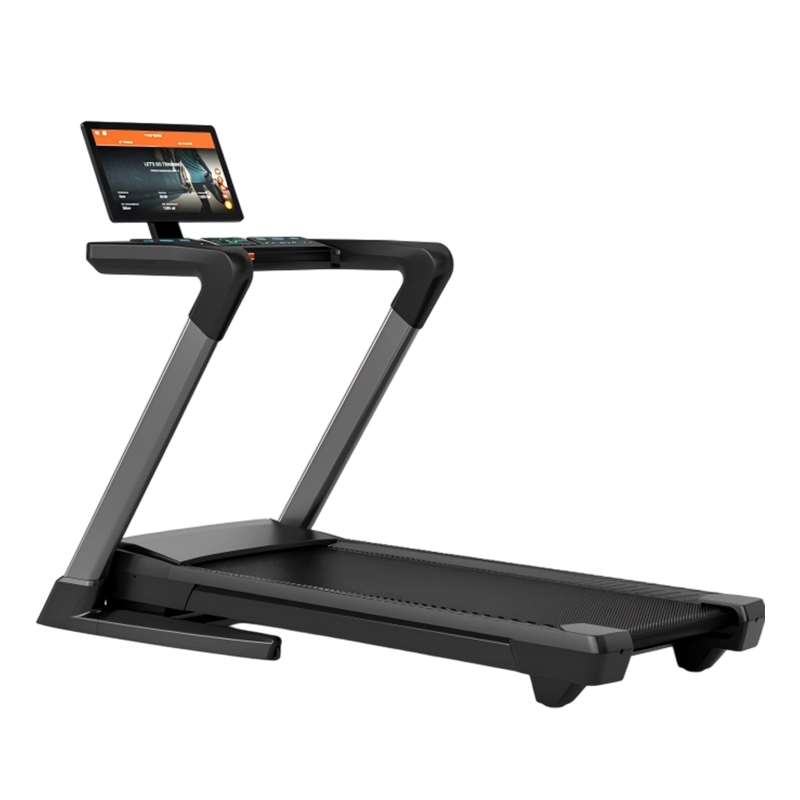
Adding grade shifts the muscular demand of walking noticeably compared to flat sessions.
Incline treadmill training is flexible enough to serve very different training goals, but the details of grade, speed, and duration should shift depending on what you are actually training for.
For fat loss, consistency and total weekly calorie expenditure matter more than any single session. A 10 to 12 percent grade for 25 to 35 minutes, performed four to five times per week, creates a substantial calorie deficit contribution without the joint stress of high volume running, and the steady state nature of the effort keeps the workout in a comfortably repeatable intensity zone day after day.
If you are training for a hiking trip, the goal is muscular endurance under sustained load rather than short bursts of intensity. Longer sessions of 45 to 60 minutes at an 8 to 10 percent grade, optionally carrying a light daypack to simulate trail weight, build the specific leg and cardiovascular endurance that hilly trails demand far more effectively than flat walking or running ever could.
For anyone returning from a lower body injury or managing joint sensitivity, low incline walking at 3 to 6 percent grade offers a way to elevate heart rate and build aerobic base without the repetitive impact loading of running. Progression should be slow and guided by how the joint responds, ideally with input from a physical therapist or physician for anything beyond general fitness.
To specifically target aerobic capacity, short interval efforts at 8 to 15 percent grade for 20 to 60 seconds, performed at a near maximal effort and followed by full recovery, mirror the hill sprint format used in many structured VO2 max programs. These sessions are demanding and should be limited to once or twice per week alongside easier steady state incline or flat sessions.
Holding the front or side rails to stay balanced. Gripping the handrails can reduce calorie burn by an estimated 20 to 25 percent because it transfers part of your bodyweight support away from your legs.
Leaning too far forward from the waist instead of hinging naturally from the hips, which places unnecessary strain on the lower back over a full session.
Jumping straight to a 15 percent grade in the first week. Ramping incline too quickly before your calves and Achilles tendons adapt is a common cause of early soreness that discourages people from continuing.
Keeping the same incline and speed every single session. Without occasional variation the body adapts and the same workout becomes progressively less effective over a period of weeks.
Ignoring proper footwear. Shoes with a very low heel-to-toe drop can increase Achilles and calf strain on sustained incline sessions, so a shoe with moderate cushioning and support is generally the safer choice.
Relying entirely on the treadmill console's calorie estimate. Because these displays commonly overestimate actual energy expenditure by 15 to 30 percent, using them as an exact target can lead to a mismatch between perceived and actual progress.
Skipping a warm up before jumping straight into a high grade. A short 3 to 5 minute flat or low incline warm up helps raise muscle temperature and heart rate gradually before the steeper work begins.
Progression matters more than any single workout. A simple six-week structure allows the calves, tendons, and cardiovascular system to adapt gradually while steadily increasing the training stimulus.
| Week | Sessions per week | Incline focus | Duration |
|---|---|---|---|
| Week 1 | 3 | 5 to 6 percent | 15 to 20 minutes |
| Week 2 | 3 | 8 percent | 20 to 25 minutes |
| Week 3 | 4 | 10 to 12 percent | 25 to 30 minutes |
| Week 4 | 4 | 12 percent with interval spikes to 15 percent | 30 to 35 minutes |
| Week 5 | 4 | 12 percent steady plus one interval session | 30 to 40 minutes |
| Week 6 | 4 to 5 | Mixed: steady state, interval, and one longer endurance session | 30 to 45 minutes depending on session type |
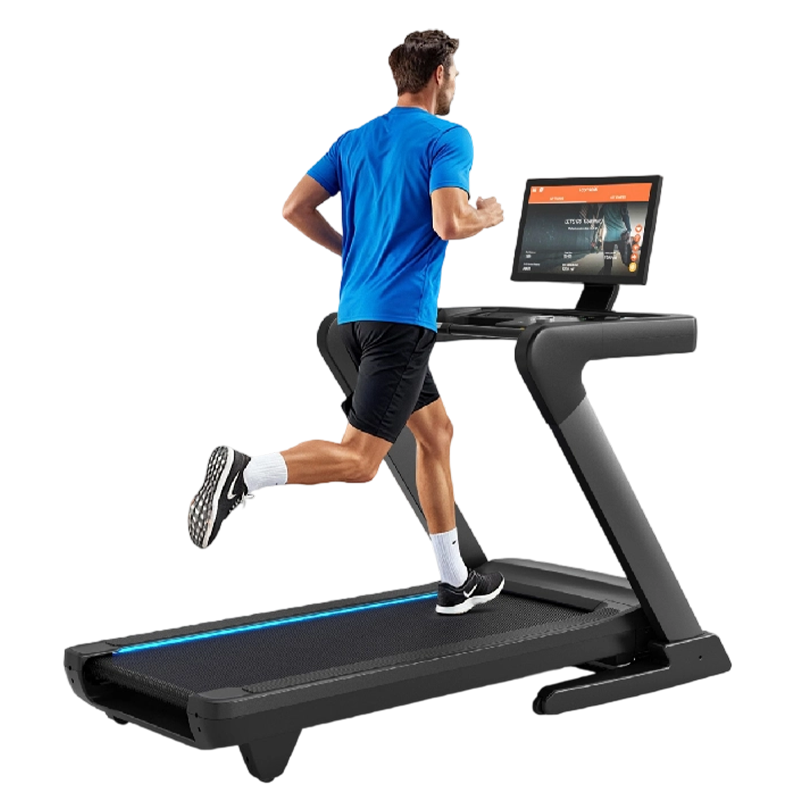
Walking backward at a low incline of 3 to 5 percent shifts emphasis toward the quadriceps and can be used as a light rehabilitation or activation tool. This should only be attempted at very slow speeds with a firm grip available for balance and full attention on foot placement.
Adding 5 to 10 percent of bodyweight as a vest or backpack during an incline walk increases the metabolic and muscular demand further, and closely mimics rucking or loaded hiking. This variation should be introduced only after several weeks of unweighted incline training to avoid overloading the lower back and joints too quickly.
Short, near maximal efforts of 20 to 30 seconds at an 8 to 15 percent grade, followed by full recovery through a reduced speed or the incline being lowered to zero, form the basis of many programs aimed at improving VO2 max. A typical session includes 8 to 12 repeats and is demanding enough to be limited to once or twice weekly.
The Bruce protocol, a graded exercise test that increases both speed and incline every three minutes, is used in clinical and sports performance settings to estimate cardiovascular fitness and VO2 max. Recreational exercisers sometimes use a simplified version of this format as a periodic fitness check to track long term progress.
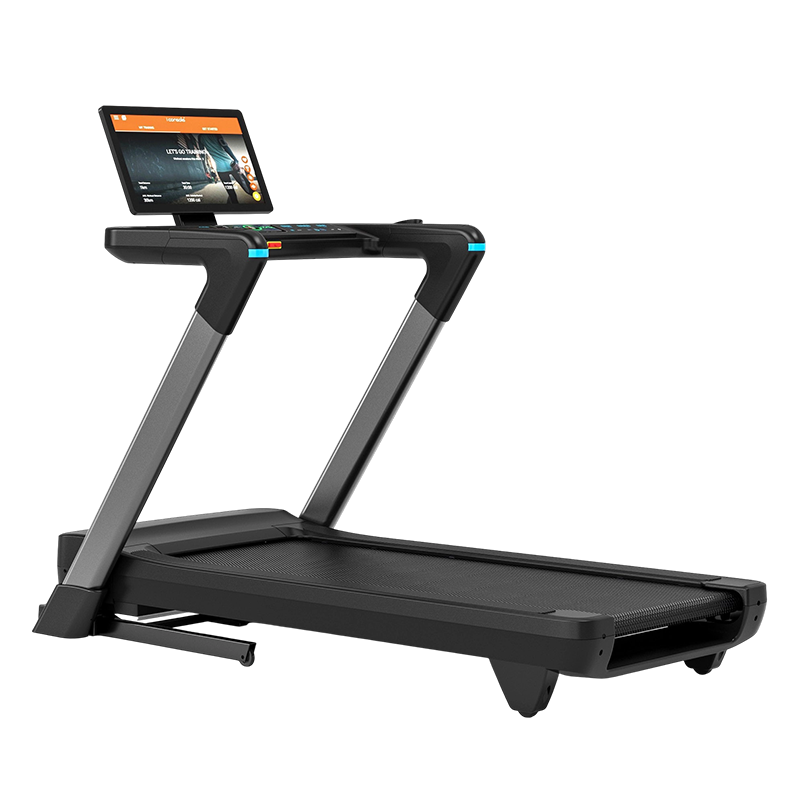
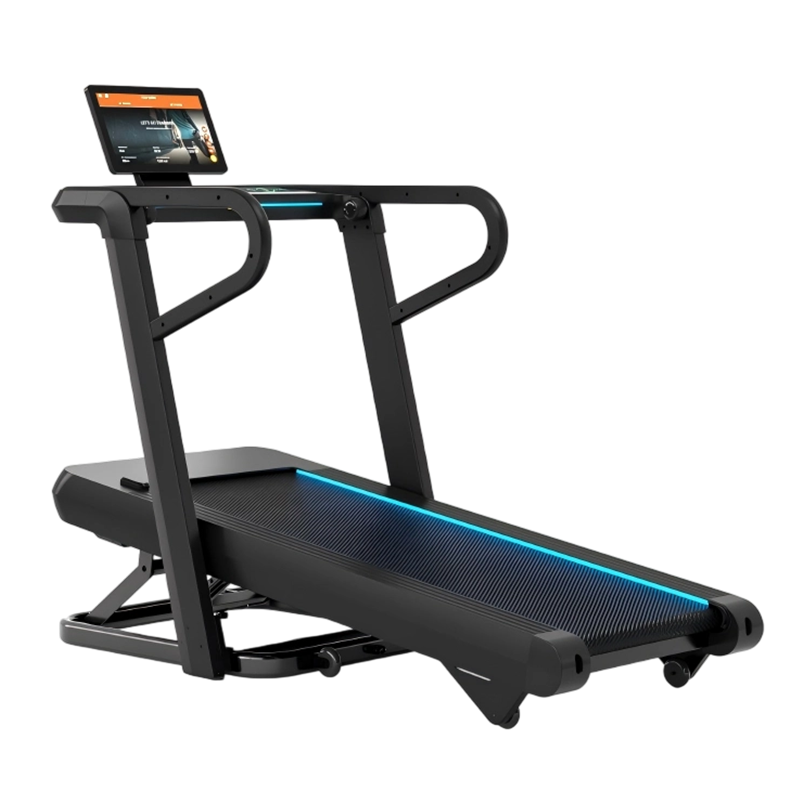
Not every treadmill is equally suited to incline focused training, and a few equipment details make a meaningful difference to comfort and safety.
A light meal or snack containing easily digestible carbohydrate roughly one to two hours before a longer or higher intensity incline session helps maintain energy through the workout without causing digestive discomfort.
Because incline walking places extra demand on the calves and glutes, a few minutes of calf and hip flexor stretching after the session can help reduce next day soreness, particularly during the first few weeks of a new incline program.
Hydration matters more than many people expect for incline sessions, since the higher heart rate and sustained effort increase sweat rate compared to flat walking at the same duration. Spacing rest days appropriately between higher incline or interval sessions also gives the calves and Achilles tendons time to recover, which reduces the risk of the overuse soreness that is a common reason people abandon incline programs in the first few weeks.
Rather than focusing only on the calorie number on the console, a few other metrics give a clearer picture of whether your incline training is actually working. Tracking your resting heart rate over several weeks can reveal improving cardiovascular fitness even before performance metrics change noticeably. Watching how your heart rate responds at a fixed incline and speed over time is one of the simplest ways to see aerobic progress, since a lower heart rate at the same workload is a reliable sign of improved fitness. Periodically retesting your maximum sustainable incline or speed at a comfortable perceived effort also gives a concrete, motivating way to see the program working beyond the number displayed on the treadmill screen.
Sustained incline walking raises heart rate significantly, and field research sponsored by the American Council on Exercise has found that steep incline walking can push heart rate into 75 to 80 percent of an individual's maximum, placing it firmly in a moderate to vigorous cardiovascular training zone. Anyone returning from a lower body injury, managing a cardiovascular condition, or new to structured exercise should start at the lower end of the incline range and increase gradually rather than following an aggressive program from the first session. Stop and lower the incline immediately if you experience sharp joint pain, dizziness, or chest discomfort, and allow rest days between higher incline sessions so the calves and Achilles tendons can recover.
Most beginners do well starting at a 5 to 6 percent grade for 15 to 20 minutes and increasing the grade by 1 to 2 percent every one to two weeks as the calves and cardiovascular system adapt.
Yes, a 12 percent incline session raises calorie burn substantially compared to flat walking at the same speed, and consistent sessions several times a week can meaningfully contribute to a calorie deficit when combined with overall dietary habits.
Twenty to thirty minutes at a moderate incline is a practical target for most people, while shorter interval formats of 15 to 20 minutes work well for advanced exercisers alternating high and low incline blocks, and hiking preparation sessions may extend to 45 to 60 minutes.
Incline walking increases activation in the glutes, hamstrings, and calves well beyond flat walking, giving it a mild strength stimulus alongside its cardiovascular benefit, though it is not a substitute for resistance training aimed at building significant muscle mass.
No, holding the handrails reduces the calorie burn of the session by an estimated 20 to 25 percent and also encourages poor posture, so it is best reserved only for brief moments of balance correction.
It can serve as a highly effective low impact alternative, but comparative research shows a self-paced run still edges out a 12 percent incline walk in total calories burned per minute, so the two are best viewed as complementary rather than interchangeable.
Three to five sessions per week works well for most goals, with at least one or two lower intensity days mixed in so the calves and cardiovascular system have time to recover between harder sessions.
Low to moderate incline walking, generally in the 3 to 8 percent range, is often better tolerated than flat running or high impact cardio because it avoids the flight phase and reduces peak joint loading, though anyone with an existing knee condition should introduce incline training gradually and consider guidance from a physical therapist.
Lower incline, shorter duration sessions can often be done daily, but higher incline or interval sessions are more demanding on the calves and cardiovascular system and generally benefit from at least one rest or easy day between them.
Supportive athletic shoes with a moderate heel-to-toe drop and good grip, along with moisture wicking clothing, are the most practical choices given the higher sweat rate and sustained calf and Achilles engagement involved in incline work.
Hot Products

Phone: +86-152 5836 5876
TEL: +86-574 6322 1199
Email: mandy@evbfit.com
Address: No. 518 Zhengtong Road, Kandun Street, Cixi, Ningbo, Zhejiang, China
Copyright © Zhejiang Everbright Industry, Inc. All Rights Reserved. Custom Exercise Bikes Manufacturers China Stationary Bikes Factory