Nov 09, 2026
Content
If you have about 12 square feet of floor space to spare, a downstairs neighbor, and a knee that complains on stairs, buy the exercise bike. If you can give up 25 square feet, your floor is solid and yours alone, and your goal is a faster 5K, buy the treadmill. That is the short version of the treadmill or bike decision, and everything below is the reasoning behind it.
Most buyers searching this question are actually juggling four separate questions at once: which machine fits the room, which one is kinder to joints, which burns more calories in a 30-minute session, and which one still works three years from now. Those four answers rarely point to the same machine, which is why the debate never settles on forums. Here is each answer in turn, with numbers attached.
The single rule that matters more than any specification is this: the machine you actually use four times a week beats the machine that burns 10 percent more per minute. With that in mind, sort your situation into one of the following lines and the choice becomes mechanical rather than emotional.
If two or three of those lines describe you at once, you are a cross-training buyer, and the usual answer is a bike plus outdoor walking, or a treadmill plus a cheap spin bike bought used.
Running is a series of single-leg landings. Gait analysis literature commonly cited in sports medicine education puts peak knee joint loading during running at roughly two to three times body weight per step, with the hip and ankle absorbing comparable peaks. Stationary cycling keeps both feet supported on pedals, spreads the work across quadriceps, hamstrings, and glutes, and produces far lower peak compression at the knee joint.
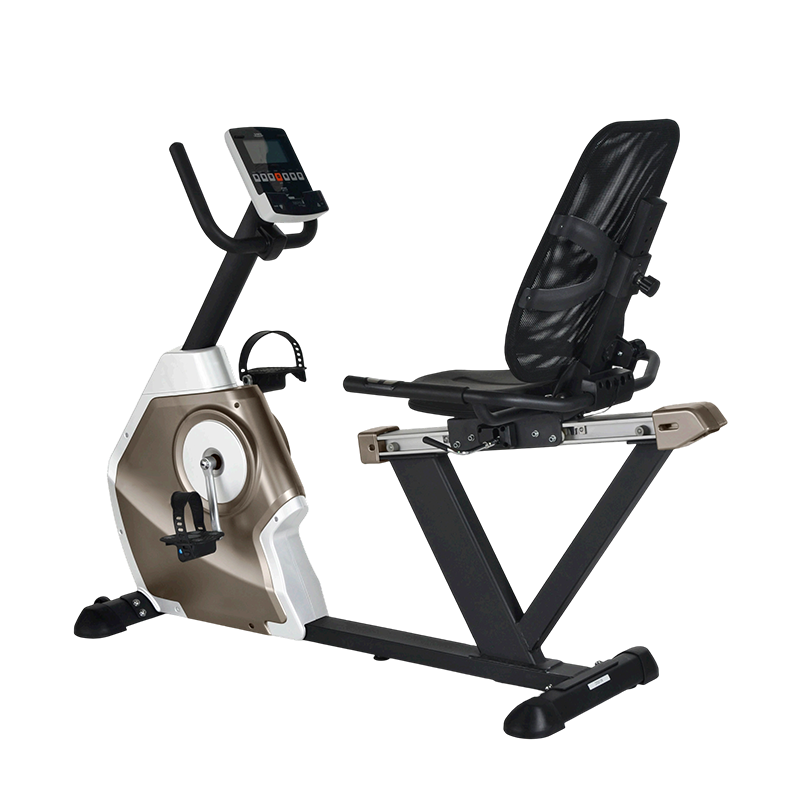
A recumbent bike pushes that logic further. Your back is supported, the hip angle stays open, and the seat carries your body weight instead of your feet and knees absorbing every repetition. This is why recumbent bikes show up in rehabilitation rooms, hotel fitness corners, and homes where the user is over 60 or carrying more than 100 kg.
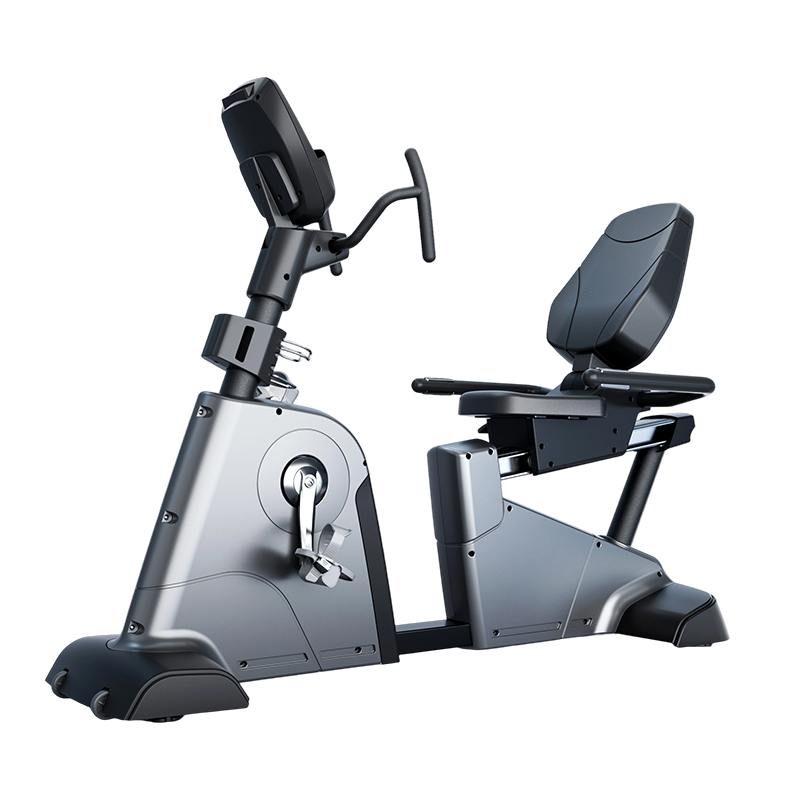 EB3200L Extra-large Seat Cushions Recumbent BikeInstrument Features: 1) The 350*270 panel displays a variety of information, including speed, distance, and calorie consumption, helping users fully understand their e...View Product →
Seat and cushion dimensions deserve more attention than they usually get. A narrow saddle concentrates pressure on the sit bones and turns a planned 40-minute ride into a 15-minute ride, particularly for riders above average body weight. Wide, padded seats and adjustable seat-back angles are not comfort extras; they are what makes daily volume possible.
Cycling is not automatically easy, and that is the point. Resistance still produces hard efforts and real cardiovascular work. What changes is where the load lands, not whether the heart and lungs get challenged.
The 2011 Compendium of Physical Activities (Ainsworth and colleagues) assigns energy costs in METs, where 1 MET is the energy you expend sitting quietly. Level walking at 3.0 mph sits around 3.5 METs, stationary cycling at a moderate 90 to 100 watts around 6.8 METs, vigorous stationary cycling at 101 to 125 watts around 8.8 METs, and running at 6 mph around 9.8 METs. Using the standard conversion of METs multiplied by body weight in kilograms multiplied by hours, here is what 30 minutes looks like for a 70 kg adult.
| Activity | METs | Calories in 30 minutes (70 kg) |
|---|---|---|
| Level walking at 3.0 mph | 3.5 | about 123 |
| Stationary cycling, moderate (90 to 100 W) | 6.8 | about 238 |
| Stationary cycling, vigorous (101 to 125 W) | 8.8 | about 308 |
| Running at 6 mph | 9.8 | about 343 |
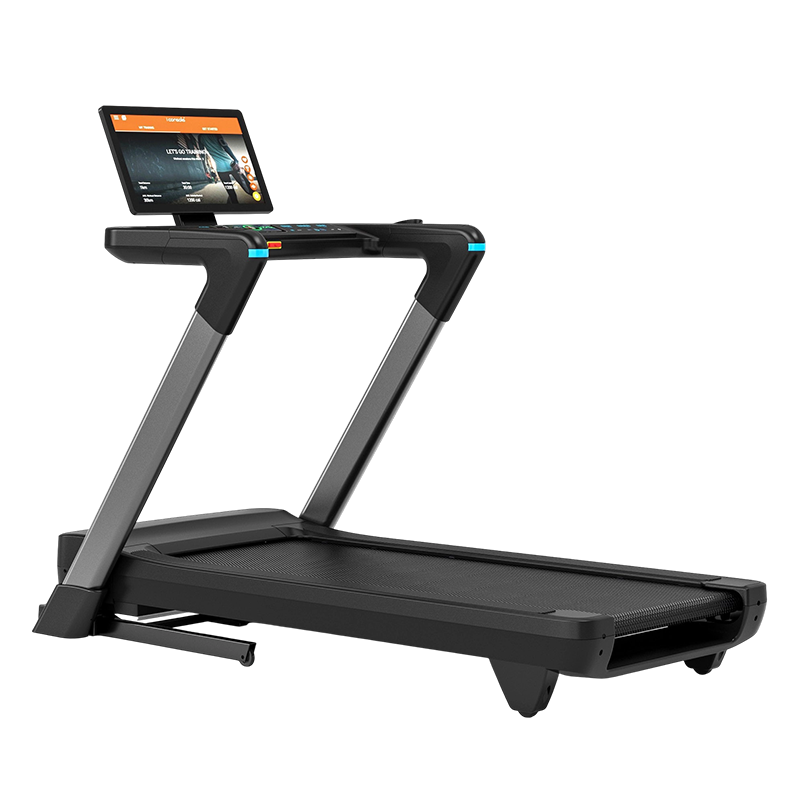
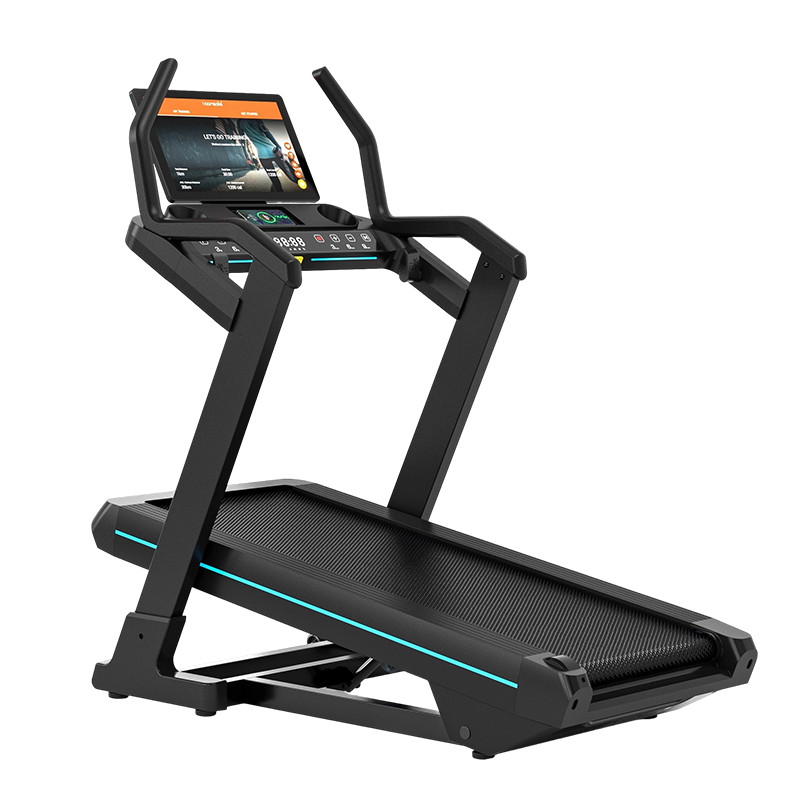
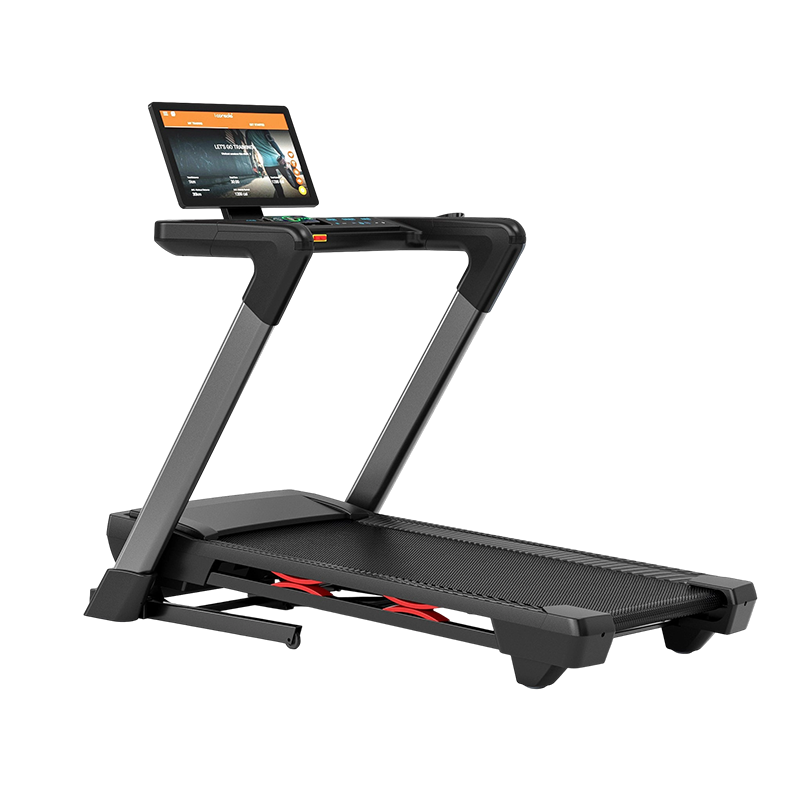 Adjustable Incline Treadmill SuppliersEB340 new home-used treadmill with innovation designView Product →
Read that table carefully and the gap shrinks. Running beats vigorous cycling by roughly 10 percent per minute, and the difference between walking and moderate cycling is small enough that session length decides the monthly total. Where the treadmill genuinely pulls ahead is intensity control: a belt sets the pace, an incline adds load in seconds, and most people push harder when the machine, not their own discipline, dictates speed. The home treadmill market has moved toward programmed intervals and connected consoles precisely because that pacing assistance is what keeps owners using the machine in month six.
Showroom floors are open and tall, which hides the two constraints that send buyers back to the store. Typical home dimensions are worth writing down before you order anything.
If you are upstairs, a 10 mm rubber mat under either machine and a wall-adjacent placement away from shared bedrooms solves most complaints. If you are on a wooden floor above a downstairs neighbor, the bike simply removes the problem instead of softening it.
Walking and running are already in your movement vocabulary, so the skill barrier is close to zero. The risk is volume, not technique. The widely used rule of thumb is to raise weekly running distance or time by no more than 10 percent, which means a 20-minute week-one routine becomes 22 minutes in week two, not 35. Muscular emphasis falls on calves, hamstrings, and glutes, with the quadriceps working hard on downhill and decline sections.
There is no impact, but there is a fit requirement. Set the saddle so the knee stays slightly bent, commonly described as 25 to 35 degrees of flexion, at the bottom of the pedal stroke. Too low and the kneecap grumbles; too high and the hips rock. Cadence also takes a few sessions to calibrate: most steady-state riders settle between 80 and 100 revolutions per minute. Cycling emphasizes the quadriceps more than running does, and a recumbent position shifts some of that work toward the glutes and hamstrings while supporting the lower back.
One honest limitation: bike fitness transfers only partially to running. If your goal includes running a race, the treadmill is the specific tool and the bike is a supplement, not a substitute.
Ownership cost separates the two machines more sharply than purchase price does. A treadmill is a belt, a deck, a motor, and a controller, and each of those wears in its own way. Common manufacturer guidance is to lubricate the belt every three months or every 40 to 50 hours of use, whichever comes first, and to check belt tension so the belt does not slip under foot strike. For regular running, a continuous duty motor rated around 2.5 to 3.0 CHP is the usual recommendation, while walkers can stay in the 1.75 to 2.5 CHP range. Decks and belts eventually need replacement on any machine that sees serious mileage.
A bike has fewer wear surfaces. Electromagnetic resistance has no contact point at all, which is why these units stay quiet and stable for years. Friction-pad spin bikes are the exception: the felt or leather pad contacts the flywheel, wears, and needs replacing every few months under heavy use, and pad dust collects underneath. Belt-driven and magnetic systems avoid that entirely.
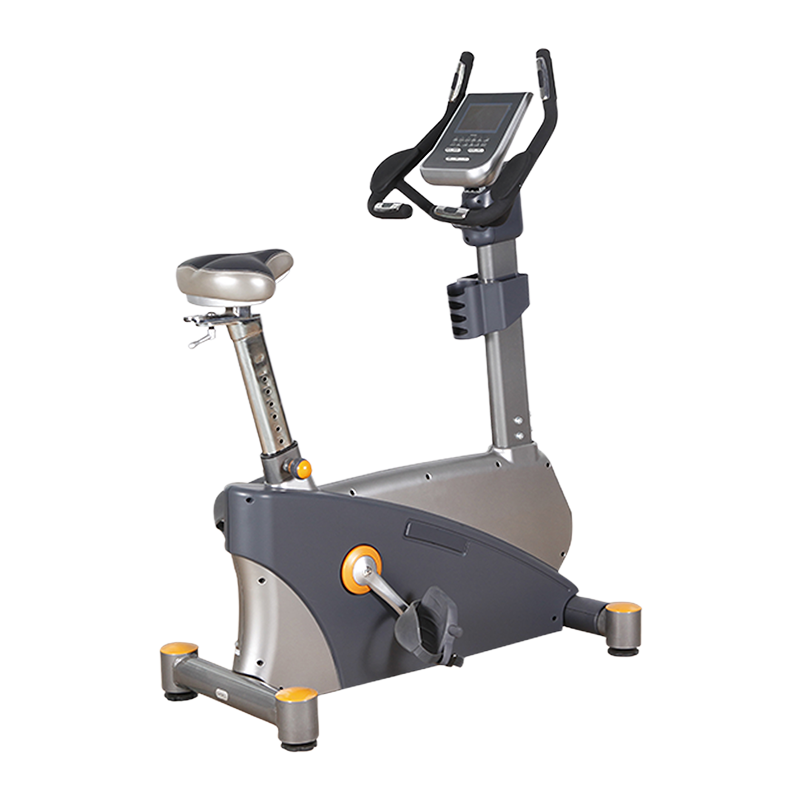 EB2000 Self-Propelled Electromagnetic Controlled Fitness BikeInstrument Features: 1) The instrument panel measures 350*270mm and features red backlit buttons for easy operation. It displays simulated training modes and exercise ...View Product →
The self-generating category deserves a mention because it solves a specific problem. On these machines your pedaling produces the electricity that runs the console and the resistance system, so no cable and no outlet are needed. That makes them practical in basements, garages, converted rooms without spare sockets, and any layout where a dangling power cord is a trip hazard. The trade-off is that you have to be pedaling for the electronics to wake up, which most riders stop noticing within a week.
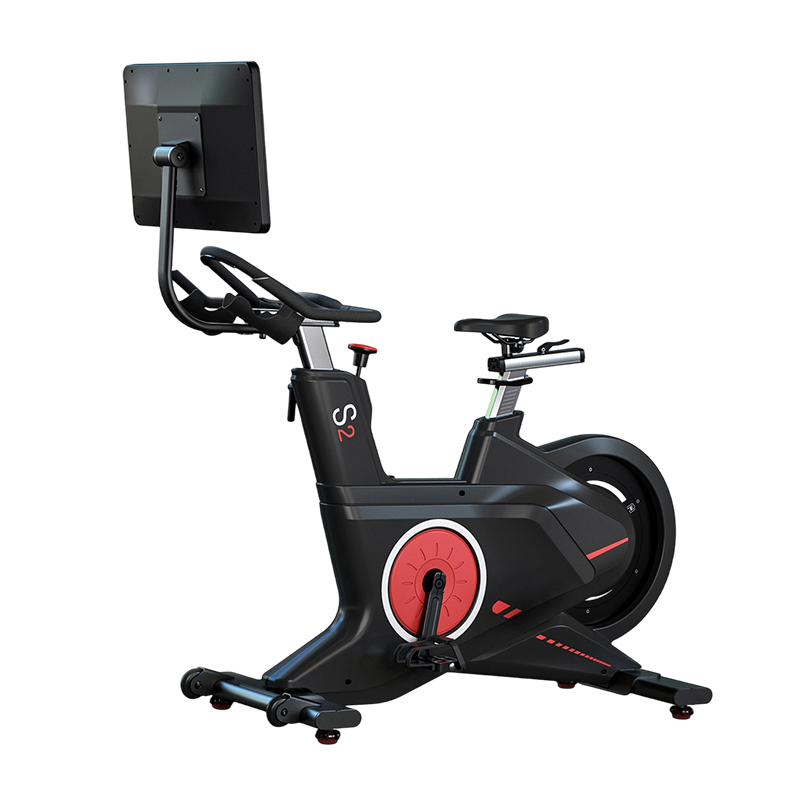
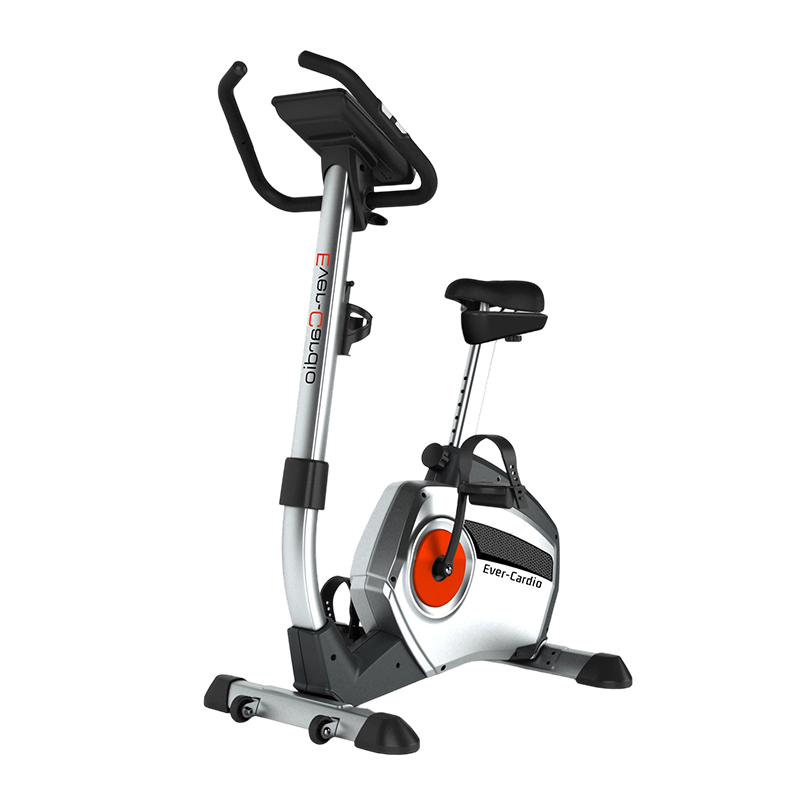
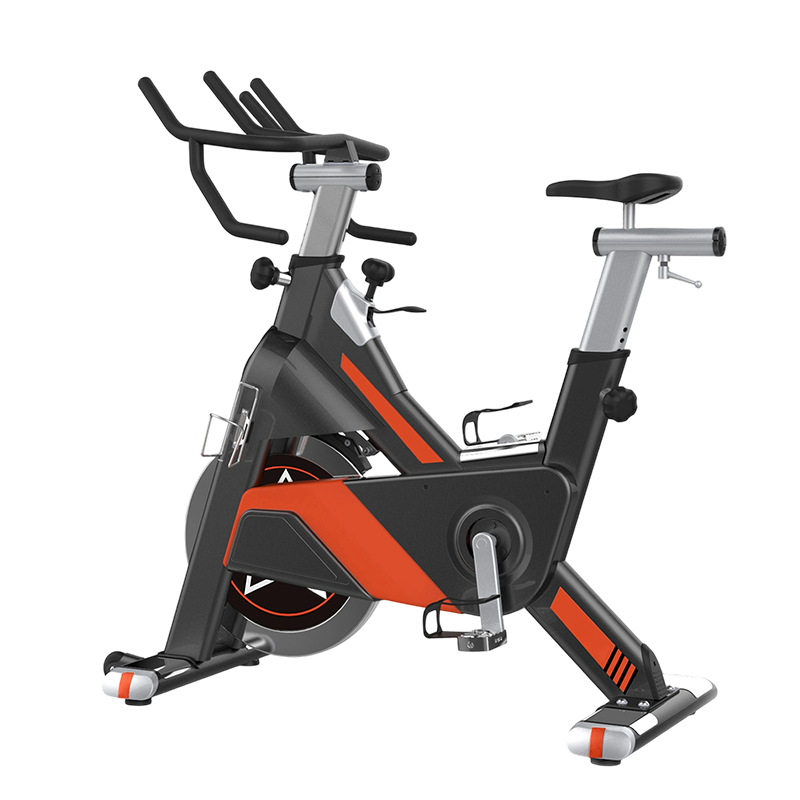
If you are comparing build philosophies rather than single units, the upright exercise bike range shows how resistance type, frame size, and pedal dimensions scale from home use up to club-grade duty.
| Your main goal | Better first machine | Why |
|---|---|---|
| Lose body fat with daily 40-minute sessions | Exercise bike | Low impact makes long sessions repeatable day after day |
| Run a 5K or 10K | Treadmill | Training specificity: gait, pace control, incline work |
| Protect knees, hips, and lower back | Recumbent bike | Seat and back support, low peak knee compression |
| Small apartment above another unit | Upright or spin bike | Smaller footprint, no landing impact through the floor |
| Short, hard interval sessions | Spin bike | Resistance changes in seconds, no belt to spin up |
| Return to training after years away | Recumbent bike | Easy mount, supported posture, controllable effort |
| Maximum calories in a 20-minute window | Treadmill | Highest energy cost per minute of the two |
Two machines can look identical in photos and be built to completely different duty ratings. Zhejiang Everbright Industry, a Ningbo-based indoor fitness equipment manufacturer founded in 2004, illustrates how that works in practice. The company operates a 127,000 square meter site with seven factory buildings covering welding, painting, powder coating, parts production, and final assembly across eight production lines, and it has supplied brands including Wahoo, iFIT, and Reebok under OEM and ODM contracts.
The same product concept gets tuned for three different rooms. A home-use unit is built for a few hours a day, one or two users, and a living room footprint. A light commercial machine targets apartment clubhouses, hotel fitness corners, and corporate gyms running perhaps six to ten hours a day. Club-grade equipment is engineered for near-continuous use, heavier riders, and years of service before a rebuild. Frame wall thickness, bearing grade, seat adjustment hardware, and resistance system capacity all change between those tiers, even when the silhouette does not.
For a buyer, the practical takeaway is that the words home use and light commercial on a label are duty ratings, not marketing decoration. If two people will ride 30 minutes a day, home use is fine. If a dozen gym members will use it daily, the cheap version becomes the expensive one within two years.
If a machine fails two of those six checks, walk away. There is no shortage of inventory in this category, and the next unit will fit better.
Per minute of exercise, the treadmill has the higher energy cost. For a 70 kg adult, 30 minutes of running at 6 mph costs roughly 343 calories against roughly 238 for moderate stationary cycling, based on 2011 Compendium of Physical Activities MET values. Over a full month, though, repetition matters more than that per-minute gap. A bike someone rides five evenings a week beats a treadmill used twice, even though the treadmill wins on paper.
The bike, by a wide margin. Running produces repeated single-leg landings with peak knee loads commonly reported at two to three times body weight, while cycling keeps both feet supported and generates much lower peak compression. A recumbent bike adds back support on top of that. Whichever bike you choose, set the saddle so the knee stays slightly bent at the bottom of the stroke, roughly 25 to 35 degrees of flexion.
Yes. Vigorous stationary cycling reaches roughly 8.8 METs, which puts it in the same cardiovascular neighborhood as fast walking and short-distance running. The one goal a bike cannot serve is running-specific performance, because cycling does not train the gait cycle or the impact tolerance that running requires.
Plan for roughly 1.8 to 2.0 m by 0.8 to 0.9 m for a motorized treadmill, plus about 1.8 m of clear space behind it. A spin bike needs about 1.2 m by 0.6 m, an upright bike about 1.1 m by 0.55 m, and a recumbent bike about 1.5 m by 0.65 m. Measure your ceiling as well if you plan to run indoors on an incline.
The bike. Foot strikes on a treadmill send vibration into the floor structure, and that vibration, not motor noise, is what neighbors notice. Electromagnetic bike resistance is essentially silent. On wooden floors, a 10 mm rubber mat helps either machine, but only the bike removes the impact source entirely.
Not all of them. Self-generating designs convert pedal power into electricity for the console and the resistance system, so they run without a cable. That suits basements, garages, and rooms where a cord would cross a walkway. The trade-off is that you must be pedaling before the display powers up.
Common manufacturer guidance is every three months or every 40 to 50 hours of use, whichever comes first. Check the manual for your specific model, because over-lubricating is a real problem: excess silicone lets the belt slip under foot strike, which feels like the machine is losing power.
The 2020 World Health Organization guidelines recommend 150 to 300 minutes of moderate-intensity aerobic activity, or 75 to 150 minutes of vigorous activity, per week for adults. Twenty minutes a day, seven days a week, lands at 140 minutes of moderate work, just under the lower bound. Add two longer sessions of 30 to 40 minutes, or push several sessions into the vigorous range, and you clear it comfortably.
Buy the machine that matches the constraint you cannot change. If your floor space and your joints are fixed limits, the bike wins and a treadmill becomes an expensive clothes rack. If running specificity is the fixed goal, the treadmill wins and the bike becomes cross-training equipment. Everything else, resistance type, console features, seat padding, is a detail you can negotiate.
One last number worth remembering: a 40-minute ride four times a week is 160 minutes of training, which clears the WHO weekly guideline on its own. Whatever you buy, the plan that works is the one you can repeat on a weeknight when you are tired.
Hot Products

Phone: +86-152 5836 5876
TEL: +86-574 6322 1199
Email: mandy@evbfit.com
Address: No. 518 Zhengtong Road, Kandun Street, Cixi, Ningbo, Zhejiang, China
Copyright © Zhejiang Everbright Industry, Inc. All Rights Reserved. Custom Exercise Bikes Manufacturers China Stationary Bikes Factory