Jul 20, 2026
Content
A person working at moderate intensity on an elliptical machine typically burns between 270 and 450 calories per hour, with a 30-minute session landing somewhere around 175 to 380 calories depending on body weight and effort level. These figures come from standard MET-based exercise calculations used across fitness research, and they hold up whether the machine is a home cross-trainer or a commercial gym unit.
The range is wide because calorie burn on an elliptical machine is not a fixed number. Two people riding the same machine for the same amount of time can burn noticeably different totals depending on their weight, stride length, resistance setting, and how much they engage their arms through the moving handles. A lighter person moving at a relaxed pace sits at the low end of the range, while a heavier person pushing higher resistance and using the full range of motion sits at the high end.
Intensity matters as much as duration. At a light, conversational pace, most people burn 170 to 210 calories per hour. At a steady moderate pace, that climbs to 350 to 450 calories per hour. Pushing into a vigorous interval pace with heavier resistance can push the number past 500 to 650 calories per hour for a well-conditioned exerciser. This is why two people who both say they did "an hour on the elliptical machine" can report calorie totals that differ by several hundred calories.
What makes the elliptical machine useful for calorie burn specifically is that it lets you sustain a higher heart rate for longer without the joint strain that comes with running. That combination of sustainability and intensity is why it consistently ranks near running and stair climbing for calories burned per hour, while remaining far gentler on the knees and hips. For anyone building a long-term cardio habit, that gentleness on the joints is often the difference between a routine that lasts and one that gets abandoned after a few weeks of soreness.
Body weight is the single biggest variable in any calorie burn estimate. Heavier bodies require more energy to move the same distance, so the same 30-minute elliptical machine session produces different totals for different people. The table below shows typical calorie burn at moderate intensity across common body weights.
| Body Weight | Calories Burned (30 min) | Calories Burned (60 min) |
|---|---|---|
| 125 lb (57 kg) | 170 - 270 | 340 - 400 |
| 155 lb (70 kg) | 210 - 324 | 390 - 450 |
| 185 lb (84 kg) | 245 - 378 | 420 - 500 |
| 215 lb (98 kg) | 280 - 420 | 460 - 550 |
| 250 lb (113 kg) | 310 - 460 | 500 - 610 |
These numbers assume a steady moderate pace with light to medium resistance. Someone at the lower end of a weight bracket who is also new to cardio training will land near the bottom of each range, while an experienced exerciser at the same weight who pushes resistance and cadence will land near the top. A useful way to think about it: for every extra 30 pounds of body weight, expect roughly 30 to 50 more calories burned per half hour at the same intensity.
It can feel counterintuitive, but a higher body weight is not a disadvantage for calorie burn during cardio. Moving a heavier mass through the same range of motion costs more energy, in the same way carrying a loaded backpack up a hill burns more calories than climbing it empty-handed. This is one reason the elliptical machine is often recommended early in a weight-loss program: the same relative effort produces a larger absolute calorie burn compared with lower-impact alternatives like walking on flat ground.
As cardiovascular fitness improves, the heart and lungs deliver oxygen more efficiently, which can slightly lower calorie burn at a fixed workload over time. In practice, this means the same 30-minute session at the same resistance and speed may burn a few percent fewer calories after two or three months of consistent training. The usual fix is to progressively increase resistance, incline, or interval intensity roughly every few weeks so the workload keeps pace with the improved fitness level.
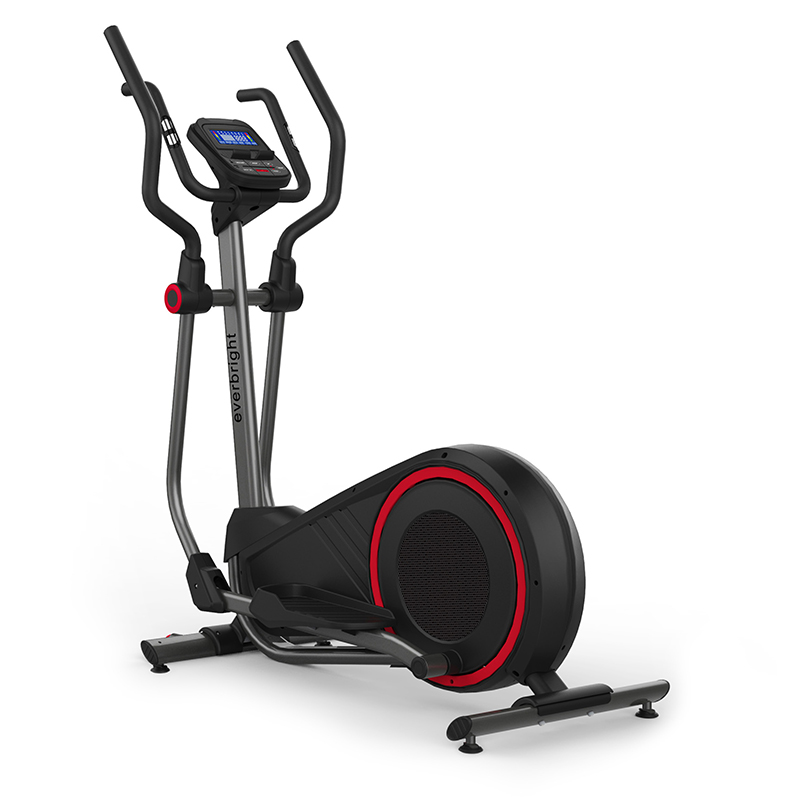
Body weight sets the baseline, but several other factors shift the number up or down for any given elliptical machine session.
Of these, resistance and arm engagement are the two variables most people leave untouched, and they are also the easiest to adjust mid-session for an immediate difference in calorie output. A simple test: hold your pace and speed constant for two minutes with arms resting on the stationary bars, then two minutes actively pushing and pulling the handles at the same pace. Most people notice their heart rate climb measurably during the second interval, which is a rough proxy for the increase in energy demand.
Higher-intensity elliptical machine sessions, particularly interval-based ones, can produce a modest afterburn effect known as excess post-exercise oxygen consumption. This means the body continues burning calories at an elevated rate for a period after the workout ends while it restores itself to a resting state. The effect is generally small relative to the calories burned during the workout itself, but it is one more reason that harder, well-structured sessions tend to outperform long, flat, low-effort ones on total daily calorie burn.
Every calorie estimate for elliptical machine training traces back to a measure called MET, or metabolic equivalent of task. One MET represents the energy your body uses at rest. Elliptical training at moderate intensity sits around 4.6 to 5.7 METs, meaning the body burns roughly 4.6 to 5.7 times more energy than it would sitting still. Vigorous interval sessions can push this figure closer to 7 or 8 METs for short bursts.
The standard formula used by exercise physiologists is:
Calories burned = MET x body weight in kg x duration in hours
As an example, a 70 kg (155 lb) person working at 5.0 METs for 30 minutes (0.5 hours) burns approximately 5.0 x 70 x 0.5 = 175 calories using the base formula, though real-world figures tend to run somewhat higher once stride mechanics and arm involvement are factored in, which is why practical estimates for the same person often land closer to 210 to 320 calories over 30 minutes.
Working through a second example makes the pattern clearer. An 84 kg (185 lb) person at 5.5 METs for 45 minutes (0.75 hours) computes to 5.5 x 84 x 0.75, which is approximately 347 calories from the base formula alone, before accounting for arm engagement or incline. Adjusting the MET value upward for a more vigorous pace, say to 7 METs for the same person and duration, raises the estimate to roughly 441 calories, which illustrates how much intensity alone can move the final number even when weight and duration stay fixed.
This formula also explains why two elliptical machines can display different numbers for what feels like the same workout. Machines that ask for your weight during setup use this equation, or a close variant of it, directly. Machines that skip that step often apply a generic average weight, which introduces error in either direction depending on how far your actual weight sits from that assumed average.
Calorie burn differences between cardio machines are smaller than most people assume. The table below compares typical 30-minute calorie ranges at moderate to vigorous effort.
| Machine | Moderate Effort | Vigorous Effort |
|---|---|---|
| Elliptical machine | 210 - 320 | 320 - 450 |
| Treadmill (walk/jog) | 180 - 300 | 350 - 500 |
| Stationary bike | 200 - 300 | 300 - 420 |
| Rowing machine | 210 - 310 | 330 - 460 |
| Stair climber | 220 - 330 | 340 - 480 |
At matched effort levels, running on a treadmill tends to edge out the elliptical machine slightly in raw calorie burn, mainly because running involves more direct impact and vertical movement. The tradeoff is joint stress: the elliptical machine keeps both feet in continuous contact with the pedals, which removes the impact spikes that running produces with every stride. For anyone managing knee or hip sensitivity, that difference in joint load often outweighs a small gap in calorie totals.
For pure calorie burn per minute, a stair climber or a vigorous treadmill run will generally edge out an elliptical machine session at matched perceived effort. For sustainable, joint-friendly calorie burn across a longer training block, the elliptical machine tends to win because people can maintain higher weekly volume without the accumulated wear that comes with repeated high-impact sessions. A rowing machine adds more upper-body and back involvement, which some people prefer for full-body conditioning, while the elliptical machine keeps the movement pattern closer to natural walking and running mechanics, which can make it easier to sustain proper form over longer sessions.
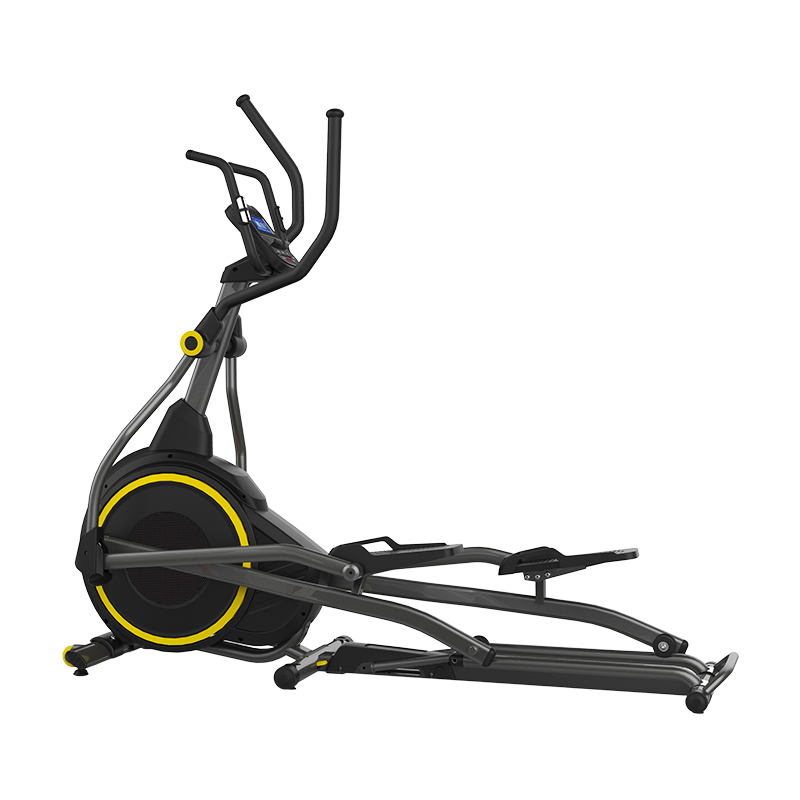
Built-in calorie counters on gym and home elliptical machines are known to run high, sometimes by 20 to 40 percent compared with lab-measured values. This happens for a few consistent reasons.
Most consoles use a generic formula built around an average adult weight, height, and age unless you enter your own stats precisely. Even when you do enter accurate information, the console cannot measure your actual oxygen consumption, so it estimates energy cost from resistance level and stride speed alone, which ignores individual differences in efficiency, muscle mass, and cardiovascular fitness.
Manufacturers also tend to calibrate consoles slightly optimistic, since a higher displayed number is generally viewed more favorably by users than a lower one, even if it is less accurate. This is not unique to elliptical machines; the same pattern shows up across treadmills, stationary bikes, and stair climbers from most major brands.
A practical takeaway: treat the number on the screen as a rough guide for tracking session-to-session progress rather than a precise figure to log into a calorie budget. If you need a more accurate number, a heart rate based estimate or a MET calculation using your actual body weight will typically land closer to reality than the console display. Consistency matters more than precision here — using the same method every session lets you track real trends even if the absolute number carries some built-in error.
Small adjustments during a session can meaningfully raise total calorie burn without extending workout time.
None of these changes require more time on the machine. A focused 30-minute elliptical machine session with resistance intervals and active arm engagement can match or exceed the calorie burn of a slower 45-minute session at a flat, low resistance setting.
A simple, repeatable structure that raises average intensity without requiring advanced fitness: five minutes at an easy warm-up pace, followed by six rounds of one minute at high resistance and hard effort paired with one minute at low resistance and easy effort, finishing with a five-minute cooldown at an easy pace. This totals 27 minutes and typically produces a higher calorie burn than 30 minutes at a single flat moderate pace, because the hard intervals push average heart rate well above what a steady pace alone can sustain for most exercisers.
Not every elliptical machine session should look the same. The right structure depends on what you are training for.
For general fat loss, three to five sessions per week of 30 to 45 minutes at moderate intensity, with resistance high enough that conversation becomes slightly difficult, tends to produce a reliable weekly calorie deficit when paired with consistent eating habits. Mixing in one or two interval sessions per week adds variety and raises average weekly calorie burn without requiring more total time.
For building aerobic base and endurance, longer steady-state sessions of 40 to 60 minutes at a sustainable moderate pace, done two to three times per week, build the aerobic capacity needed to sustain effort for longer periods. Calorie burn per minute is lower here than in interval work, but total session calorie burn is often higher simply because of the extended duration.
For people short on time, 20 to 25 minute interval sessions two to four times per week can deliver a comparable weekly calorie burn to longer steady sessions, provided the hard intervals are genuinely hard. The tradeoff is that interval sessions demand more recovery between workouts than easy steady-state sessions of the same frequency.
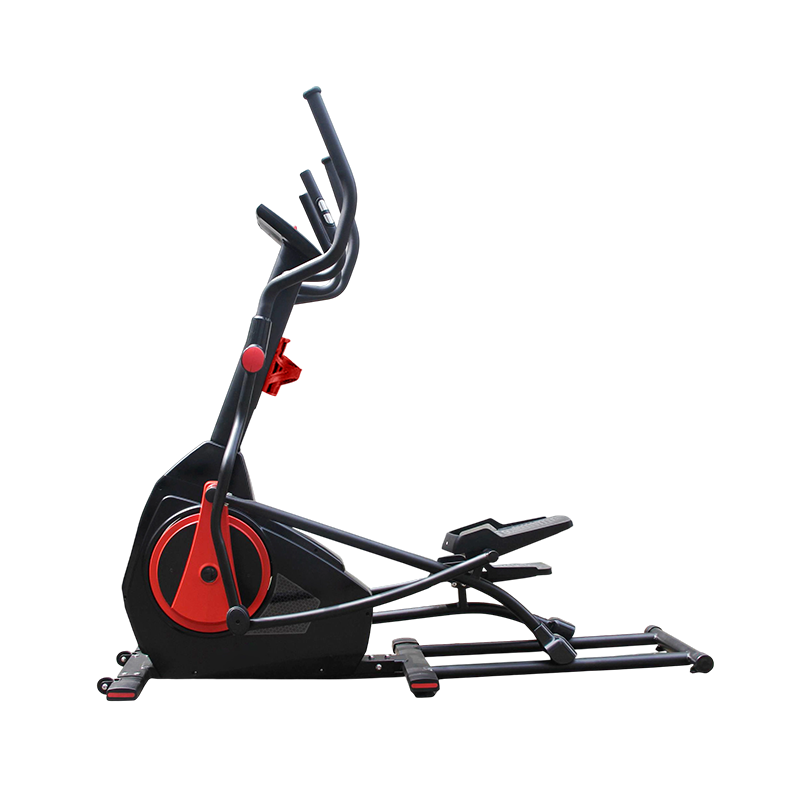
Most people burn between 130 and 250 calories in 20 minutes at moderate intensity, with the exact figure depending on body weight and resistance level. Someone at a lighter body weight working at a relaxed pace sits near the lower end, while a heavier person at higher resistance sits near the upper end.
Yes, the elliptical machine supports weight loss the same way any sustained cardio activity does, by contributing to a calorie deficit when combined with dietary control. Its main advantage for weight loss specifically is that the low-impact motion allows for longer, more frequent sessions with less recovery time needed compared with high-impact cardio.
Yes. Actively pushing and pulling the handles engages the chest, back, shoulders, and arms in addition to the legs, which raises total muscle recruitment and oxygen demand compared with keeping the arms still.
Console calorie counters generally use a simplified formula based on resistance and speed, while wrist-based trackers estimate calories from heart rate. The two methods rarely agree exactly, and console numbers tend to run higher because they do not account for individual fitness level or true oxygen consumption.
At moderate intensity, most people need roughly 65 to 90 minutes to reach 500 calories, while at a vigorous pace with higher resistance that time can drop to 45 to 60 minutes depending on body weight.
A 30-minute session at moderate to vigorous intensity meets a meaningful portion of the commonly recommended 150 minutes of weekly moderate activity, and it is enough to produce cardiovascular benefit and calorie burn on its own, especially when done consistently several times a week.
Yes. Raising the incline or ramp angle shifts more of the workload onto the glutes and hamstrings, which increases the overall energy cost of the session compared with a flat setting at the same speed and resistance.
Backward pedaling on an elliptical machine does not typically burn significantly more calories than forward pedaling at the same effort level, but it does shift emphasis toward the hamstrings and glutes, which some exercisers use to balance muscle engagement across a session rather than to chase a higher calorie number.
Beginners often burn a similar or even slightly higher number of calories at a given resistance and speed compared with experienced exercisers at the same body weight, since a less-conditioned cardiovascular system tends to work harder at the same perceived effort. As fitness improves, resistance and pace typically need to increase to maintain the same calorie burn.
Hot Products

Phone: +86-152 5836 5876
TEL: +86-574 6322 1199
Email: mandy@evbfit.com
Address: No. 518 Zhengtong Road, Kandun Street, Cixi, Ningbo, Zhejiang, China
Copyright © Zhejiang Everbright Industry, Inc. All Rights Reserved. Custom Exercise Bikes Manufacturers China Stationary Bikes Factory