Aug 24, 2026
Content
The direct answer: most commercial gym ellipticals use a 20-inch stride length. That number is the de facto industry standard because it fits the widest cross-section of adult gym users, from roughly 5'3" to 5'11" tall. If you do not feel joint pain, hip rocking, or overreaching on a 20-inch machine, it is almost certainly the right size for you.
When you ask, "how many inches of stride for elliptical at the gym," the practical answer is a range: 18 to 22 inches. Machines below 18 inches are mostly designed for home use and compact frames, while machines above 20 inches, up to 22 inches, are built for taller commercial users and heavier-duty training environments. This guide explains why that range exists, how to match it to your body, and how to verify the fit on any machine on the gym floor.
Stride length is the horizontal distance between the pedal at its furthest forward point and the pedal at its furthest rearward point as it travels along the elliptical path. It is fixed by the machine's crank arm and frame geometry, which is why two ellipticals with the same 20-inch specification can feel entirely different depending on the drive design.
In a cross-analysis of equipment sizing guides, Sunny Health & Fitness identifies 20 inches as the typical stride on commercial gym ellipticals, while Skelcore's sizing framework places 16–20 inches in the mid-range band for users from roughly 5'3" up to 6 feet. SoLe Treadmills and Peak Primal Wellness similarly agree that users over 6 feet generally need 20 inches or more. The consensus across these sources is that the gym-standard 20-inch figure sits near the top of the mainstream range on purpose: it serves both average-height users and the upper end of the taller bracket.
Rear-drive ellipticals position the flywheel behind the user and produce a flatter, longer-feeling pedal path, which is why a rear-drive elliptical tends to feel more spacious for tall users at the same stride number. Front-drive machines position the flywheel at the front and deliver a slightly more vertical path with a more upright posture; this makes a front-drive elliptical feel more compact and can suit shorter users better.
If you are over 5'10", test a rear-drive model before concluding that a 20-inch stride feels short. If you are under 5'4", a front-drive unit may allow you to use the same 20-inch machine without discomfort.
Use this table as your first reference when evaluating a gym machine. The numbers assume a fixed-stride elliptical with a normal pedal spacing.
| User Height | Recommended Stride Length | Typical Machine Class |
|---|---|---|
| Under 5'0" (152 cm) | 11"–14" | Compact home ellipticals |
| 5'0"–5'3" (152–160 cm) | 14"–16" | Home and light recreational use |
| 5'3"–5'6" (160–168 cm) | 16"–18" | Home, light commercial |
| 5'6"–5'11" (168–180 cm) | 18"–20" | Commercial gym standard |
| 6'0" and above (183 cm+) | 20"–22" | Commercial, wide-step machines |
Two independent sizing guides are consistent on the key boundary: 16 inches is the functional minimum for most adults, and 18 inches is the minimum for anyone around 6 feet tall. A 20-inch gym floor machine therefore sits comfortably inside the recommended zone for the majority of users, which is exactly why commercial facilities standardize on it.
A mismatched stride does not just feel awkward; it changes how your joints, muscles, and cardiovascular system respond to the workout. Here is the practical effect of each scenario:
The effect extends beyond comfort. A stride that is too short shifts more work to the quadriceps and reduces glute and hamstring activation. When the stride matches your leg length, you can sustain a higher cadence with lower perceived effort, and over a full session that translates into greater total training volume and higher calorie expenditure.
Commercial gyms standardize on a 20-inch stride for a simple reason: population matching. Most adult gym users fall between 5'3" and 5'11", and a 20-inch stride fits exactly that band. Choosing a different midpoint would leave either the shorter or taller half of the membership on a poorly matched machine.
Gym-grade machines also differ from home models in ways that affect stride feel: larger flywheels smooth out the motion, heavier frames reduce flex at the pedal mounts, and wider pedal spacing helps taller users keep their ankles in a neutral line. When gym buyers evaluate equipment, they look at stride length together with drive type, flywheel weight, pedal gap, and frame durability.
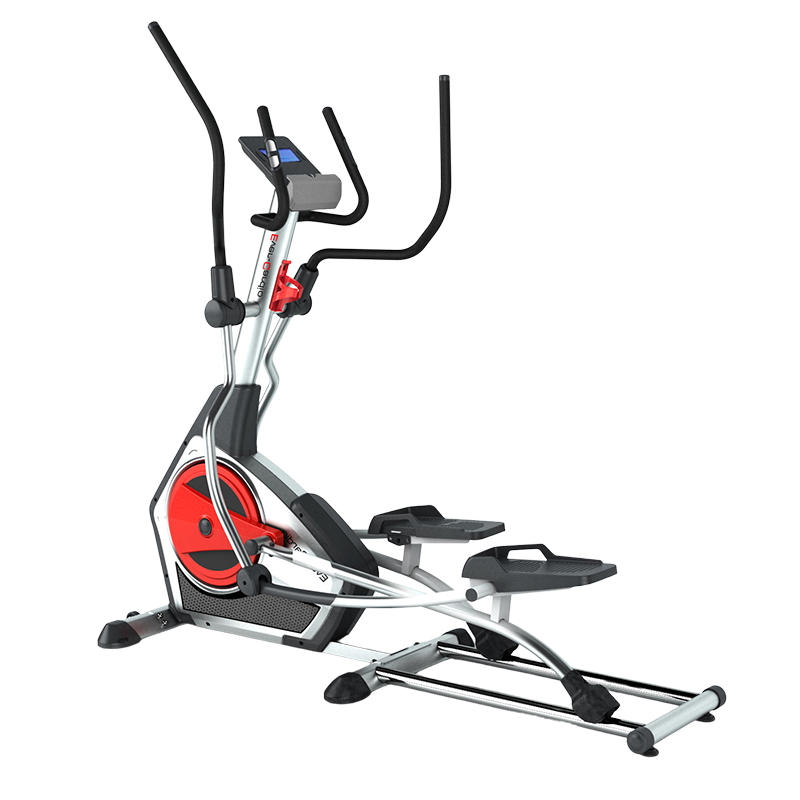
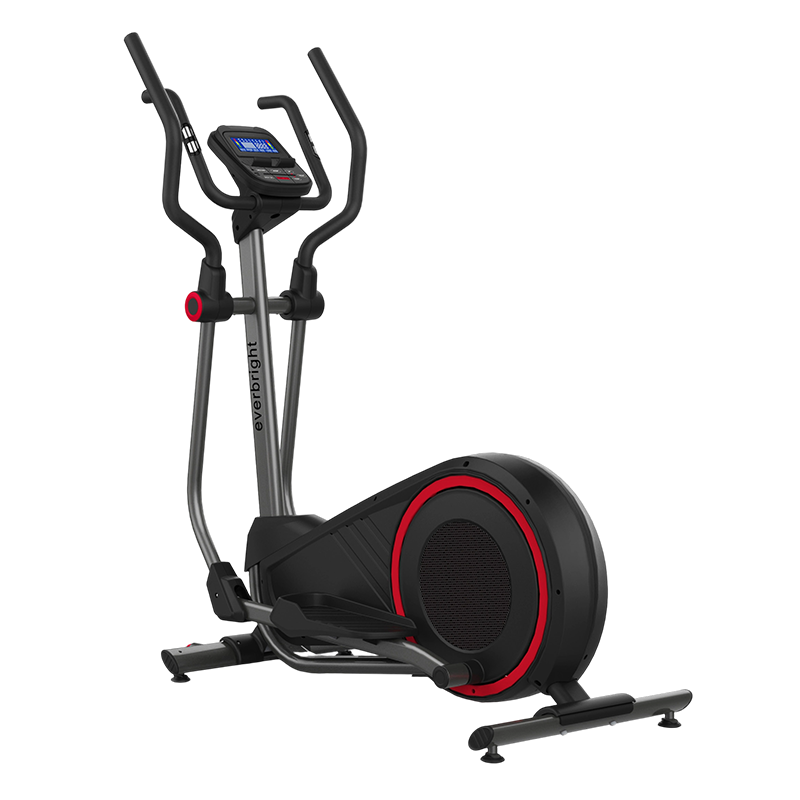
For high-traffic facilities, a wide-step commercial elliptical gives tall gym members the full 20-inch-class stride plus a more generous pedal gap that reduces ankle and hip strain. For boutique studios, hotel gyms, and lighter-traffic spaces, an EB5200T light commercial elliptical keeps the same stride standard in a lighter-duty frame at a more accessible price point.
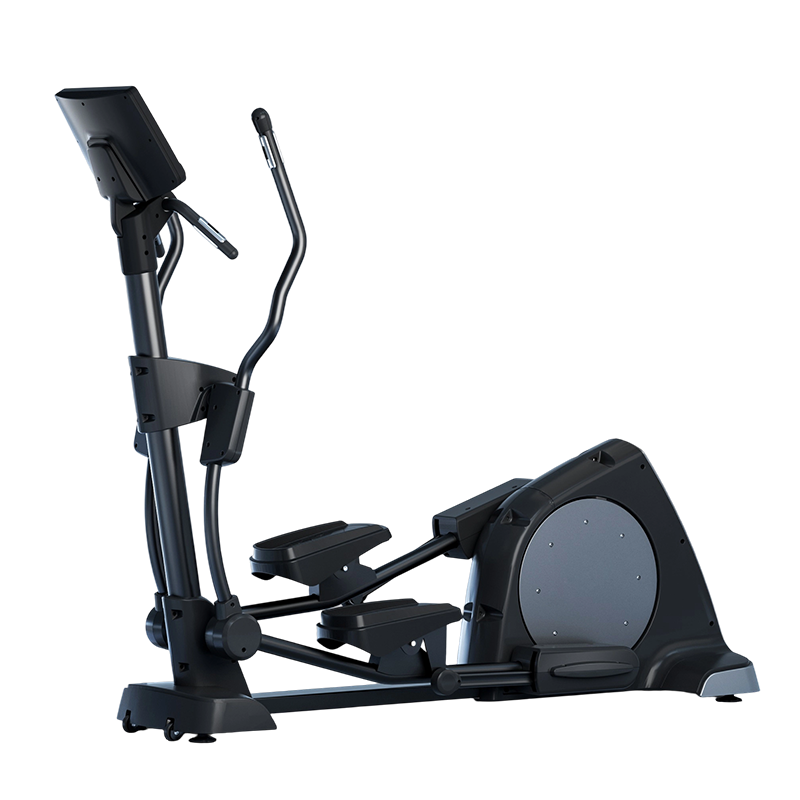 EB5200T Light Commercial Elliptical Machine- Zhejiang Everbright Industry, IncInstrument Features:1) Supports multi-user data storage, allowing you to distinguish exercise records for family members or different use...View Product →
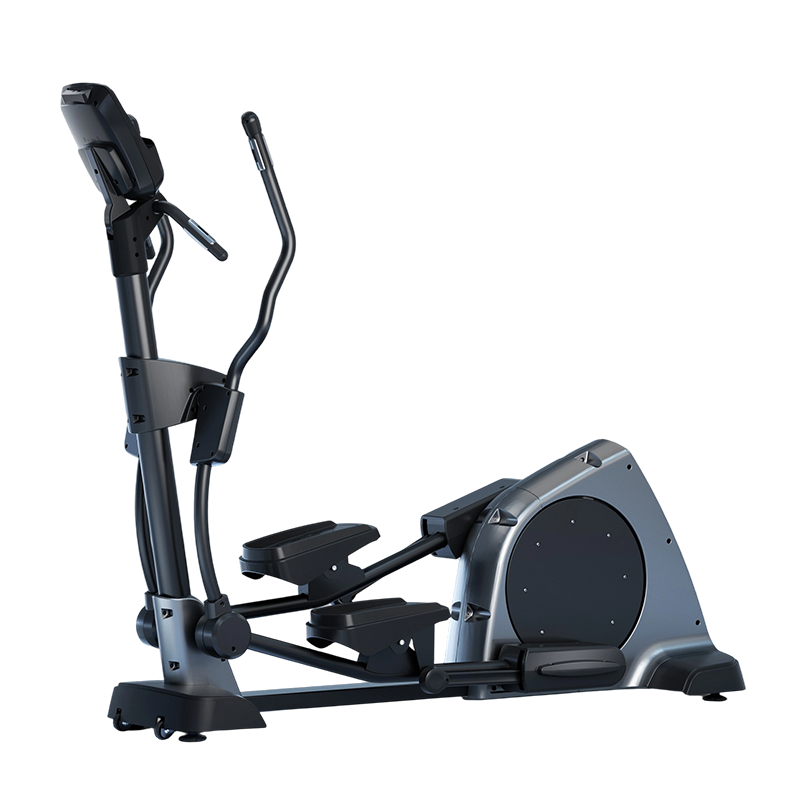 EB5200L Wide-Step Commercial Elliptical Machine- Zhejiang Everbright Industry, IInstrument Features:1) A large 7-inch (158*97) display provides clear and intuitive data display, making it easy for users to quickly rea...View Product →
On the premium end of the gym floor, self-generating machines pair a long stride with electromagnetic resistance. The EB5000 self-generating electromagnetic elliptical, for instance, adds a 21-inch display and generator-driven resistance, which means the resistance system does not even need a power cord. These machines show how a manufacturer's complete elliptical machine lineup balances stride length, drive design, console features, and commercial durability in one package.
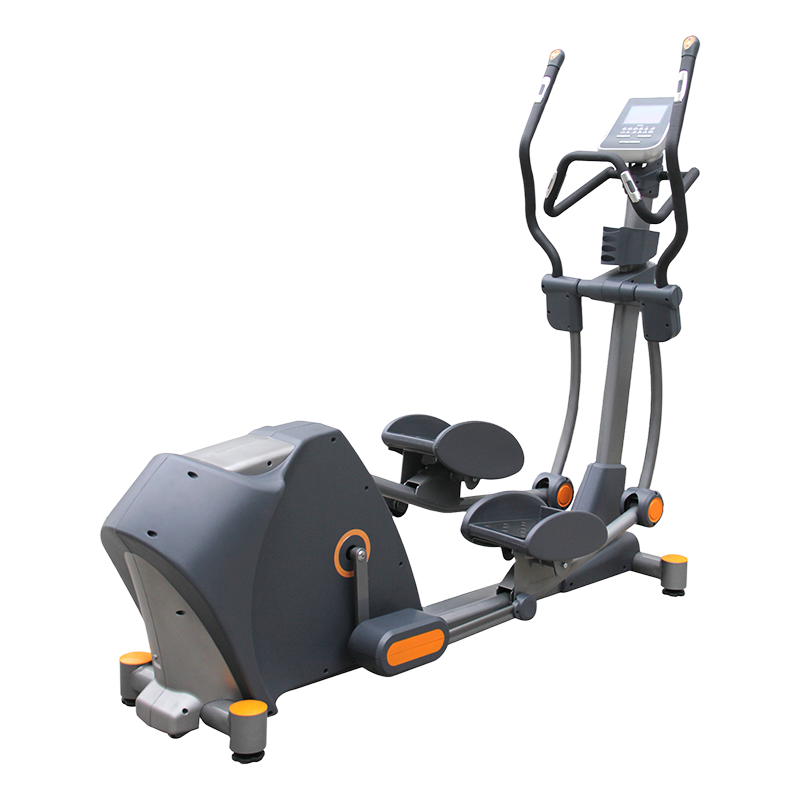 EB5000 21-Inch Self-Generating Electromagnetic Elliptical Machine- Zhejiang EverInstrument Features:1) The meter features a high-resolution display with clear, detailed content, allowing users to more intuitively view...View Product →
Here is a fact most gym users miss: nearly every elliptical on a commercial gym floor has a fixed stride length. The pedal path is welded into the frame geometry, and the stride cannot be changed by the user. Adjustable stride mechanisms add cost and moving parts, which is exactly why gym brands avoid them and most home models in the value segment skip them too.
If you cannot adjust the stride, which variables can you adjust? The three that matter are pedal height on some models, incline ramp angle, and resistance. An incline ramp does not change the stride length; it changes the angle of the pedal path, shifting muscle emphasis from the calves and quads to the glutes and hamstrings. So if a machine feels fine in the hips but you want more glute engagement, raise the incline. If the stride itself is wrong, no incline setting can fix it.
For home buyers who share a machine between different-height family members, an adjustable-stride model is worth the premium. For gym members, the realistic approach is machine selection rather than machine adjustment: find the unit whose fixed geometry matches your height.
You do not need a spec sheet or a tape measure to confirm a stride fits. Use this five-step protocol on any machine:
If the machine fails the test and it is a fixed-stride commercial unit, move to a different model or drive type. A rear-drive machine may fit where a front-drive unit does not, even when both list a 20-inch specification.
Pay attention to these symptoms during or after a gym session. They are reliable indicators that the machine geometry, not your fitness level, is the problem:
If any of these appear consistently, switch machines before changing your workout intensity. The right machine will feel noticeably smoother within the first minute.
No. Twenty inches is the most common specification, but commercial machines range from 18 to 22 inches depending on the manufacturer and model tier. The only reliable way to know is to check the spec decal on the frame or console, or look up the model number online.
It usually is. Shorter users typically prefer a stride of 14 to 16 inches, and a 20-inch stride will cause the hips to rock and the feet to overreach. If you are under 5'3", look for a 16-to-18-inch machine or an adjustable-stride model instead of the standard gym unit.
Look for a sticker or decal on the back of the console, the side of the frame, or near the flywheel. If the model number is visible, search it online. Facility managers also have the spec sheet and can tell you the exact figure.
Not automatically. A longer stride that forces an awkward gait lowers your sustainable cadence and reduces total work output. A correctly matched stride lets you maintain a higher, more consistent effort, and that higher effort is what drives calorie burn.
Almost never. Commercial machines use fixed pedal geometry for durability and maintenance simplicity. A small number of adjustable-stride machines exist, but they are rare on gym floors and far more common in the premium home market.
For a general membership, a 20-inch fixed-stride machine is the safest baseline. Adding a wide-step 20-to-22-inch model covers taller users, and a 16-to-18-inch unit in the same cardio zone can accommodate smaller members. Light-traffic facilities can step down to light commercial frames without losing the 20-inch stride benefit.
Hot Products

Phone: +86-152 5836 5876
TEL: +86-574 6322 1199
Email: mandy@evbfit.com
Address: No. 518 Zhengtong Road, Kandun Street, Cixi, Ningbo, Zhejiang, China
Copyright © Zhejiang Everbright Industry, Inc. All Rights Reserved. Custom Exercise Bikes Manufacturers China Stationary Bikes Factory