Aug 03, 2026
Content
For pure calorie burn and lower-body strength building, the stairmaster is the more intense choice, typically burning 15-20% more calories per session than an elliptical at a comparable perceived effort. For joint-friendly, full-body cardio that you can sustain for longer sessions, the elliptical is the safer and more sustainable option, especially for beginners, older adults, or anyone recovering from a lower-body injury.
Neither machine is universally "better." The right pick depends on your goals: choose the stairmaster if you want to build glute and quad strength while maximizing calorie burn in a short workout window. Choose the elliptical if you want a low-impact, joint-sparing cardio session that also engages your arms and core through moving handles.
The sections below break down the exact differences in calorie burn, muscles worked, joint impact, and which machine fits which type of person, along with sample workouts for both.
A stairmaster (also called a stair climber or stepmill) simulates the motion of climbing a continuous flight of stairs. Most commercial models use a rotating staircase of 6-8 steps that cycles beneath you, forcing your legs to lift and drive downward in a stepping pattern rather than a fixed pedal motion.
Because the stairmaster mimics real stair climbing, it heavily recruits the glutes, quadriceps, hamstrings, and calves, and it demands more from your hips and core to keep you upright and balanced with each step.
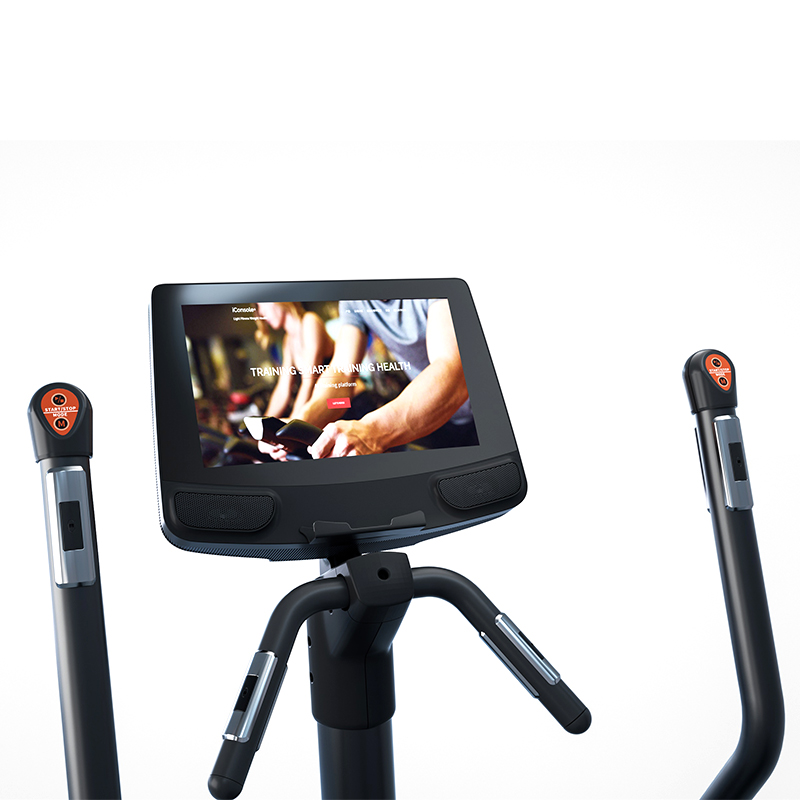
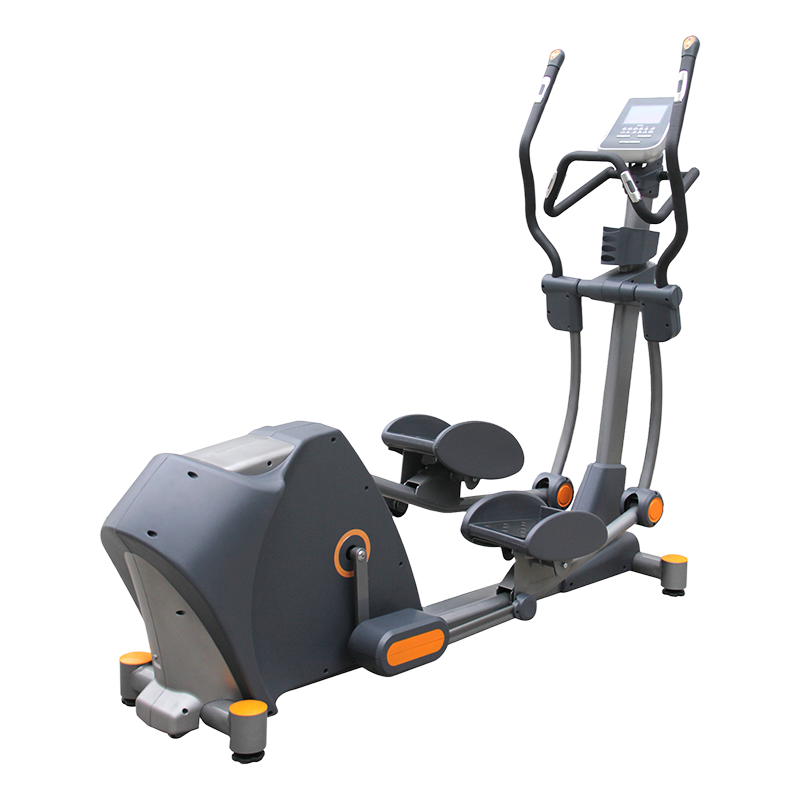
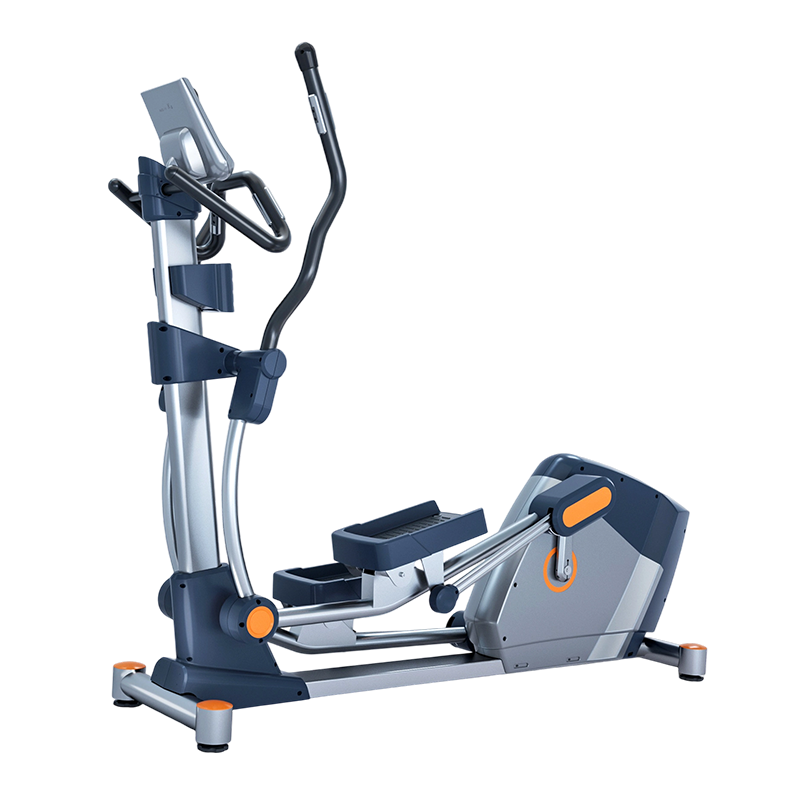
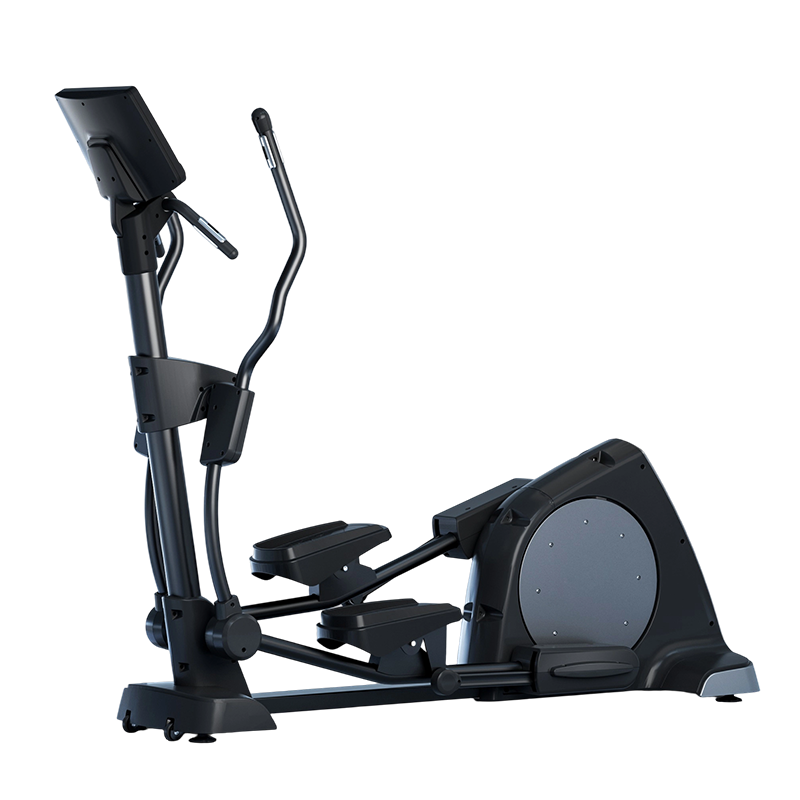
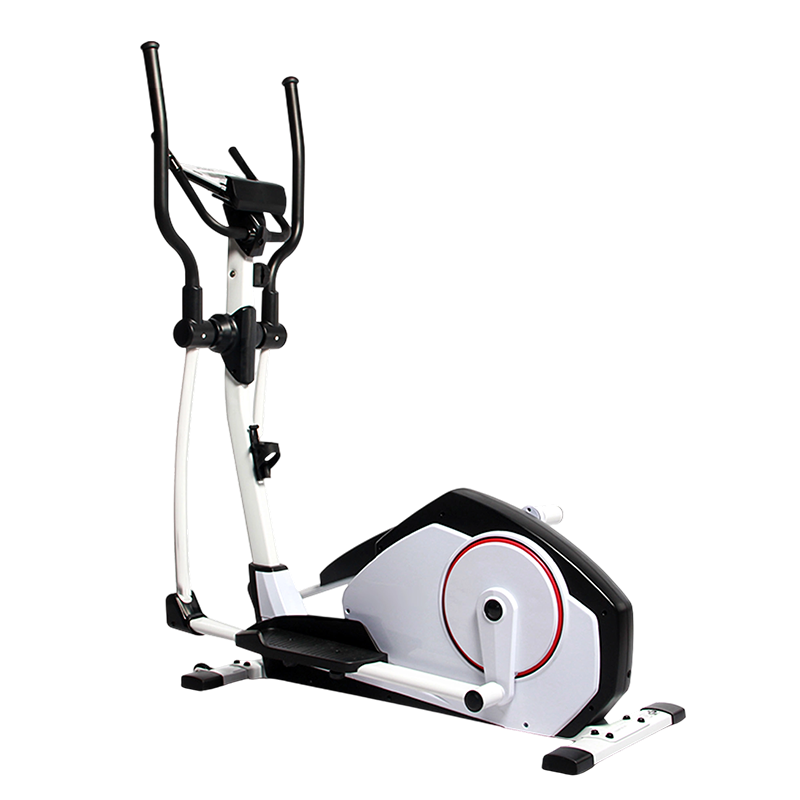
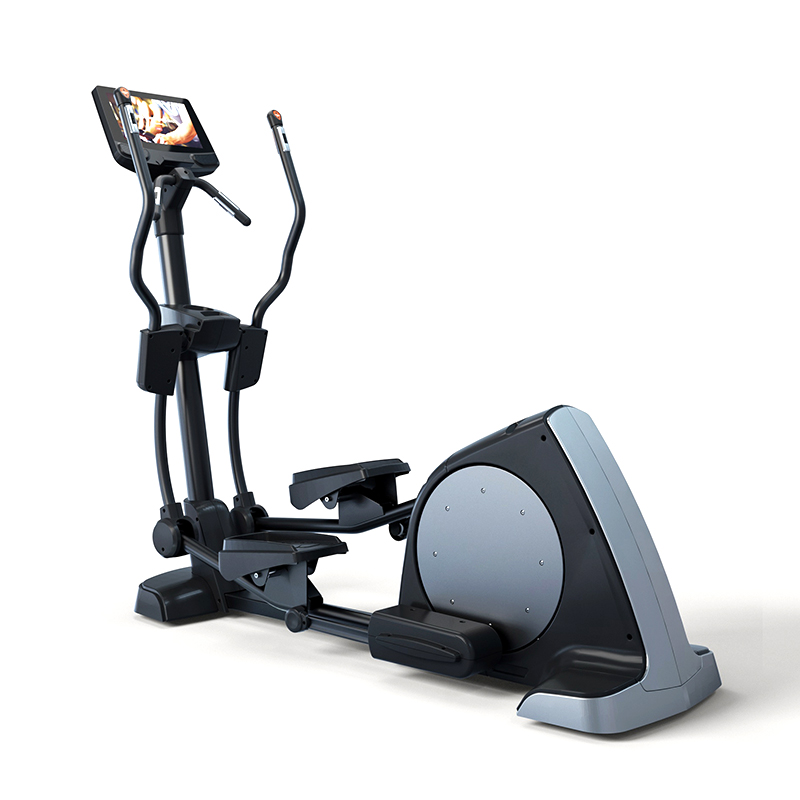
An elliptical trainer uses two pedals that move in a fixed elliptical (oval-shaped) path, combined with moving handles that let you push and pull with your arms. The motion blends elements of walking, cycling, and stair climbing into one smooth, continuous glide.
This combination makes the elliptical one of the few cardio machines that offers near-zero impact while still training the upper and lower body together in a single motion.
Calorie burn depends heavily on body weight, intensity, and workout duration, but general research-backed estimates for a 155-pound (70 kg) person show a clear pattern:
| Machine | Moderate Effort | Vigorous Effort |
|---|---|---|
| Stairmaster / Stepmill | 223 kcal | 335 kcal |
| Elliptical | 200 kcal | 300 kcal |
Heavier individuals burn more on both machines because vertical stepping and elliptical striding both require moving more body mass. A 185-pound person can expect roughly 20% higher totals than the figures above on either machine.
The stairmaster wins on raw calorie burn per minute mainly because it is a purely vertical, weight-bearing movement. Every step requires you to lift your entire body weight against gravity, which is metabolically more demanding than the elliptical's smooth, momentum-assisted glide.
| Muscle Group | Stairmaster | Elliptical |
|---|---|---|
| Glutes | Very High | Moderate |
| Quadriceps | High | High |
| Hamstrings | High | Moderate |
| Calves | High | Low-Moderate |
| Core | Moderate | Moderate |
| Arms / Shoulders / Back | Minimal | Moderate (with handles) |
The stairmaster concentrates almost all of its load on the lower body, making it excellent for glute and leg strength endurance. The elliptical distributes work across the upper and lower body when you actively push and pull the handles, giving it a slight edge for total-body conditioning.
This is where the two machines diverge the most, and it's often the deciding factor for people with knee, hip, or back concerns.
The stairmaster is low-impact but high-load. There's no jarring foot strike like running, but because it's a weight-bearing vertical movement, it places continuous compressive stress on the knees and hips, especially at higher step speeds or with poor posture (leaning heavily on the handrails).
The elliptical is widely considered the gentlest cardio machine on the joints. Because the feet never leave the pedals and the motion path is fixed and smooth, there is virtually no impact loading, which is why physical therapists frequently recommend it during rehabilitation from knee surgery, ankle injuries, or lower-back issues.
Both machines are effective tools for improving cardiovascular fitness, but they train your heart and lungs slightly differently.
The stairmaster tends to push your heart rate up faster because the movement is more metabolically demanding per minute. This makes it well suited to interval training, short bursts of high intensity followed by recovery, which has been shown to improve cardiovascular capacity efficiently in shorter total workout times.
The elliptical allows for longer, steadier sessions at a controlled heart rate, making it a strong choice for steady-state cardio, the kind of extended, moderate-intensity training that builds aerobic base and endurance without excessive joint fatigue.
Weight loss ultimately comes down to calorie balance over time, not which single machine you choose. That said, there are practical differences worth considering.
The stairmaster burns more calories per minute, so it can create a larger calorie deficit in a shorter workout. However, its intensity also makes it harder to sustain for long durations, and many people burn out on it after 15-20 minutes.
The elliptical burns slightly fewer calories per minute but is easier to sustain for 30-60 minutes at a time, and it's gentler on recovery, meaning you can train more frequently without accumulating joint fatigue. Over a full week, consistent 40-minute elliptical sessions can produce a comparable or even greater total calorie burn than shorter, harder stairmaster sessions that leave you needing extra rest days.
For most people, the best approach for weight loss is alternating between both machines across the week to balance intensity with recovery.
Beginners generally find the elliptical easier to learn and more approachable. The fixed pedal path means there's no risk of missing a step or losing your footing, and the intensity can be scaled down to a very light effort while still moving your whole body.
The stairmaster has a steeper learning curve. New users often struggle with pacing, tend to lean too heavily on the handrails, and can fatigue their legs within just a few minutes if they start at too fast a step speed. If you're new to cardio machines, starting on the elliptical for 2-3 weeks before introducing short stairmaster intervals is a reasonable progression.
For older adults or anyone managing arthritis, prior joint surgery, or chronic joint pain, the elliptical is almost always the better option. Its zero-impact, fixed-path motion allows for effective cardiovascular training without the compressive loading that the stairmaster places on the knees and hips.
If mobility and balance are strong and a doctor or physical therapist has cleared higher-intensity training, short, slow-paced stairmaster sessions can still be incorporated to help maintain lower-body strength, which is important for fall prevention. But as a default daily cardio option, the elliptical is the safer long-term choice for this group.
| Factor | Stairmaster | Elliptical |
|---|---|---|
| Typical Footprint | Compact to Moderate | Moderate to Large |
| Noise Level | Moderate (motorized steps) | Low |
| Mechanical Complexity | Higher (motor, chain-driven steps) | Lower (flywheel-based) |
| Typical Home Price Range | Higher | Wide range, entry models more affordable |
Home stairmaster units tend to be mechanically more complex because they use a motorized, chain-driven step mechanism, which generally means a higher price point and more maintenance needs over time. Ellipticals rely on a simpler flywheel and resistance system, which usually makes them quieter and easier to maintain for home use.
Using both machines in the same training week is one of the most effective approaches for most people. The stairmaster builds lower-body strength and pushes cardiovascular intensity, while the elliptical provides recovery-friendly volume and total-body engagement without adding joint stress.
A practical structure is to treat the stairmaster as your higher-intensity, shorter-duration session (similar to a strength-cardio hybrid) and the elliptical as your longer, steady-state recovery cardio. This combination reduces the risk of overuse injury while still delivering strong calorie burn and cardiovascular improvement across the week.
Understanding the design history of each machine explains why they feel so different underfoot. The stairmaster was originally developed in the 1980s as a training tool to condition firefighters and athletes for repeated stair-climbing under load, which is why its motion is deliberately vertical, weighted, and unforgiving. It was built to replicate a real physical task, not to smooth it out.
The elliptical arrived in the 1990s specifically as an answer to the injury complaints coming out of treadmill running. Engineers designed the oval foot path to eliminate the "dead spot" where a foot strikes the ground, blending the hip motion of walking with the smoothness of cycling. Its entire design brief was to reduce impact while preserving a full range of motion, which is the opposite design goal of the stairmaster.
This history is useful context: if your priority is replicating a demanding, functional, weight-bearing task, the stairmaster is doing exactly what it was built to do. If your priority is joint preservation while still training your heart and legs, the elliptical is doing exactly what it was built to do. Neither machine has "improved" on the other over time, they were built to solve different problems.
On a stairmaster, each step is a mini squat-to-lockout pattern. Your hip flexes and your knee bends as you lift your leg onto the next step, then your glutes and quads drive extension as you push down through the step. This repeated hip and knee extension under body-weight load is what makes the stairmaster so effective for glute development, it is essentially hundreds of weighted step-ups performed continuously.
Your ankle also plays a bigger role than most people expect. Because you're pushing off the ball of your foot on every step, your calves and Achilles tendon absorb repeated loading, which is part of why new users often feel calf fatigue and soreness after their first few stairmaster sessions.
On an elliptical, your foot stays fixed to the pedal through the entire stride, so your hip and knee move through a continuous arc rather than a series of discrete lifts. This removes the "loading and unloading" cycle that happens on a stairmaster or when walking, and instead creates one smooth resistance curve throughout the stride.
Because your foot never leaves the pedal, the muscles around your ankle do far less stabilizing work, and the movement is guided almost entirely by the machine's fixed path. This is a major reason ellipticals feel easier to balance on and safer for people with limited ankle or knee stability.
Calorie burn scales with body weight because moving more mass requires more energy on both machines. The table below extends the earlier estimate across a wider weight range for a 30-minute session at moderate effort.
| Body Weight | Stairmaster | Elliptical |
|---|---|---|
| 125 lb (57 kg) | 180 kcal | 162 kcal |
| 155 lb (70 kg) | 223 kcal | 200 kcal |
| 185 lb (84 kg) | 266 kcal | 238 kcal |
| 215 lb (98 kg) | 310 kcal | 277 kcal |
These figures are estimates based on standard metabolic equivalent (MET) calculations and will vary with individual fitness level, effort, and machine settings. The gap between the two machines stays roughly proportional across weight ranges, with the stairmaster consistently burning about 10-12% more than the elliptical at matched effort levels.
Because the stairmaster is more metabolically demanding, it tends to push your heart rate into higher training zones faster than the elliptical at the same perceived exertion. This has practical implications for how you should structure sessions on each machine.
Most users reach 75-85% of their max heart rate (Zone 4) within 3-5 minutes of steady stairmaster climbing, making it naturally suited to shorter, harder sessions or interval formats rather than long continuous efforts.
The elliptical allows more control over intensity because resistance and incline can be dialed down independently, making it easier to hold a steady 60-70% of max heart rate (Zone 2-3) for 30-60 minutes, which is the zone most associated with building aerobic base and improving fat metabolism over time.
If your goal is building aerobic endurance, longer elliptical sessions in Zone 2-3 are typically more appropriate. If your goal is improving VO2 max or anaerobic capacity, shorter high-intensity stairmaster intervals in Zone 4-5 are more effective per minute spent.
| Machine | Common Mistake | Fix |
|---|---|---|
| Stairmaster | Leaning on handrails to reduce load | Use handrails for balance only, keep torso upright |
| Stairmaster | Taking short, rapid shuffle steps | Slow down and take full, deliberate steps |
| Elliptical | Letting momentum do all the work | Raise resistance so your muscles, not gravity, drive the stride |
| Elliptical | Locking knees at full extension | Keep a soft bend in the knee throughout the stride |
This plan is designed to build aerobic base on the elliptical while gradually introducing stairmaster intensity, so you develop both endurance and lower-body strength without overloading your joints too quickly.
Three elliptical sessions of 25-30 minutes at a steady, moderate pace. No stairmaster yet, focus purely on building comfort and consistency.
Two elliptical sessions of 30 minutes, plus one short stairmaster session of 10 minutes at a slow, steady step rate to introduce the movement pattern.
Two elliptical sessions of 35 minutes, plus two stairmaster sessions of 15 minutes, including light intervals (1 minute faster pace, 2 minutes recovery).
Two elliptical sessions of 40 minutes steady-state, plus two stairmaster interval sessions of 20 minutes each, using a 1:2 work-to-recovery ratio at a challenging pace.
By the end of four weeks, most users can comfortably sustain both a long elliptical session and a structured stairmaster interval workout in the same training week, which is a solid template to continue long-term.
Because the stairmaster loads the glutes, quads, and calves more intensely, it's common to feel next-day soreness in those muscle groups, especially after your first few sessions or after increasing step speed. The elliptical, being gentler and more evenly distributed, typically produces less post-workout soreness, which is one reason it's easier to use on consecutive days.
Placing the stairmaster and elliptical alongside two other common cardio machines helps clarify where each one fits in a broader routine.
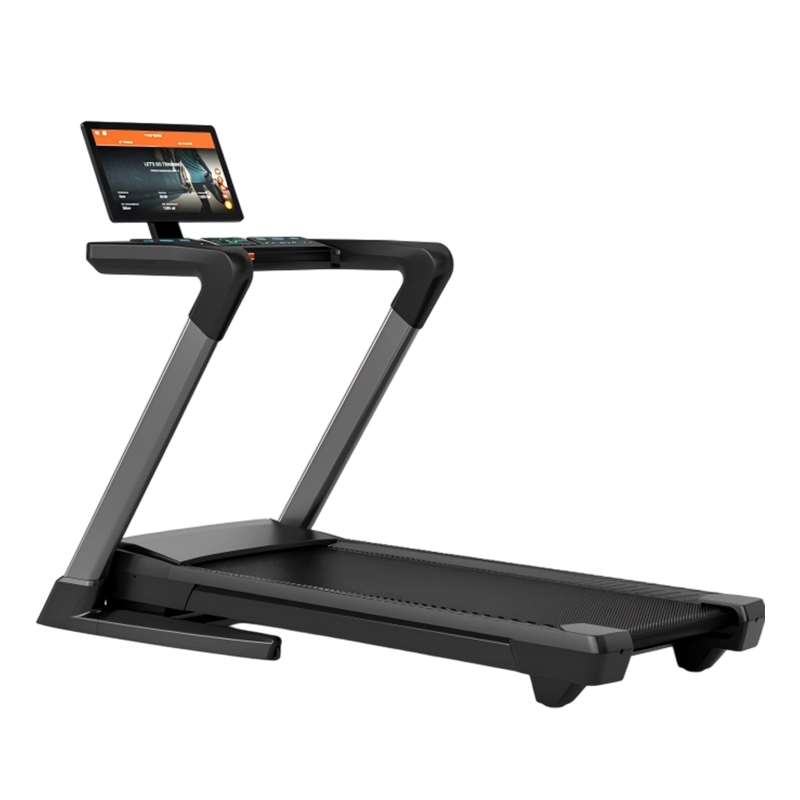
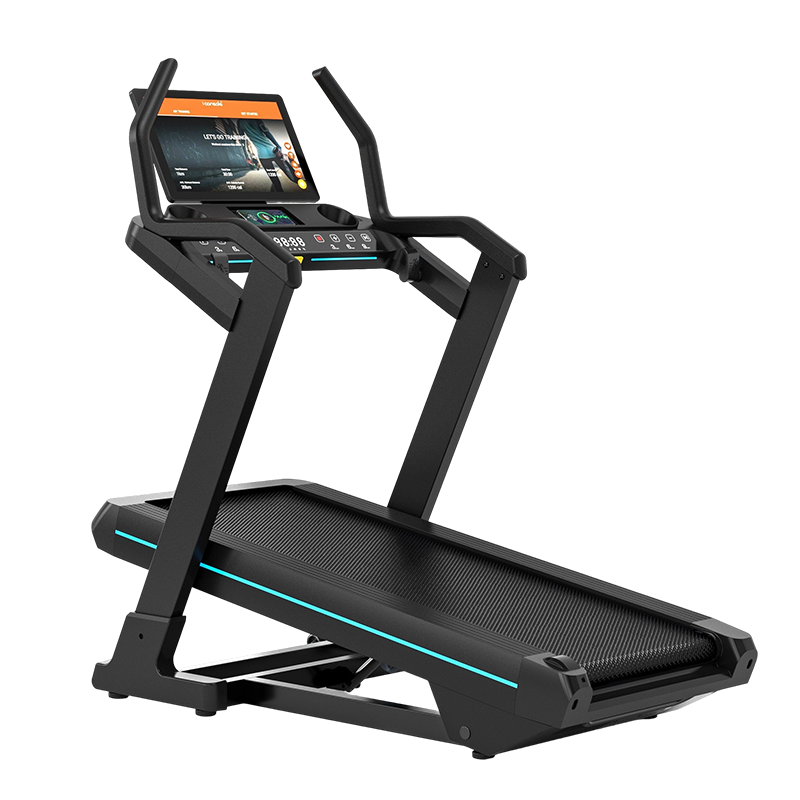
A treadmill, particularly at a running pace, produces more joint impact than either the stairmaster or elliptical because of the repeated ground-strike force, but it also tends to burn calories at a similar or higher rate than the stairmaster at matched perceived effort. A stationary bike is the gentlest option of all on the joints, even more so than the elliptical, but it isolates the lower body almost entirely and does not engage the upper body or core to the same degree as an elliptical with active handles.
In this context, the stairmaster sits closer to running in terms of intensity and lower-body loading, while the elliptical sits closer to cycling in terms of joint friendliness, but with the added benefit of upper-body engagement that cycling does not offer.
This isn't accurate. Elite athletes and physical therapists use ellipticals for high-intensity interval training and rehabilitation alike. Increasing resistance and incline can make an elliptical session just as demanding as many other cardio machines, it's simply more scalable across fitness levels.
Cardio-based stepping, even at high volume, is very unlikely to significantly increase muscle size on its own. Muscle growth requires progressive resistance training with adequate load, which a bodyweight stepping motion does not typically provide. The stairmaster builds muscular endurance and tone in the lower body far more than it builds bulk.
On both machines, consistency and appropriate intensity matter more than always training at maximum resistance. Overly aggressive settings often lead to poor form, faster burnout, and higher injury risk, particularly on the stairmaster where speed control is critical for safety.
Yes, at matched time and perceived effort, the stairmaster is generally more physically demanding because it requires lifting your full body weight vertically with every step, while the elliptical's momentum-assisted glide reduces the load per stride.
The stairmaster provides more targeted glute and quad activation due to its vertical stepping motion. The elliptical also works the legs but distributes more of the effort across a wider range of muscles, including the upper body when handles are used.
Beginners can use the stairmaster, but it's easier to build a base level of fitness and step confidence on the elliptical first, then introduce short stairmaster intervals once basic cardio endurance improves.
Yes. While it burns slightly fewer calories per minute than the stairmaster, the elliptical allows for longer, more sustainable sessions and engages both the upper and lower body, making it an effective and joint-friendly cardio option.
The elliptical is generally considered safer for bad knees because its fixed, smooth pedal path avoids the compressive vertical loading that the stairmaster places on the knee joint with every step.
Most people do well with 3-5 cardio sessions per week, mixing machines based on recovery needs. A common approach is 2-3 elliptical sessions for volume and 1-2 shorter stairmaster sessions for intensity.
Both engage the core to a moderate degree for balance and stability, but neither is a dedicated core exercise. The stairmaster requires slightly more core stabilization due to the vertical stepping motion, especially if you avoid leaning on the handrails.
The elliptical is generally better suited to building long-duration aerobic endurance because its lower joint stress allows for longer, more frequent sessions. The stairmaster is better for building short-burst, high-intensity capacity due to its greater metabolic demand per minute.
Neither machine targets fat loss in a specific body area, spot reduction is not physiologically possible. Both machines contribute to overall calorie expenditure, and consistent use of either, combined with a calorie deficit, supports fat loss across the whole body over time.
Yes, for most people 20 minutes on the stairmaster, especially with intervals, is a substantial workout given its intensity. Many users find it more effective to do 15-20 focused minutes on the stairmaster than to force a longer session at reduced intensity.
Sessions of 30-45 minutes at a moderate to vigorous pace are commonly recommended for weight loss goals, performed 3-5 times per week alongside a calorie-appropriate diet.
Yes, pedaling backward shifts more emphasis onto the hamstrings and calves and slightly reduces quad dominance, offering a useful variation within the same session.
Visible fat loss follows overall body fat reduction rather than machine choice. Whichever machine you can use most consistently and recover from well will typically produce better visible results over time than a "harder" machine used inconsistently.
Hot Products

Phone: +86-152 5836 5876
TEL: +86-574 6322 1199
Email: mandy@evbfit.com
Address: No. 518 Zhengtong Road, Kandun Street, Cixi, Ningbo, Zhejiang, China
Copyright © Zhejiang Everbright Industry, Inc. All Rights Reserved. Custom Exercise Bikes Manufacturers China Stationary Bikes Factory