Sep 14, 2026
Content
The most effective elliptical workout for weight loss is a structured mix of high-intensity interval training (HIIT) and moderate steady-state cardio, performed on four to five days per week. This approach keeps your body both challenged and recoverable, which maximizes the total calorie deficit you can sustain.
Unlike short, one-off workouts, this weekly system lets you alternate between hard effort and moderate effort so that your joints, tendons, and nervous system can adapt. In the sections below, you will find exact protocols, weekly schedules, and the machine features that actually matter for fat loss.
An elliptical trainer allows you to burn a substantial number of calories while keeping the impact on your knees and hips extremely low. For anyone who is 30 pounds overweight or more, this reduces the risk of shin splints, knee pain, and plantar fascia discomfort that often appear with running or high-impact aerobics.
Using an elliptical recruits both your lower body and upper body when you push and pull the moving handles. This full-body engagement raises your heart rate without requiring you to achieve a high stride speed. According to Harvard Health Publishing's calorie chart, a 155-pound person burns approximately 335 calories in 30 minutes at a moderate elliptical pace, and this number climbs closer to 420 calories at a vigorous pace.
Researchers and trainers generally agree that interval training creates a bigger metabolic disturbance than steady-state cardio. The "afterburn effect" or excess post-exercise oxygen consumption (EPOC) can keep your metabolism elevated for several hours after you stop. While the exact magnitude depends on intensity, the practical consequence is that you burn more total calories per minute of exercise, and you do not have to spend 60 minutes on the machine to achieve a meaningful result.
Steady-state cardio still has a place because it builds mitochondrial density and teaches your body to use oxygen efficiently. The best plan is to include both. If you only do steady-state, you may miss out on the fat-loss boost from intervals. If you only do intervals, you may struggle to recover.
The table below shows a simple but effective weekly structure that you can repeat for 8 to 12 weeks. The key is to always take at least one full rest day after the hardest interval session.
| Day | Workout type | Duration | Intensity target |
|---|---|---|---|
| Monday | HIIT intervals | 25 minutes | 85 to 95% max heart rate during sprints |
| Tuesday | Steady-state | 40 minutes | 60 to 70% max heart rate |
| Wednesday | Recovery or rest | 20 minutes | Very low effort or no machine |
| Thursday | HIIT intervals | 25 minutes | 85 to 95% max heart rate during sprints |
| Friday | Steady-state | 45 minutes | 65% max heart rate |
| Saturday | Long moderate ride | 60 minutes | 55 to 65% max heart rate |
| Sunday | Rest | No machine | Recovery |
If you are new to exercise, replace the Saturday long ride with a 30-minute leisurely walk. This schedule is designed to be sustainable, not brutal.
This is the centerpiece of your week. You should do it after a 5-minute warm-up and before a 3-minute cool-down. The total time on the machine will be about 28 minutes, but the working portion is only 20 minutes.
The total interval working time is 8 x 45 seconds = 6 minutes of hard effort, which may sound short, but performed at the proper intensity it is enough to trigger a large hormonal and metabolic response.
To make the HIIT and steady-state sessions effective, you need to know what your maximum heart rate is. The simplest estimation is 220 minus your age. For a 35-year-old, this gives a max of 185 beats per minute.
During a HIIT sprint, you should reach 85 to 95% of this number, which for the 35-year-old would be between 157 and 176 beats per minute. In the recovery period, you should drop down to about 60 to 70%, or roughly 111 to 130 beats per minute.
If you do not want to wear a heart rate monitor, you can use the talk test. At high intensity, you can only say one or two words without gasping. At moderate intensity, you can speak two to three full sentences but still feel warm.
Steady-state sessions provide the aerobic base that lets you recover faster from intervals. They also allow you to burn a meaningful number of calories on days when your nervous system needs a break.
Set the elliptical to a resistance level between 5 and 8 on a typical home machine. Maintain a cadence of 80 to 100 strides per minute. Keep your heart rate in the zone where you can still speak a full sentence without gasping, but where you would not want to hold a long conversation.
If you find your heart rate dropping below 60% max during the session, increase the resistance slightly. If you are getting too hot and breathing too hard, reduce the pace.
If you are already comfortable with the 20-minute HIIT workout, you can add a Tabata finisher at the last 4 minutes of a steady-state session. Tabata is a specific interval format: 20 seconds of maximal effort followed by 10 seconds of rest, repeated for 8 rounds.
This is not recommended for beginners because the effort required is close to 100% of your capacity. For advanced users, it will push your VO2 max and add an extra 50 to 70 calories to the session without increasing the total training time by more than 4 minutes.
On a standard elliptical, there are two main ways to increase calorie burn: raising resistance and raising stride rate. However, stride length is a physical parameter of the machine, not something you can modify continuously. If you have a machine with a fixed 18-inch stride, you cannot suddenly make it 20 inches. This is why buying the right elliptical matters before you start a serious program.
For fat loss, you want a machine that has a stride length that matches your height. A taller user (above 6 feet) will benefit from a 20-inch or longer stride. A shorter user may prefer 16 to 18 inches. A misaligned stride forces you to move inefficiently and can lead to knee discomfort.
Resistance should never be set so low that you are simply moving your legs without effort. A practical guideline is that you should be able to produce about 200 to 300 watts of output during a HIIT sprint on most machines. If you do not have a wattage display, use the "talk test" and the "perceived exertion scale" instead.
People often fixate on resistance and speed, but the size of the stride and the distance between the pedals can make the difference between an efficient workout and a painful one. If the pedals are too close together, you may feel hip pinching. If the stride is too short for your height, you will have to take many shallow steps, which reduces glute engagement and prevents you from training your posterior chain.
In general, a home elliptical with a 16-inch stride is acceptable for people under 5 feet 6 inches. Anyone taller should aim for a 18-inch or 20-inch stride. When you test a machine in person, your knees should not bend more than 90 degrees at the bottom of the stride, nor should you have to stretch to reach the front handle.
The exact number of calories you burn depends on your body weight, intensity, and efficiency. Harvard Health Publishing provides a well-known chart. Below is a summary for 30 minutes of elliptical work.
| Body weight | Moderate effort | Vigorous effort |
|---|---|---|
| 125 lbs / 57 kg | 270 calories | 337 calories |
| 155 lbs / 70 kg | 335 calories | 419 calories |
| 185 lbs / 84 kg | 400 calories | 500 calories |
These numbers are estimates and can vary by 10 to 15 percent depending on body composition, fitness level, and how actively you use the arm handles.
If you repeat the same workout for two months, your body will adapt and your calorie burn will decline. To avoid this, increase the intensity gradually. The following progression plan works well for most healthy beginners and intermediate exercisers.
| Week | HIIT rounds | Steady-state minutes | Rest days |
|---|---|---|---|
| 1-2 | 6 rounds | 30 | 2 |
| 3-4 | 8 rounds | 35 | 2 |
| 5-6 | 9 rounds | 40 | 2 |
| 7-8 | 10 rounds | 45 | 1-2 |
Always increase the number of rounds or the duration, but never both on the same day. This prevents overtraining and keeps your joint recovery on pace.
Your elliptical should match your training style. If you plan to do a lot of HIIT intervals, you need a machine with a quick response when you change resistance. If you want a long steady-state session, a stable frame and a comfortable pedal placement matter more than acceleration.
A common mistake is buying a very compact machine with a short stride, only to find that your hips and knees feel cramped after 20 minutes. Another mistake is choosing a machine with no console or a console that is too small to read your heart rate or time. These details determine whether you will actually continue your program. To make it easier, you can browse our full elliptical lineup and compare the key specs before you buy.
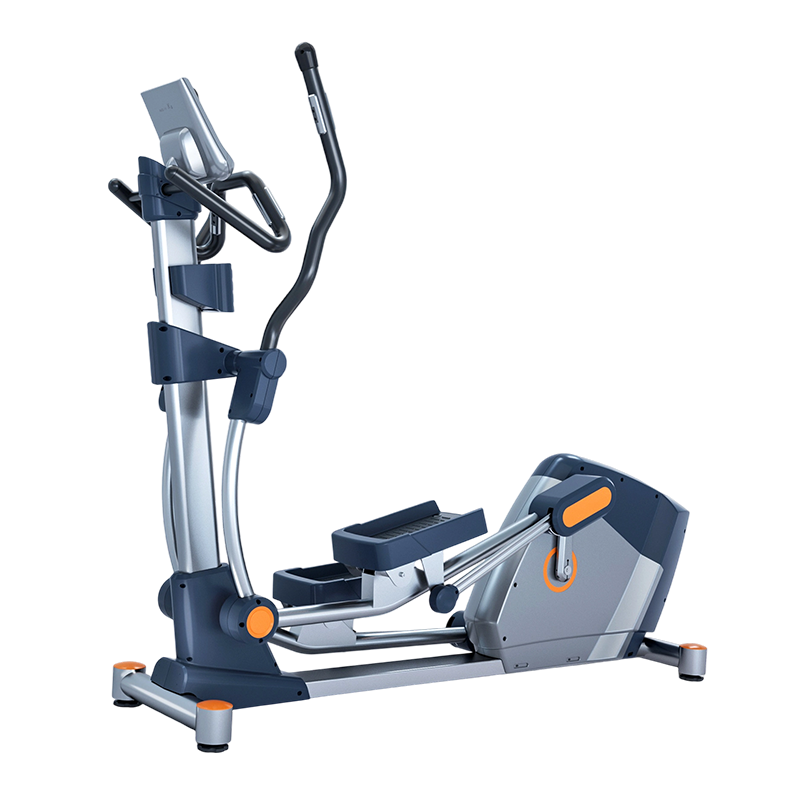
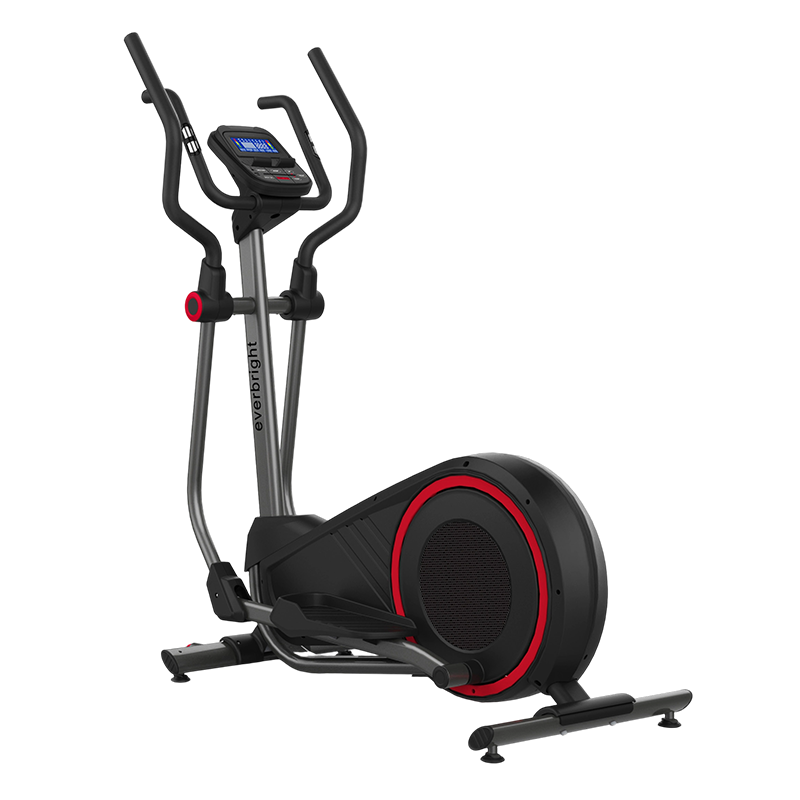
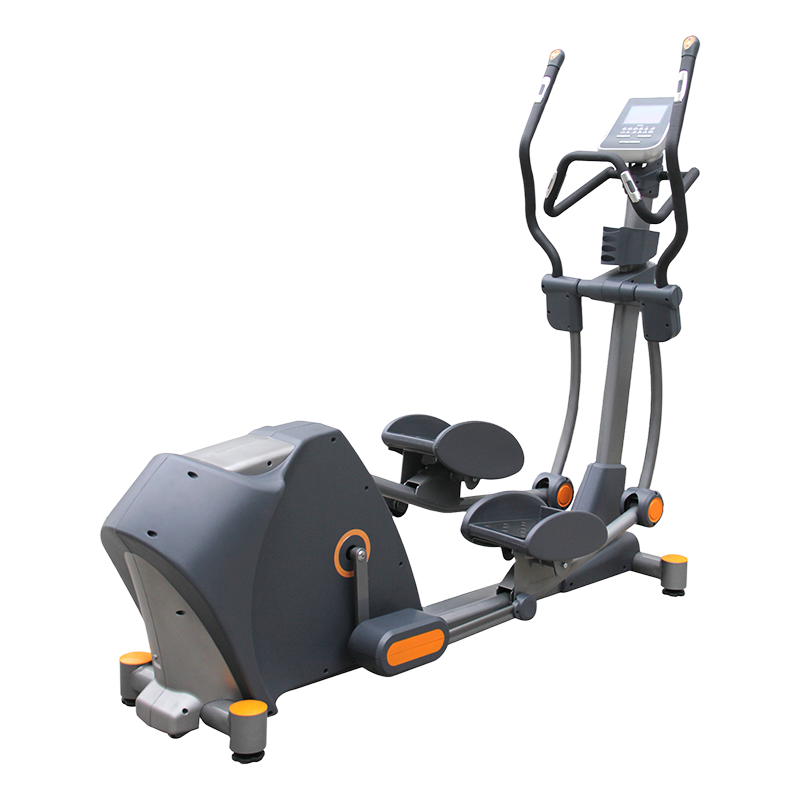 Self-Generating 21-Inch Elliptical with Wireless Heart Rate MonitorThis elliptical offers a 21-inch stride for a natural gait, while the wireless heart rate function helps you stay in your optimal fat-burning zone. Its silent flywheel and multiple training modes support effective home workouts.View Product →
For most home users who want to lose weight, a stable front-drive or rear-drive elliptical with a 16 to 18 inch stride is sufficient. The flywheel weight affects smoothness; a heavier flywheel produces a smoother motion, which is easier on your knees during long sessions.
If you live in an apartment or have limited space, also think about whether you can move the machine without damaging your floor. A compact home-use model with a foldable design can be practical, but be aware that folding machines often have a shorter stride. If you are taller than 5 feet 8 inches, test the stride length before buying.
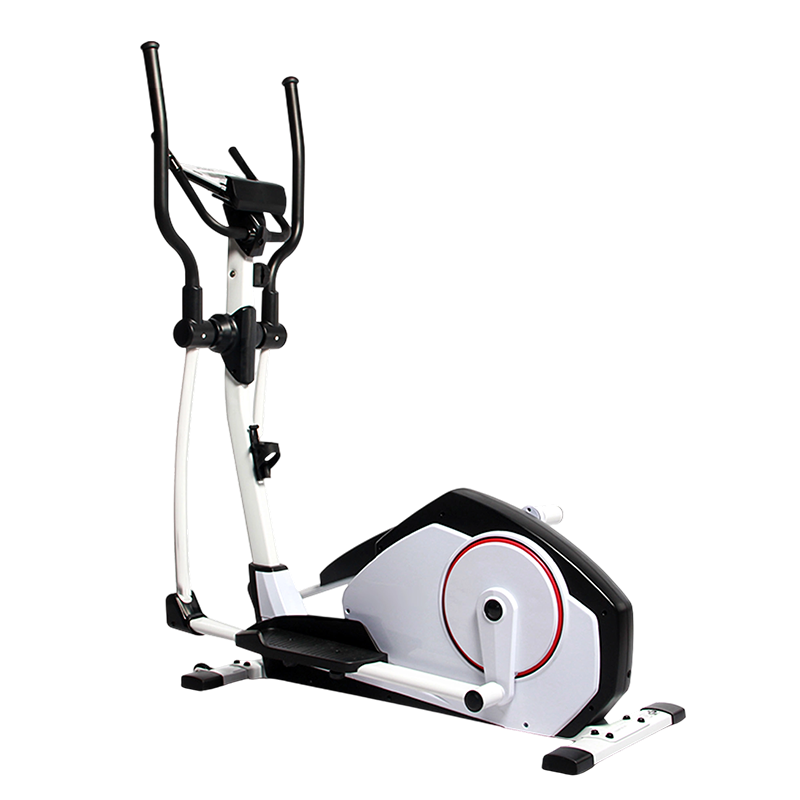 Compact Home Elliptical with Bluetooth and 32 Resistance LevelsDesigned for small spaces, this elliptical provides full-body training with 32 motorized resistance levels. Bluetooth connectivity lets you sync data to apps, and the backlit display shows key metrics clearly.View Product →
If your goal is to lose a significant amount of weight and you plan to spend 45 to 60 minutes per session five days a week, a commercial-grade elliptical may be a better investment. These machines are built to withstand a higher duty cycle, which means they are less likely to fail after 12 months of heavy use.
Look for a large stride length of 20 inches or more if you are above average height, a high user weight capacity, and a magnetic or electromagnetic resistance system that allows very small increments. These features make it easier to fine-tune your effort during the final repeats of a HIIT session.
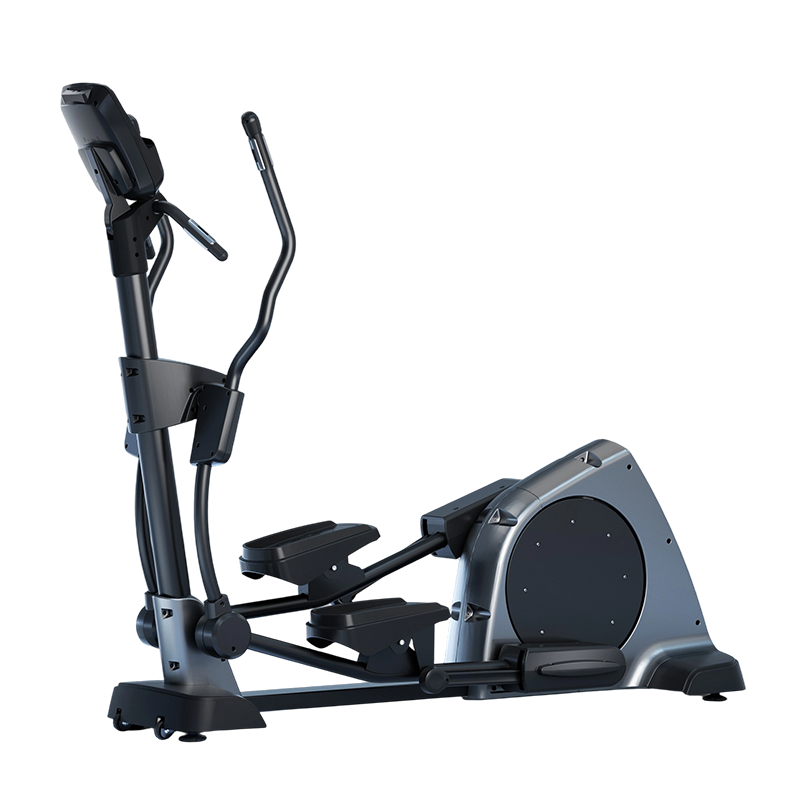 Commercial-Grade Elliptical with 21-Inch Stride and Quick ControlsWith a wide 21-inch stride and shortcut buttons on the armrests, this machine lets you adjust intensity without breaking rhythm. Its sturdy build and large display suit intense interval sessions.View Product →
1. Holding the handles too tightly. If you constantly lean on the moving grips, you reduce the load on your legs and turn a full-body workout into a light leg massage.
2. Setting the resistance too low. On many home ellipticals, the resistance levels are far apart. Level 1 may feel like nothing. You should increase resistance until your arms and legs feel challenged but not strained.
3. Using the same workout every day. Your muscles adapt quickly. If you do 30 minutes of moderate elliptical three times a week for six weeks, your body will become more economical and you will burn fewer calories per session.
4. Ignoring nutrition. The elliptical cannot outrun an extra two servings of pasta each evening. The best effort in the gym will be canceled out by a large calorie surplus.
5. Skipping recovery. If you push hard every day, your muscle tissue cannot repair itself, your cortisol levels rise, and your appetite increases. This is the fastest way to get stuck in a plateau.
On training days, you do not need to eat "extra" for fat loss unless the workout is longer than 60 minutes. For a 20-minute HIIT elliptical session, your body will use a mix of glycogen and fat stores, and a normal balanced meal is sufficient to refill your energy.
To support recovery, prioritize protein after exercise. A simple goal is 0.6 to 0.8 grams of protein per pound of body weight per day, spread across three to four meals. This is just a general nutrition guideline, not a clinical prescription.
Stay hydrated, because even a 2% loss in body weight through sweat can reduce your stroke rate and increase perceived effort.
If you can complete your usual 30-minute steady-state session while holding a long phone conversation, it may be time to increase the intensity. Other signs include:
When you notice these signs, add one more round to your HIIT workout or increase the steady-state resistance by one level. Small changes every two weeks are enough to keep progress moving.
A good session is between 25 and 45 minutes, not including warm-up and cool-down. If you perform HIIT, 25 minutes is enough. If you do steady-state, you can go longer.
Both can work. The elliptical is lower impact and recruits the upper body, which can make the same 30 minutes feel more challenging to some people. The treadmill allows you to run outside your gait cycle, but it carries more impact.
Yes, but not by spot reduction. Belly fat reduces when you lower your overall body fat. A consistent elliptical routine combined with a slight calorie deficit will help.
You can, but it is not necessary. If you feel shaky or weak, eat a small easily digestible snack such as a banana 20 minutes before training. If you do not feel safe exercising without food, do not skip it.
Beginner: 3 days. Intermediate: 4 to 5 days. Advanced: up to 6 days if you manage your intensities and include at least one rest day.
Use a resistance level where you feel a clear muscular challenge but you can maintain a steady cadence. For most people, this is a 4 to 7 on a scale of 1 to 10. During HIIT sprints, raise it to 8 or 9 if possible.
To get the best results from your elliptical for weight loss, follow this simple three-part rule: Do a 5-minute warm-up, alternate between HIIT and steady-state sessions, and increase the work progressively every two weeks. The target is to burn 400 to 500 calories per session on average, with two harder days and two easier days each week.
Remember that the best elliptical workout for weight loss is not a single magic routine. It is a structured system that you can sustain without dreading it. A high-quality machine helps, but your execution and consistency will drive the outcome.
Hot Products

Phone: +86-152 5836 5876
TEL: +86-574 6322 1199
Email: mandy@evbfit.com
Address: No. 518 Zhengtong Road, Kandun Street, Cixi, Ningbo, Zhejiang, China
Copyright © Zhejiang Everbright Industry, Inc. All Rights Reserved. Custom Exercise Bikes Manufacturers China Stationary Bikes Factory