Apr 20, 2026
Content
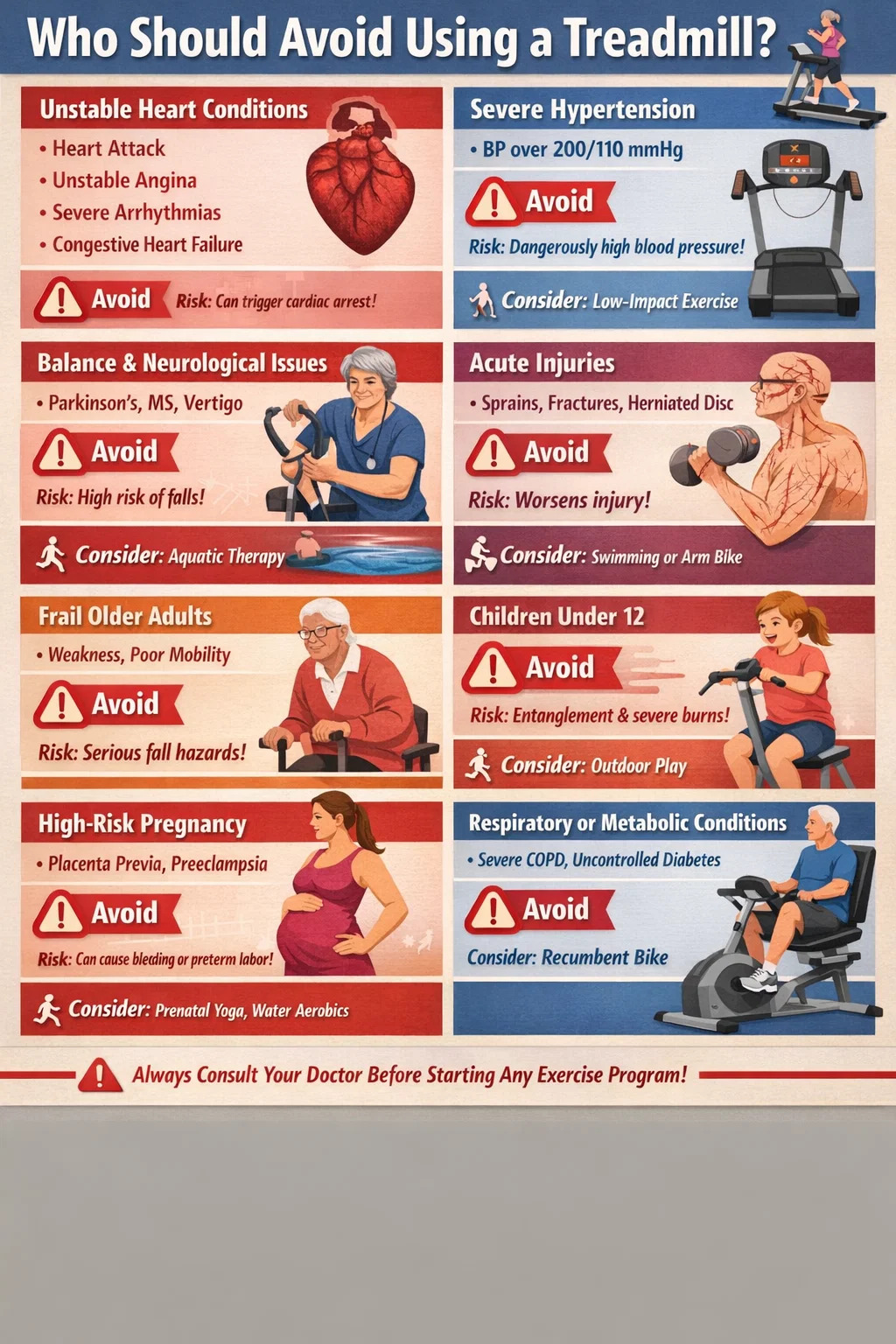
Not everyone should step onto a treadmill. While this piece of cardio equipment is one of the most popular in gyms and homes worldwide, it carries real risks for specific groups of people. People with unstable heart conditions, severe joint disease, significant balance problems, uncontrolled hypertension, or acute injuries should avoid treadmill use entirely or only proceed under direct medical supervision. For others — including the frail elderly, certain pregnant women, and children under 12 — the risks outweigh the benefits in most cases. Understanding exactly who falls into these categories, and why, can prevent serious injury or medical emergencies.
This article breaks down each high-risk group in detail, explains the specific dangers associated with treadmill exercise for each, and offers alternative movement options where appropriate.
Cardiac patients represent one of the most clearly defined groups for whom treadmill use can be life-threatening. The problem is not exercise itself — movement is generally encouraged for heart health — but rather the specific physiological demands that treadmill running or brisk walking places on a compromised cardiovascular system.
Anyone who has experienced a heart attack within the last 48 hours should not use a treadmill under any circumstances. The heart muscle is acutely injured and cannot sustain the increased oxygen demand that even moderate treadmill walking imposes. The ACC/AHA guidelines list acute myocardial infarction as an absolute contraindication to exercise treadmill testing — a standard that applies equally to recreational treadmill use. Forcing the heart to work harder during this period risks extending the area of damaged tissue and can trigger fatal arrhythmias.
Unstable angina is chest pain that occurs at rest or with minimal exertion and signals that arterial plaques may be unstable. Using a treadmill with unstable angina is dangerous because the increased heart rate and blood pressure during exercise can rupture these plaques, triggering a sudden complete blockage of a coronary artery. This is a medical emergency, not a fitness inconvenience. Anyone experiencing new or unpredictable chest pain must be evaluated by a physician before any treadmill exercise.
Certain arrhythmias — abnormal heart rhythms — become more dangerous when the heart rate increases during treadmill exercise. Ventricular tachycardia, for instance, can deteriorate into ventricular fibrillation and cardiac arrest under exertion. The key word is "uncontrolled." Patients whose arrhythmias are well-managed with medication or devices like pacemakers may be cleared for supervised treadmill use by their cardiologist. Those with hemodynamically significant uncontrolled arrhythmias should not use a treadmill.
For people living with congestive heart failure, exercising on a treadmill can worsen symptoms including fatigue and significant shortness of breath. The heart's reduced pumping capacity means it cannot meet the increased demand that treadmill exercise creates. This does not mean all exercise is forbidden — some cardiac rehabilitation programs use carefully supervised treadmill walking — but unsupervised home treadmill use is inappropriate and potentially dangerous for this population.
Aortic stenosis is a narrowing of the aortic valve that restricts blood flow out of the heart. When it is severe and causes symptoms such as chest pain, fainting, or breathlessness, treadmill use can provoke sudden cardiac death. Exercise causes the heart to pump more blood, but the narrowed valve cannot accommodate the increased flow, leading to dangerously low blood pressure and loss of consciousness.
Moderate exercise generally helps lower blood pressure over time, but treadmill use during a hypertensive crisis — or in people with severely uncontrolled hypertension — is a different matter entirely. During treadmill running, systolic blood pressure can rise by 30 to 50 mmHg above baseline. For someone already starting at a dangerously elevated pressure, this additional increase can cause a hypertensive emergency, with risks including stroke, aortic dissection, or heart attack.
A resting blood pressure above 200/110 mmHg is considered a contraindication to exercise treadmill testing by most clinical guidelines. If you have not had your blood pressure checked recently and experience symptoms such as headaches, visual changes, or dizziness, get evaluated before using a treadmill. Once hypertension is managed to safer levels — typically below 160/100 mmHg — supervised low-intensity treadmill walking may become appropriate.
A treadmill belt moves continuously at a set pace, regardless of how the user is feeling at any given moment. This is fundamentally different from walking on a sidewalk or a park path, where you automatically adjust your pace to match your body's real-time capacity. For people with balance disorders, this loss of control creates a significant fall risk.
Natural walking involves constant micro-adjustments to uneven terrain, small slopes, and changes in surface texture — all of which train the body's proprioceptive system. A treadmill removes these variables entirely. The perpetually flat, uniform surface of a treadmill belt actually removes an important factor in balance training. For someone with already compromised balance, this means the treadmill neither rehabilitates their coordination nor provides the postural challenge of real-world walking.
Holding the handrails, which seems like a logical safety measure, compounds the problem. Using handrails on a treadmill alters the mechanics of normal walking, can adversely affect spinal alignment, exacerbate back pain, and further impair balance development by removing the need to self-stabilize.
Falls from treadmills cause serious injuries. Reported injuries include road-rash-type abrasions from the moving belt, fractures from the fall itself, and entrapment between the belt and the machine's frame. These risks make it critical for anyone with documented balance or neurological problems to avoid the treadmill and instead use supervised, stationary alternatives.
Treadmill running and even brisk walking transmit repeated impact forces through the feet, ankles, knees, hips, and spine. For someone dealing with an acute injury — a fresh sprain, stress fracture, herniated disc, or post-surgical joint — these repeated forces slow healing, worsen inflammation, and can convert a manageable injury into a permanent one.
A person recovering from an acute knee ligament tear (ACL, MCL), a fresh meniscus injury, or knee replacement surgery should not use a standard treadmill without medical clearance. Running on a treadmill produces ground reaction forces of roughly 2 to 3 times body weight with each footstrike — a 180-pound person generates up to 540 pounds of force per step. This is not what a healing knee needs. Similarly, a fresh ankle sprain creates instability that the treadmill's moving surface turns into a re-injury risk.
Stress fractures are hairline cracks in bones caused by repetitive loading. The tibia (shin bone), metatarsals (foot bones), and femur (thigh bone) are among the most commonly affected sites in runners. Continuing to use a treadmill with an undiagnosed or healing stress fracture converts a small crack into a complete break — sometimes requiring surgery and months of recovery rather than weeks.
People with acute disc herniations, severe sciatica, or recent spinal surgery should avoid treadmill use during the acute phase of their injury. The vertical loading and forward-lean posture of treadmill walking increases compressive forces on the lumbar spine. Additionally, many people unconsciously grip the treadmill handrails when in pain, further distorting spinal alignment and worsening symptoms.
Age alone does not make someone unsuitable for treadmill use — many healthy adults in their 70s and 80s walk on treadmills safely. The concern is specifically with older adults who are frail, have significant muscle weakness (sarcopenia), or have not been physically active for an extended period.
Frailty involves reduced muscle strength, slowed gait speed, poor endurance, and diminished grip strength — all of which are directly relevant to safe treadmill use. A frail older adult who stumbles on a treadmill belt cannot react quickly enough to recover, and the consequences of a fall are far more serious in this population. Hip fractures, which occur at a dramatically higher rate in frail older adults, carry a one-year mortality rate of approximately 20 to 30 percent.
| Risk Factor | Why It Matters on a Treadmill | Safer Alternative |
|---|---|---|
| Poor grip strength | Cannot hold handrails firmly if they stumble | Walking frame / rollator on flat ground |
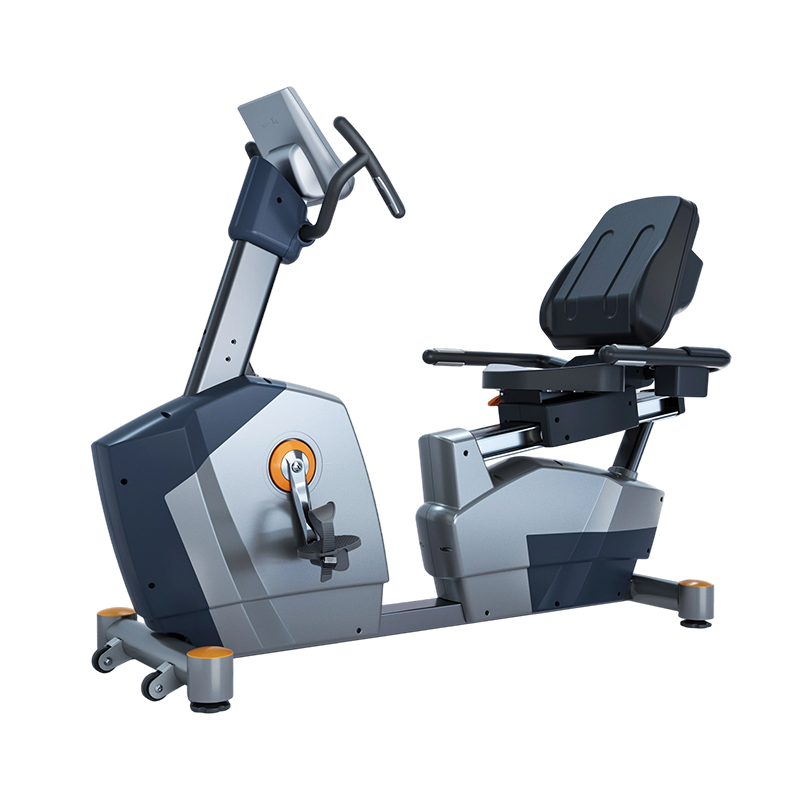
| Slow reaction time | Cannot compensate when belt speed changes | Stationary recumbent bike |
| Muscle weakness (sarcopenia) | Legs fatigue quickly; fall risk increases | Seated resistance training, water aerobics |
| Cognitive impairment | May not understand or remember safety procedures | Supervised group walking programs |
| Vision impairment | Difficulty reading controls or judging belt speed | Outdoor walking with companion |
If you are an older adult who wants to walk for fitness but have concerns about balance or strength, speak with a physical therapist before purchasing or using a treadmill. Many physical therapy clinics offer supervised treadmill programs specifically designed for older patients where vital signs, gait patterns, and exertion levels are closely monitored.
Treadmills are not designed for young children, and the consequences of unsupervised or inappropriate use can be devastating. Research published in the Journal of Burn Care & Research found that treadmill-related burns in children were more severe than burns caused by touching a hot stovetop. These injuries typically occur when a child places their hand near a moving treadmill belt that then becomes trapped near the back of the machine as it continues to run. The resulting friction creates deep, difficult-to-heal wounds.
In April 2021, the U.S. Consumer Product Safety Commission issued an urgent warning following the death of a young child who became trapped under a Peloton Tread+ machine. This underscored that treadmill hazards for children are not hypothetical — they are documented, recurring, and serious.
The general guideline from pediatric health professionals is that children 12 and older may be able to use a treadmill safely, provided they understand the risks and have adult supervision initially. The rationale mirrors the standard used for other equipment requiring judgment and physical coordination: the child needs to be developmentally mature enough to comprehend the dangers.
For households with young children, treadmills should always be stored with the safety key removed and, ideally, in a room that can be locked. Never leave a treadmill running unattended if children are present in the home.
For healthy pregnant women with uncomplicated pregnancies, moderate-intensity treadmill walking is generally considered safe and even beneficial. The guidance shifts significantly for women with high-risk pregnancies or specific complications.
Additionally, balance shifts significantly as pregnancy progresses, particularly in the third trimester, as the growing belly alters the center of gravity. This increases fall risk on a treadmill. Many healthcare providers advise switching to lower-risk activities such as swimming or stationary cycling during the later stages of pregnancy, regardless of overall health status.
Several metabolic and systemic conditions make treadmill exercise unsafe until they are properly treated and stabilized.
Exercise rapidly changes blood glucose levels. For people with poorly controlled diabetes — particularly those using insulin — treadmill use without proper glucose monitoring and management can result in severe hypoglycemia (dangerously low blood sugar) during or after exercise. Hypoglycemia during treadmill use can cause sudden dizziness, loss of consciousness, and a serious fall. Additionally, people with diabetic peripheral neuropathy may not feel the blisters or sores forming on their feet from repeated treadmill friction, leading to wounds that heal poorly and carry infection risk.
Anemia reduces the blood's ability to carry oxygen to working muscles and to the brain. During treadmill exercise, when oxygen demand increases substantially, a person with significant anemia may experience dizziness, fainting, chest pain, or extreme weakness. Hemoglobin levels below 8 g/dL are generally considered a contraindication to vigorous treadmill exercise. Once anemia is treated and hemoglobin reaches acceptable levels, exercise can typically resume.
An overactive thyroid already drives the heart rate unnaturally high at rest. Adding the cardiovascular demand of treadmill exercise on top of a baseline elevated heart rate can push the heart into dangerous territory, including atrial fibrillation or thyroid storm — a potentially life-threatening intensification of hyperthyroid symptoms. Treadmill use should wait until thyroid hormone levels are controlled and resting heart rate has normalized.
Electrolytes including potassium, sodium, and magnesium regulate heart muscle function. Significant imbalances — which can result from eating disorders, certain medications such as diuretics, kidney disease, or severe diarrhea and vomiting — can cause arrhythmias during the cardiovascular stress of treadmill exercise. This is listed as a recognized contraindication to exercise testing in clinical guidelines and applies equally to recreational treadmill use.
Treadmill use demands a sustained increase in breathing rate and depth. People with severe COPD — characterized by forced expiratory volume (FEV1) below 35% of predicted — may be unable to meet this demand and can experience a dangerous drop in blood oxygen saturation during treadmill exercise. If oxygen saturation (SpO2) drops below 88% during activity, the risk of cardiac arrhythmias and other complications rises significantly.
This does not mean all exercise is prohibited for COPD patients — pulmonary rehabilitation programs do include supervised walking on treadmills with oxygen supplementation where needed. But unsupervised home treadmill use for someone with severe respiratory compromise is inappropriate. People with active respiratory infections, pneumonia, or acute exacerbations of asthma should also avoid treadmill use until symptoms resolve.
Treadmill manufacturers specify weight limits — typically between 250 and 350 pounds for consumer models. Beyond the structural concern, however, there are physiological ones. Running or even walking at speed on a treadmill places substantial compressive forces on the knee and hip joints. For someone with a BMI above 40 who is completely deconditioned, treadmill use without medical supervision carries risks of joint injury, cardiovascular overload, and falls.
This is a group for whom a medically supervised approach is particularly valuable. Starting with low-impact water exercise, stationary cycling, or even gentle chair-based resistance training builds cardiovascular fitness and reduces joint load before transitioning to a treadmill. The goal is not to avoid exercise — it is to choose a starting point that is genuinely safe given current fitness and joint health.
It is worth distinguishing between conditions that absolutely preclude treadmill use and those that simply require a conversation with a physician first. Many people fall into the second category and can safely use a treadmill with appropriate guidance.
The common thread across all these groups is that the decision should involve a healthcare professional who knows your complete medical history. Self-diagnosing whether you fall into a safe-use or contraindicated category is genuinely risky. A physician can review your medications (many drugs including beta-blockers, calcium-channel blockers, and digoxin affect how the heart responds to exercise), current fitness level, and specific condition to give you a clear, individualized recommendation.
Not being able to use a treadmill does not mean not being able to exercise. For virtually every condition that makes treadmill use inappropriate, there is at least one safer alternative that provides meaningful cardiovascular or strength benefit.
| Condition | Recommended Alternative | Key Benefit |
|---|---|---|
| Congestive heart failure (supervised) | Stationary recumbent bike | Lower cardiovascular demand, seated |
| Poor balance / neurological conditions | Aquatic therapy / pool walking | Water supports body weight, reduces fall risk |
| Acute knee or hip injury | Swimming / upper body ergometer | Maintains fitness without joint loading |
| High-risk pregnancy | Prenatal yoga / water aerobics | Low impact, no fall risk from moving belt |
| Severe COPD | Seated breathing exercises, supervised walking | Controlled exertion with respiratory monitoring |
| Frail elderly | Chair exercises, resistance bands, tai chi | Builds strength and balance without fall hazard |
For people with joint problems who specifically want the benefit of walking for cardiovascular fitness, anti-gravity treadmills (lower body positive pressure treadmills) are a specialized option. These devices use pressurized air to reduce effective body weight by up to 80%, dramatically lowering joint impact while preserving normal walking biomechanics. They are widely used in physical therapy and sports medicine settings. Clinical trials have evaluated their use for knee osteoarthritis in elderly populations with promising results. However, they are not consumer products and require access to a clinical or rehabilitation facility.
Even people who have been appropriately cleared for treadmill use need to know when to stop. The following symptoms during treadmill exercise warrant immediate cessation and, in several cases, emergency medical attention:
Every treadmill sold in the US includes an emergency stop mechanism — typically a safety clip that attaches to clothing and pulls free if the user moves too far back on the belt. Always use this safety clip. It is one of the simplest and most effective injury-prevention tools available, yet research has found that the majority of treadmill users do not attach it during exercise.
Hot Products

Phone: +86-152 5836 5876
TEL: +86-574 6322 1199
Email: mandy@evbfit.com
Address: No. 518 Zhengtong Road, Kandun Street, Cixi, Ningbo, Zhejiang, China
Copyright © Zhejiang Everbright Industry, Inc. All Rights Reserved. Custom Exercise Bikes Manufacturers China Stationary Bikes Factory